
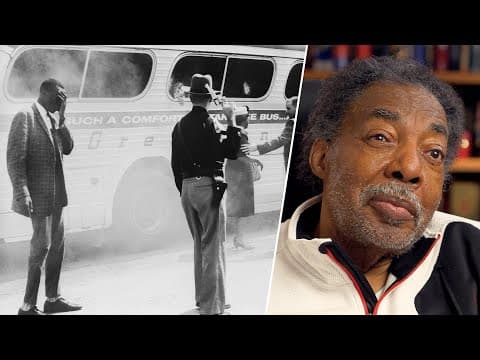
The Freedom Riders, a group of courageous students in the early 1960s, challenged racial segregation laws in the South by embarking on a series of bus rides to integrate public transportation. Their journey was marked by violence, arrests, and significant personal sacrifice, ultimately contributing to the Civil Rights Movement and the fight for equality in America.
In 1961, the landscape of the American South was starkly divided by racial segregation. Public places were segregated by law, and the treatment of Black individuals was dehumanizing. This blog post recounts the courageous actions of the Freedom Riders, a group of young activists who challenged these unjust laws and fought for civil rights.
During this period, Black individuals were relegated to the back of buses, forced to sit in designated seats, and often had to stand if those seats were filled. This was not just a social norm but a legal requirement in many Southern states. The oppressive atmosphere of segregation was palpable, especially in cities like St. Augustine, Florida, where young activists began to take a stand.
Hank Thomas, a high school student at the time, recalls his experience of staging a one-man sit-in at a local five-and-dime after being inspired by the Civil Rights Movement. Despite his friends backing out, Thomas sat at the lunch counter alone, an act of defiance that garnered attention and marked the beginning of his journey into activism.
As a student at Howard University, Thomas participated in sit-in demonstrations in solidarity with Southern students. After being arrested during one of these protests, he was bailed out by Sammy Davis Jr. Inspired by the ongoing sit-ins in the South, Thomas decided to join the Freedom Rides, a movement initiated by students from Fisk and Howard University.
The Freedom Rides were a series of bus trips taken by activists to challenge segregation in public transportation. The 13 Freedom Riders represented the original 13 states of the United States. At just 19 years old, Thomas and his peers were driven by a sense of urgency and bravery, often unaware of the dangers that lay ahead.
The Freedom Riders faced immediate hostility, particularly in Alabama, where their bus was firebombed. The mob's attempt to brutalize them was thwarted when the bus caught fire, forcing the riders to escape. Thomas vividly recalls the chaos as he reached the front door, only to find it held shut by three white men who feared the bus would explode. Once freed, he was violently attacked and suffered injuries that required medical attention.
Despite the violence, the Freedom Riders were determined to continue their mission. They were arrested in Jackson, Mississippi, and sentenced to six months in prison at Parchman Prison, notorious for its brutal treatment of Black inmates. Thomas shared a cell with Stokely Carmichael, another prominent civil rights activist, and witnessed firsthand the harsh realities of racial injustice.
The Freedom Riders' journey was fraught with danger, but their bravery laid the groundwork for future civil rights advancements. The struggle against racial segregation was not just a fight for legal rights but a battle for human dignity. The sacrifices made by the Freedom Riders and countless others during this tumultuous period were instrumental in shaping the freedoms enjoyed in America today.
The story of the Freedom Riders is a testament to the courage and resilience of those who fought against systemic racism. Their journey was marked by violence and hardship, yet it was also a pivotal moment in the Civil Rights Movement. The freedoms we enjoy today were hard-earned through the sacrifices of individuals who dared to challenge the status quo and demand equality for all.



















