
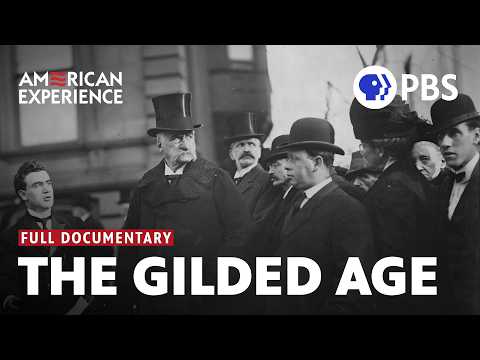
The Gilded Age, marked by rapid industrialization and stark wealth disparities, saw the rise of influential figures like Andrew Carnegie and J.P. Morgan, while ordinary Americans faced harsh working conditions and economic struggles. This period ignited social movements and political changes, highlighting the tension between the rich and the working class, ultimately shaping modern America.
In the late 19th century, America underwent a dramatic transformation known as the Gilded Age, a term coined to describe the era's superficial glitter masking deep social problems. This period was characterized by rapid industrialization, significant economic growth, and stark contrasts between the wealthy elite and the struggling working class.
The Gilded Age was epitomized by opulence, as seen in the extravagant balls hosted by the wealthy. One notable event was a grand ball at the Waldorf Hotel in New York City in February 1897, which cost as much as feeding a thousand working-class families for a year. While the elite reveled in luxury, critics pointed out the growing desperation among the poor, highlighting the era's social tensions.
During this time, the richest 4,000 families in America controlled as much wealth as the other 11.6 million families combined. This stark inequality led to a growing discontent among workers, who began to question their status as free citizens in a republic that seemed increasingly divided into the haves and have-nots.
The Gilded Age followed the Civil War, during which America transformed from a nation of farmers to an industrial powerhouse. Railroads played a crucial role in this transformation, connecting markets and enabling the mass production and distribution of goods. This shift allowed entrepreneurs like Andrew Carnegie and J.P. Morgan to amass great fortunes.
Andrew Carnegie, born into poverty in Scotland, became a symbol of the American Dream. He built a steel empire by capitalizing on the booming railroad industry and mass production techniques. His success was not just due to innovation but also to his ability to manage and consolidate various enterprises.
J.P. Morgan, another key figure, emerged as a powerful banker who facilitated the growth of American industry by consolidating railroads and stabilizing the economy during financial crises. His influence extended to the point where he could dictate terms to the government, showcasing the power of wealth in shaping policy.
While the elite thrived, the working class faced dire conditions. Laborers worked long hours for meager wages in unsafe environments, often without any form of compensation for injuries. The rise of labor unions marked a significant response to these conditions, as workers sought better wages and safer working conditions.
The late 19th century saw the formation of labor unions and strikes, as workers began to organize against their exploitation. The Homestead Strike of 1892 at Carnegie's steel mill exemplified the violent clashes between labor and management, resulting in significant casualties and highlighting the struggle for workers' rights.
The Gilded Age also sparked political movements aimed at addressing the inequalities of the time. Figures like Henry George, who wrote "Progress and Poverty," argued that the economic system was rigged against the poor. His ideas resonated with many, leading to the formation of the People's Party, which sought to represent the interests of farmers and laborers.
The People's Party emerged as a response to the frustrations of the working class and farmers, advocating for reforms such as public ownership of railroads and a progressive income tax. Their message gained traction, particularly in the Midwest, where economic hardships were felt most acutely.
The political landscape shifted dramatically during the 1896 presidential election, where William Jennings Bryan, a champion of the silver standard and populist reforms, faced off against the Republican candidate William McKinley. Bryan's campaign aimed to unite farmers and workers against the elite, but ultimately, McKinley's message of stability and prosperity resonated more with the electorate.
McKinley's victory solidified the power of the Republican Party and the business interests it represented. The election marked a turning point, reinforcing the divide between the wealthy and the working class and setting the stage for future social and political struggles.
The Gilded Age was a complex period in American history, marked by incredible wealth and stark inequality. The era laid the groundwork for modern America, highlighting the ongoing struggle between economic power and democratic ideals. As the nation moved into the 20th century, the questions raised during the Gilded Age about wealth, power, and equality would continue to resonate, shaping the future of American society.



















