
Chapter 18 of Alan Brinkley's 'The Unfinished Nation' explores the Gilded Age, focusing on urban growth, immigration, social history, and the challenges faced by everyday Americans in rapidly expanding cities from 1865 to 1914.
In Chapter 18 of Alan Brinkley's "The Unfinished Nation," we delve into the Gilded Age, a period spanning from 1865 to 1914. This era is characterized by significant urban growth and social transformation in the United States. While the Gilded Age may appear prosperous on the surface, it conceals a myriad of social issues that affected everyday Americans.
The term "gilded" refers to something that is gold-plated, suggesting that while the United States experienced remarkable economic growth and expansion during this time, much of this prosperity was superficial. Beneath the surface lay profound social challenges that impacted the lives of ordinary citizens.
One of the most significant trends during the Gilded Age was urban growth. By 1920, the majority of Americans lived in cities, marking a transformation from a predominantly rural society to an urban one. This shift was driven by two primary factors: immigration and internal migration.
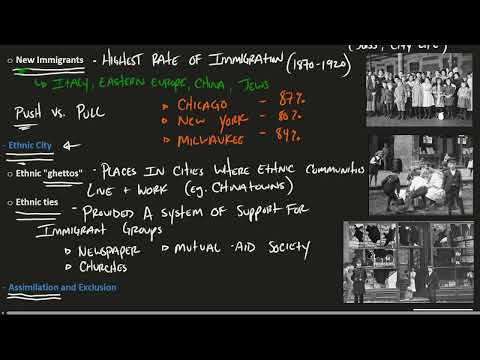
As immigrants settled in cities, they often formed ethnic enclaves, where they lived, worked, and socialized along cultural lines. Notable examples include:
These ethnic communities provided essential support systems through mutual aid societies, newspapers in various languages, and religious institutions, helping immigrants navigate their new environment.
The rapid urbanization of American cities brought about numerous challenges, including overcrowding, inadequate housing, and poor living conditions.
The search for housing became a pressing issue, leading to the development of tenement housing. While initially seen as a solution, many tenements were poorly constructed, lacking basic amenities such as:
These conditions contributed to unsanitary living environments, exacerbating health issues among urban populations.
Urban areas faced significant public health challenges, including:
Reformers like Jacob Riis emerged during this period, using photography to expose the harsh realities of urban poverty. His work, "How the Other Half Lives," highlighted the dire conditions faced by many city dwellers, advocating for social reform.
In the absence of effective government intervention, political machines emerged as a source of support for impoverished urban communities. These organizations provided assistance in exchange for votes, often engaging in corrupt practices to enrich themselves once in power.
William M. Tweed, the infamous leader of the Tammany Hall political machine in New York, exemplified this system. His administration was marked by corruption, using city resources for personal gain while offering minimal support to the communities they served.
Despite the challenges of urban life, the Gilded Age also saw the rise of mass consumption and leisure activities. Technological advancements led to:
The Gilded Age was a complex period marked by significant urban growth and social change. While it brought about economic prosperity and advancements in consumer culture, it also highlighted the stark realities of urban poverty, overcrowding, and the need for social reform. Understanding this era is crucial for comprehending the evolution of American society and the challenges that shaped its future.



















