
The Great Depression, triggered by the 1929 stock market crash, reshaped American society and government policies, leading to widespread unemployment, poverty, and significant changes in economic management under Franklin D. Roosevelt's New Deal.
The 1920s brought economic growth and optimism, but this era of prosperity was abruptly halted by the Great Depression. The stock market crashed, businesses collapsed, and unemployment soared, leaving millions struggling. This moment would change the course of American history, leading to new government policies and efforts to rebuild. In this post, we will take a closer look at how it all unfolded.
World War I left a devastating impact in its immediate aftermath, with 10 million deaths and a shaken foundation of progress. The loss of an entire generation, including young men and amateur soldiers, left countries struggling to rebuild. Nations erected memorials and held ceremonies to honor the fallen, with battlefield cemeteries becoming sites of remembrance.
The economic consequences were severe. Germany was unable to pay the reparations owed to France, which relied on those funds for its own recovery. The German Mark became virtually worthless due to excessive money printing. In response, Woodrow Wilson proposed that an expert re-evaluate the reparations, leading to a reassessment agreed upon by all nations. Although the war had ended, its effects continued to shape the world in the years ahead.
After years of economic instability, there was a sense of hope from 1924 to 1929. The Dawes Plan of 1924 was a key effort to stabilize Germany's economy and ensure that reparation payments could continue without crippling the country. Instead of demanding unrealistic payments, reparations were reduced and structured based on Germany's ability to pay. The United States loaned money to Germany, allowing them to make their reparation payments to the Allies, who in turn used those funds to repay their war debts to the United States. This cycle helped keep the global economy afloat and allowed European industries to rebuild.
The Roaring Twenties was a decade of economic expansion, technological progress, and social change. On the surface, it seemed like an era of endless prosperity, but underlying weaknesses in the economy set the stage for the Great Depression. The economic boom that followed World War I led to rapid industrial growth and increased consumer spending. The stock market surged, and many Americans eagerly invested their money, often using borrowed funds.
However, not everyone benefited equally. Farmers faced serious challenges due to overproduction, leading to falling crop prices and debt. Financially unstable banks engaged in risky lending, pouring money into the stock market and issuing unsecured loans. International economic imbalances added to the fragility of the system, as World War I had disrupted global trade.
Several key factors led to the Great Depression, creating a perfect storm of economic collapse. One major cause was speculation and margin trading. Investors poured money into the stock market, often using margin loans, under the assumption that prices would keep rising. This reckless speculation created an unsustainable financial bubble.
The stock market crash of 1929, particularly on Black Tuesday, marked the beginning of the economic downturn. Stock prices plummeted, wiping out billions in wealth almost overnight. This crash shook public confidence in the financial system, leading to bank failures and a sharp decline in consumer spending. The crisis was exacerbated for farmers by the Dust Bowl, which devastated agriculture and left rural communities in deep poverty.
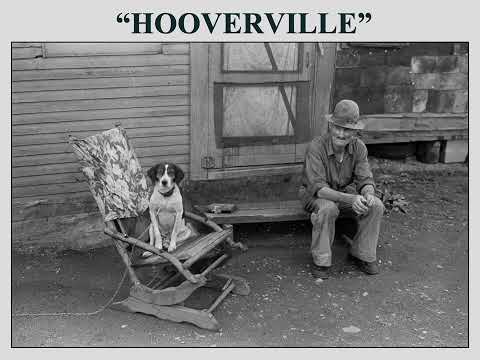
The Great Depression had a devastating impact on the American people, affecting every aspect of daily life. Public faith in President Herbert Hoover collapsed, as many saw his response to the crisis as inadequate. Unemployment soared to 25%, leaving millions without jobs or income. Families struggled to survive, and as foreclosures swept the country, many lost their homes. Shanty towns known as Hoovervilles sprang up across cities, symbolizing the widespread poverty and desperation of the era.
The psychological and social toll was severe. Families broke apart under the strain, and rates of depression and suicide rose sharply. The prolonged uncertainty and suffering left lasting scars on American society. The Great Depression was not just an economic crisis; it was a human one, reshaping the way people lived, worked, and viewed the government's role in their lives.
Herbert Hoover's response to the Great Depression was shaped by his belief in volunteerism and rugged individualism. He encouraged businesses to maintain wages and employment without government intervention, urging Americans to rely on private charity rather than federal aid. However, as the crisis deepened, this approach proved ineffective.
In 1932, Hoover established the Reconstruction Finance Corporation (RFC) to provide secured loans to banks, railroads, and local governments. Despite its efforts, it was seen by many as too little, too late. The Smoot-Hawley Tariff Act of 1930, which raised import duties, worsened the global crisis by reducing international trade.
The Bonus Army incident in July 1932, where World War I veterans demanded early payment of promised military bonuses, further damaged Hoover's public image. The violent dispersal of the Bonus Army by the U.S. Army highlighted the growing discontent with his administration.
The election of 1932 marked a turning point in the Great Depression. Disillusioned with Hoover, Franklin D. Roosevelt's campaign promised a New Deal, offering bold, decisive action to address the crisis. His message resonated with Americans desperate for change, leading to a landslide victory.
Roosevelt's New Deal introduced over 100 programs, agencies, acts, and policies designed to stabilize the economy and provide relief to struggling Americans. Key measures included the Emergency Banking Act, which stabilized the banking system, and the Civilian Conservation Corps, which provided jobs for young men in conservation projects.
The New Deal also brought about significant reforms, such as the Social Security Act, which established pensions for retirees and unemployment insurance. Roosevelt's Fireside Chats became a crucial tool for explaining his policies and calming the fears of Americans.
The Dust Bowl compounded the hardships of the Great Depression, devastating rural communities. Poor farming practices and severe drought led to massive dust storms, known as black blizzards, which destroyed crops and created severe health hazards. The federal government eventually responded by promoting new farming techniques to prevent another ecological catastrophe.
The Great Depression had a global impact, hitting Europe particularly hard. Many European nations were already struggling with post-war debt and instability. The crash of 1929 triggered a worldwide financial collapse, leading to economic crises on both sides of the Atlantic. This environment paved the way for the rise of authoritarian leaders, such as Adolf Hitler and Benito Mussolini, who capitalized on public frustration.
The question of whether the New Deal worked has a complex answer. In many ways, FDR's policies prevented things from getting worse, allowing Americans to keep their heads above water. However, the economy did not fully recover until World War II, which created millions of jobs and stimulated industrial growth. The Great Depression reshaped American society and government, leaving a lasting legacy that continues to influence economic policy today.



















