
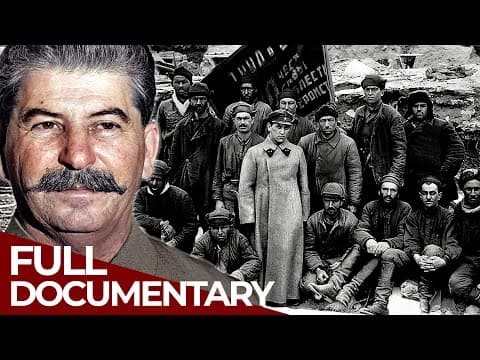
This blog post explores the evolution and impact of the Soviet Gulag system from 1934 to 1945, detailing the political repression, forced labor, and the immense suffering endured by millions of prisoners during this dark period in history.
The Soviet Gulag system represents one of the most repressive and criminal regimes in modern history. Established as early as 1918, it evolved into a centralized concentration camp system by the early 1930s, becoming a significant historical phenomenon of the 20th century. This post delves into the propagation of the Gulag system from 1934 to 1945, highlighting its impact on Soviet society and the lives of millions.
In the early 1930s, the collectivization of agriculture led to the forced relocation of hundreds of thousands of farmers to the Gulag. This forced labor was utilized to construct the massive infrastructure of the USSR, effectively creating a country within a country—a hidden civilization that remains largely misunderstood today.
On January 26, 1934, the 17th Congress of the Communist Party convened in the Kremlin, marking a significant moment in Stalin's consolidation of power. Amidst a backdrop of praise for Stalin, the Congress symbolized his triumph, despite the catastrophic consequences of policies enacted between 1929 and 1930, which resulted in a 40% drop in agricultural production and widespread starvation.
Stalin's narrative framed these failures as the result of sabotage, allowing him to justify the expansion of political repression and forced labor.
The assassination of Sergei Kirov on December 1, 1934, served as a catalyst for intensified repression. Stalin exploited this event to launch a campaign against perceived enemies within the Communist Party, leading to the arrest and execution of many of Kirov's associates.
Despite the official narrative proclaiming the success of socialism, the reality was starkly different. By 1935, the number of Gulag prisoners surpassed one million, while the privileged nomenklatura enjoyed material benefits, starkly contrasting the suffering of the general populace.
The Gulag system became integral to the Soviet economy, with prisoners engaged in various large-scale projects. Notable among these was the construction of the White Sea-Baltic Canal, where nearly 200,000 prisoners worked under horrendous conditions, resulting in approximately 30,000 deaths.
By the late 1930s, the Gulag had transformed into a vast administrative network, utilizing the labor of prisoners across the USSR. Major projects included the construction of railways and the extraction of natural resources in inhospitable regions, often resulting in high mortality rates among the labor force.
The Great Terror marked a period of extreme political repression, with Stalin executing many of his former allies and instigating a nationwide campaign against perceived enemies. The Moscow Trials showcased this purge, which led to the execution of numerous Communist officials and the arrest of hundreds of thousands of ordinary citizens.
Between 1937 and 1938, approximately 750,000 Soviet citizens were executed, with the NKVD carrying out mass arrests and executions under the guise of eradicating anti-Soviet elements. The terror instilled fear in the populace, leading to a culture of silence and compliance.
As World War II unfolded, the Gulag system faced new challenges. The German invasion in June 1941 prompted the evacuation of prisoners from western camps, often resulting in death marches under brutal conditions. Despite the chaos, the NKVD continued to arrest and deport individuals from newly occupied territories.
Life in the Gulags deteriorated significantly during the war, with starvation and disease rampant among the prisoners. The harsh winter of 1941-1942 was particularly deadly, with many prisoners succumbing to malnutrition and illness.
Following the war, the Gulag system did not dissipate. Instead, it continued to expand, with millions of war prisoners, including Germans, forced into labor camps under dire conditions. The propaganda portrayed a false image of humane treatment, while in reality, many prisoners faced severe hardships.
The Gulag system from 1934 to 1945 represents a dark chapter in Soviet history, characterized by political repression, forced labor, and immense suffering. The legacy of this period continues to resonate, serving as a reminder of the dangers of totalitarianism and the importance of remembering the past to prevent similar atrocities in the future.



















