
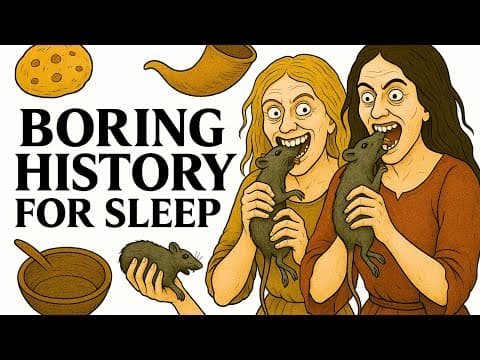
Explore the grim realities of life in medieval Europe, from unsanitary living conditions and brutal labor to the lack of medical care and the omnipresence of death. This post reveals the stark contrast between romanticized portrayals and the harsh truths of existence during the Middle Ages.
In this exploration of medieval life, we delve into the grim realities that defined the Middle Ages, a time often romanticized in popular culture. Forget the castles and chivalry; the truth is that most people wouldn't last a single day in this harsh world. From unsanitary living conditions to brutal labor, the medieval experience was one of survival against overwhelming odds.
Imagine waking up in the year 1325. The good news is that you’re alive; the bad news is that you’re sharing your half-rotted straw mattress with fleas and other unwelcome guests. Your bed is a wool blanket that hasn’t been washed in months, and your home is a wooden hut with no windows, where your family, livestock, and insects coexist in a fragrant symphony of stale beer, sweat, and decay.
As the church bell clangs, you rise to face the day. Nature calls, but there’s no modern bathroom to retreat to. Instead, you have a wooden bucket behind the house, which is already full. Relieving yourself is a public affair, and if you live in a town, you might have to share a public latrine with strangers. Privacy is a luxury you cannot afford.
After surviving the morning’s challenges, you sit down to breakfast, which is a bowl of pottage—a thick stew made from whatever scraps you can find. There are no eggs, no coffee, and certainly no avocado toast. Instead, you have a hunk of hard bread, often mixed with sawdust or acorns, and your drink is weak ale, as the water is too contaminated to consume.
Getting dressed is another ordeal. You have one outfit, a rough wool tunic that you’ve worn for months. There’s no washing machine, and your clothes are stained and stiff. Underwear is optional, and if you’re lucky, you might have a linen under tunic. Your skin is constantly itchy from fleas and lice, and personal hygiene is a distant dream.
Once dressed, it’s time to work. If you’re a peasant, your job is to labor for someone else’s comfort. You rise with the sun and work until it sets, with no weekends or breaks. The work is grueling, and if you’re a woman, you’re expected to juggle fieldwork with household duties. Children start helping at a young age, with no education or toys to distract them.
The weather adds another layer of difficulty. In winter, your home is freezing, and in summer, it becomes unbearably hot. There’s no insulation, and you’re left to endure the elements in your damp wool tunic. Whether it’s shivering in the cold or sweating in the heat, comfort is a rare commodity.
Water, which should be a source of life, is often a threat. Streams are contaminated, and bathing is considered dangerous. Instead, people drink beer or wine, as these are safer than the water. The idea of hygiene is foreign; washing is believed to invite disease.
When illness strikes, the situation worsens. Medical care is rudimentary at best. Diagnoses are based on the balance of humors, and treatments often involve bloodletting or leeches. There’s no anesthesia, and surgery is performed with unsterilized tools. The concept of germs is unknown, and many die from infections that would be easily treatable today.
After a long day of labor, you return home to a meager evening meal. Food preservation is non-existent, and what you eat is often spoiled or contaminated. Bread is a staple, but it’s often mixed with harmful ingredients. The risk of poisoning is ever-present, and every meal is a gamble.
Religion permeates every aspect of life. The church controls your calendar, laws, and even your moral compass. Missing a prayer is a sin, and the fear of eternal damnation looms large. Tithes are mandatory, and holidays are filled with religious obligations rather than joy.
For women, life is even more challenging. From a young age, they are expected to marry, bear children, and serve their husbands. Childbirth is a dangerous lottery, and women have little autonomy. They are often accused of witchcraft if they step out of line, facing dire consequences.
Violence is a common part of life. Crime is rampant, and punishment is brutal. Trials often involve torture, and justice is arbitrary. Domestic violence is normalized, and the threat of war is ever-present. Life is fragile, and everyone lives with the knowledge that death could come at any moment.
The average life expectancy is low, with many dying before reaching adulthood. Disease, malnutrition, and accidents claim lives regularly. Funerals are simple, often hastily conducted to avoid disease. Death is a constant companion, and the fear of it shapes daily existence.
In conclusion, the medieval world was not the romanticized version often depicted in stories. It was a time of hardship, suffering, and survival. Yet, through all the darkness, people found ways to laugh, love, and create meaning in their lives. As we reflect on this period, let us appreciate the comforts of modern life and honor those who endured the struggles of the past. The medieval experience teaches us about resilience and the human spirit's capacity to endure even the harshest conditions.



















