
The Hellenistic Period, following Alexander the Great's conquests, marked a significant cultural and political transformation in the ancient world, characterized by the spread of Greek culture, the rise of successor states, and the eventual dominance of Rome.
The Hellenistic Period of ancient Greek history began in 326 BC, marked by the extraordinary conquests of Alexander the Great. This era not only transformed the political landscape of the ancient world but also facilitated the spread of Greek culture across vast regions, including the Middle East and North Africa. In this blog post, we will explore the key events and cultural developments of the Hellenistic Age, which lasted for approximately three centuries.
Alexander III of Macedon, commonly known as Alexander the Great, ascended to the throne in 336 BC at the young age of 20. His rise to power was surprising, given that Macedon was not initially regarded as a great power in the Greek world. The region, located around northern Greece and parts of Bulgaria and North Macedonia, was often looked down upon by the more established city-states like Athens.
However, the political landscape shifted dramatically after the Peloponnesian War, which left Athens weakened and Sparta in decline. This created a vacuum for a new power to emerge, and Alexander's father, King Philip II, had already reformed the Macedonian army, setting the stage for his son's future conquests.
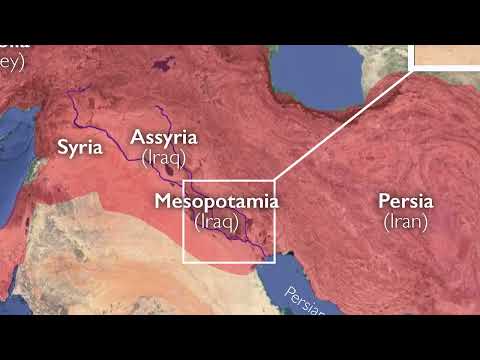
In 334 BC, Alexander launched his campaign against the Persian Empire, determined to reverse the power imbalance that had existed between the Greeks and Persians. Over the next nine years, he achieved remarkable victories, conquering Anatolia, the Levant, and Egypt, before advancing into the heart of Persia. Key battles, such as those at Granicus, Issus, and Gaugamela, showcased his military prowess and strategic genius.
By 330 BC, Alexander had captured the Persian capital of Persepolis. His ambition drove him further east into India, where he aimed to reach the edge of the known world. However, his campaign came to an end when his troops refused to march any further, leading to his return to Babylon, where he died under mysterious circumstances at the age of 32.
Following Alexander's death, a power struggle erupted among his generals, known as the Wars of the Diadochi. This civil war lasted for four decades, resulting in the fragmentation of his vast empire into several successor states. The three major kingdoms that emerged were:
These kingdoms collectively formed what is known as the Hellenistic world, where Greek culture flourished and blended with local traditions.
During the Hellenistic Age, the city of Alexandria in Egypt became a center of culture and learning. Founded by Alexander, it soon surpassed Athens as the intellectual capital of the ancient world. The Ptolemies established educational institutions and the Great Library of Alexandria, which attracted scholars, scientists, and philosophers from across the globe.
Prominent figures such as Eratosthenes and Apollonius of Perga made significant contributions to various fields, including geography, mathematics, and astronomy. Their work laid the groundwork for many scientific principles that are still relevant today.
Despite the remarkable advancements in science and culture, the Hellenistic world was plagued by continuous warfare among the successor states. The political environment was characterized by instability, with frequent border disputes and larger conflicts erupting every few years. This chaos, however, did not stifle the intellectual and cultural achievements of the time, much like the Italian Renaissance flourished amidst the wars of the 15th century.
As the Hellenistic kingdoms engaged in their conflicts, the Roman Republic was expanding its influence throughout the Mediterranean. By the late 3rd century BCE, Rome had become a formidable power, and Greek states began seeking alliances with Rome to aid in their struggles.
Between 200 BC and 146 BC, a series of wars led to the gradual subjugation of the Hellenistic kingdoms by Rome. The Romans, initially reluctant imperialists, eventually adopted a more direct form of governance over the conquered territories.
The annexation of the Ptolemaic Kingdom of Egypt in 30 BC marked the effective end of the Hellenistic era, as Rome emerged as the new hegemon in the Eastern Mediterranean.
The Hellenistic Period was a time of profound transformation in the ancient world, characterized by the spread of Greek culture, significant scientific advancements, and the rise and fall of powerful kingdoms. While the era ended with the rise of Rome, its cultural and intellectual legacy continued to influence civilizations for centuries to come. The Hellenistic Age remains a testament to the enduring impact of Alexander the Great and the complex interplay of culture and politics in shaping history.



















