
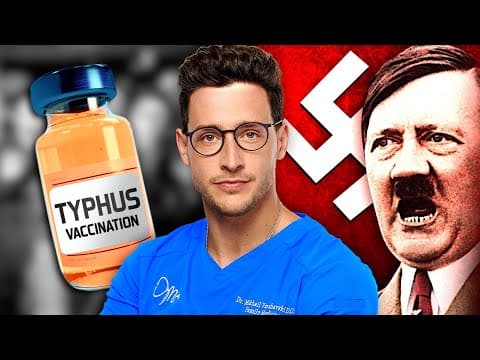
During the Holocaust, Dr. Ludwik Fleck and a team of Jewish scientists in Buchenwald executed a daring act of sabotage by creating a fake typhus vaccine for Nazis while saving real vaccines for themselves. This story highlights their bravery and ingenuity amidst horrific conditions, ultimately leading to their survival and the exposure of Nazi medical abuses after the war.
One of the darkest chapters in the history of medicine unfolded during the Holocaust, where the Nazis conducted horrific experiments on Jewish prisoners. Among these atrocities was the use of Jews as test subjects for vaccines intended for Nazi soldiers. However, within the confines of a single concentration camp, a group of Jewish prisoners, led by Dr. Ludwik Fleck, orchestrated a remarkable act of sabotage that would change the course of their fate. This is their story.
By 1941, Poland had fallen under Nazi control, and the situation for Polish Jews was dire. They were forced into overcrowded ghettos, facing starvation and disease. Dr. Ludwik Fleck, a Jewish biologist and a respected academic, found himself trapped in this nightmare. Despite the grim reality surrounding him, Fleck continued his work, protected by his mentor, Dr. Rudolph Weigl, who sought to combat the rampant disease known as typhus.
Typhus, a disease transmitted by body lice, became a significant threat in the ghettos. The unsanitary living conditions allowed lice to thrive, leading to widespread infection. Symptoms included high fever, hallucinations, and severe fatigue, often resulting in death. The disease not only affected the Jewish population but also began to impact Nazi soldiers on the front lines, who were equally vulnerable due to their poor hygiene and living conditions.
Dr. Weigl, like Oscar Schindler, sought to protect as many Jews as possible. He employed Fleck and others to develop a vaccine against typhus. They utilized a method involving louse-feeders, who were allowed to leave the ghettos to be bitten by lice that did not carry the disease. This work was crucial, but as the Nazis tightened their grip, Fleck and his family were sent to Auschwitz, while Weigl was forced to continue his work under duress.
In the midst of this chaos, the Nazis turned to Dr. Erwin Ding, a mediocre doctor with ambitions of glory. Tasked with finding a solution to the typhus outbreak, Ding resorted to unethical practices, recruiting imprisoned Jewish doctors to work under him. His team, however, was far from qualified, consisting of individuals with little to no experience in vaccine development.
Ding's team attempted to create a vaccine using flawed methods, leading to repeated failures. In desperation, Ding reached out to other concentration camps for help, which led to the recruitment of Dr. Fleck from Auschwitz. Fleck, who had been involved in the original vaccine development, was thrust into a situation where he could either comply with the Nazis or seize an opportunity for sabotage.
Upon arriving at Buchenwald, Fleck quickly identified the mistakes made by Ding's team. Instead of revealing the truth, he and his fellow scientists devised a plan to create a fake vaccine. They produced a vaccine using rabbit white blood cells, which they labeled as effective, while secretly developing a real vaccine for themselves.
Fleck informed Ding that they had corrected the production issues and needed more rabbits for the vaccine. As the Nazis received the fake vaccine, believing it would protect them from typhus, Fleck and his team distributed the real vaccine among themselves, saving countless Jewish lives. The rabbits used in the process were cooked and shared among the starving prisoners, turning a tool of oppression into a means of survival.
For 16 months, Fleck and his team continued their deception, all while the Nazis remained oblivious to the truth. The real vaccine saved lives within the camp, while the fake vaccine led to the suffering of Nazi soldiers on the front lines. Eventually, the war came to an end with the liberation of Buchenwald by American forces in April 1945.
Dr. Ludwik Fleck survived the Holocaust and was reunited with his family, who had also managed to survive. He continued his research in Poland but eventually left due to rising antisemitism, spending his later years in Israel. His story, however, was not widely known until the Nuremberg trials, where the truth about his sabotage was revealed.
In contrast, Dr. Weigl faced a tarnished reputation after the war, as many blamed him for collaborating with the Nazis. He died in 1957, his contributions overshadowed by the stigma of his association with the regime.
Dr. Ding, on the other hand, was arrested by American forces and awaited trial for his actions. His final letter expressed concern for his wife, who ultimately succumbed to typhus. Ding's fate remains a stark reminder of the consequences of his actions during the war.
The story of Dr. Ludwik Fleck and his team is a testament to the resilience and ingenuity of those who faced unimaginable horrors. Their act of sabotage not only saved lives but also exposed the moral bankruptcy of the Nazi regime. While typhus has not been eradicated entirely, modern medicine has made significant strides in preventing and treating the disease. The legacy of these brave individuals serves as a reminder of the importance of ethics in medicine and the enduring human spirit in the face of adversity.



















