
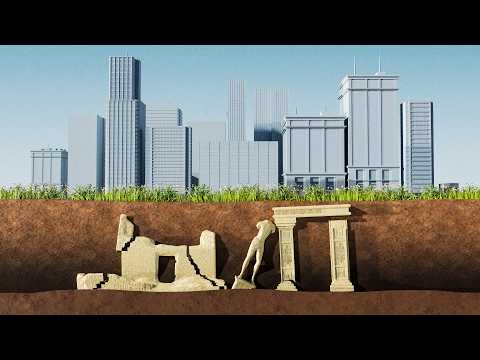
Ancient ruins are often found underground due to the continuous rebuilding of cities on top of previous structures, driven by natural disasters, urban development, and the need for improved infrastructure. This phenomenon is evident in cities like Rome, Troy, and Seattle, where layers of history are buried beneath modern streets.
Cities around the world are often built upon layers of history, with ancient ruins lying buried beneath modern streets. This phenomenon raises intriguing questions about urban development and the passage of time. In this article, we will explore why ancient ruins are found underground, examining examples from Rome, Troy, and Seattle, and uncovering the reasons behind this fascinating aspect of urban archaeology.
The Roman Forum, as it appeared in 1864, showcases a vibrant historical landscape. However, today it is a mere shadow of its former self, with much of its grandeur hidden beneath layers of modern construction. Archaeologists have uncovered a world of ruins deep underground, revealing that the city has risen by more than 10 meters over the centuries. This rise is not unique to Rome; it is a global phenomenon where ancient cities are often forgotten as new ones are built on top.
The ancient city of Troy serves as a prime example of this layered history. Rebuilt ten times, Troy consists of ten distinct layers, each representing a different civilization that occupied the site. This practice of building on top of previous structures is common in many ancient cities, where the remnants of past civilizations are gradually buried under new developments.
The question arises: why do cities build on top of each other? One significant reason is the aftermath of disasters. After the Great Fire of Rome in the first century, much of the city was destroyed. Instead of clearing the rubble, it was more efficient to flatten the debris and construct new buildings on top. This process led to a gradual increase in street levels, as new constructions were built higher to match the raised streets, effectively burying older ruins.
A striking example of this layering can be seen in the Basilica of San Clemente in Rome. The current structure, dating back to the 12th century, was built atop a 4th-century church, which itself was constructed over a mysterious temple. This layering continues down to an ancient house, with the entire valley now 18 meters higher than it was in the first century. The history of this site was largely forgotten until archaeologists began excavating in the 1800s, revealing the rich tapestry of its past.
In the Middle East, the phenomenon of layered cities is exemplified by the presence of tells—artificial hills formed by centuries of civilizations building on top of one another. These tells, such as those found near Tel Aviv, conceal a wealth of ancient ruins within their mounds. The ancient city of Troy, which began as a small settlement around 3000 BC, is one of the most notable examples of this practice, with its layers representing various civilizations from the Persians to the Romans.
While many cities rise due to construction, others face the opposite problem: sinking. For instance, Shanghai is currently sinking at a rate of approximately 1 cm per year due to the excessive pumping of groundwater. This has led to significant subsidence, with the city shrinking by around 3 meters over the last century. When cities sink below sea level, the only viable solution is often to build on top of the existing structures, leading to further layers of history being buried.
Seattle, despite being a relatively young city at just 175 years old, has its own underground network of streets and abandoned buildings. Following a devastating fire in 1889, the city took the opportunity to redesign its infrastructure. To combat flooding, the streets were raised, and buildings were constructed above the old city, resulting in a unique situation where structures sat two stories below street level for a time. This transformation left behind a well-preserved glimpse into the city’s past, hidden beneath the modern urban landscape.
The phenomenon of ancient ruins lying underground is a testament to the resilience and adaptability of human civilization. As cities evolve, they often bury their past, creating a complex tapestry of history that archaeologists continue to uncover. From the layered streets of Rome to the tells of the Middle East and the hidden networks of Seattle, the stories of our ancestors remain just beneath the surface, waiting to be discovered. Understanding this layered history not only enriches our knowledge of the past but also highlights the ongoing relationship between urban development and historical preservation.



















