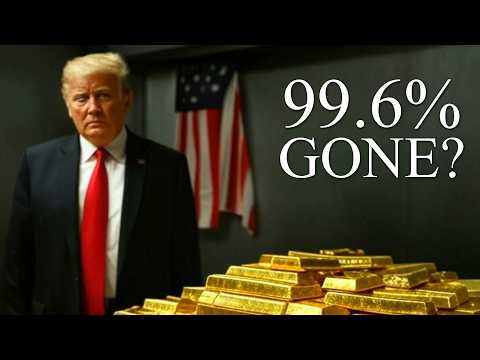
This article explores the complex history of America's gold reserves, the implications of the Federal Reserve's control over gold, and the constitutional concerns surrounding the nationalization of gold under Franklin D. Roosevelt. It reveals that only 0.04% of the gold remains unencumbered by liens, raising questions about transparency and accountability in the U.S. financial system.
The story of America's gold reserves is shrouded in secrecy and controversy. With less than 0.04% of the gold owned by the United States remaining unencumbered, questions arise about the Federal Reserve's role and the historical context of gold nationalization. This article delves into the intricacies of America's gold, the implications of its management, and the constitutional concerns that have emerged over the years.
In 1933, President Franklin Delano Roosevelt signed an executive order that nationalized all gold held by the public. This order required citizens to turn over their gold coins, bullion, and certificates to Federal Reserve banks. The rationale behind this move was to stabilize the economy during the Great Depression, but it raised significant legal and ethical questions.
The term "hoarding" was defined in the executive order as the withdrawal of gold from recognized channels of trade. Interestingly, while citizens were discouraged from saving gold, they were encouraged to hoard Federal Reserve notes, which are essentially promises to pay nothing. This contradiction highlights the government's stance on currency versus tangible assets like gold.
The Federal Reserve does not own gold outright; instead, it holds a lien on nearly all of America's gold reserves. This means that while the gold technically belongs to the U.S. government, the Federal Reserve has a claim over it, complicating the ownership narrative.
Paul Warburg, a key architect of the Federal Reserve System, was instrumental in shaping the monetary policy that led to the nationalization of gold. His influence extended to advising Roosevelt, raising concerns about the motivations behind the gold confiscation. Warburg's vision of a world government, whether by conquest or consent, adds another layer of complexity to the discussion.
The nationalization of gold raises significant constitutional issues. Article I, Section 10 of the U.S. Constitution states that no state shall emit bills of credit or make anything but gold and silver coin a tender in payment of debts. Roosevelt's actions effectively outlawed gold as money, which some argue constitutes treason against the Constitution.
Federal Reserve notes, which replaced gold-backed currency, are essentially IOUs from the government. Initially, these notes were redeemable in gold, but as the government issued more currency than it had gold to back it, the system became unsustainable. This discrepancy is at the heart of why gold was deemed dangerous by the government—it threatened to expose the underlying fraud of the fiat currency system.
As of now, the U.S. Treasury holds approximately $11 billion in gold reserves, but this is offset by liabilities for gold certificates issued to the Federal Reserve. The gold certificates represent a claim on the gold reserves, but they also indicate that the Federal Reserve has loaned cash to the government with gold as collateral.
Gold certificates are no longer physical currency but rather book-entry transactions that represent the monetization of government-owned gold. The Federal Reserve Bank of New York issues and redeems these certificates, which complicates the understanding of who truly owns the gold.
The lack of transparency surrounding America's gold reserves has led to calls for a real audit of the Federal Reserve and the U.S. gold stocks. With only 0.04% of the gold remaining unencumbered, the question of accountability becomes paramount. Why is there resistance to auditing these reserves, and what might be uncovered if such an audit were conducted?
The story of America's gold is not just about precious metal; it is a narrative intertwined with constitutional rights, economic policy, and the complexities of modern finance. As we continue to navigate the implications of the Federal Reserve's control over gold, the need for transparency and accountability remains critical. Understanding the past can help inform our future decisions regarding monetary policy and the role of gold in our economy.