
This blog post explores the significant events and societal impacts of World War II, focusing on the home front mobilization, wartime propaganda, the contributions of various demographic groups, and the conclusion of the war, including the use of atomic bombs and the establishment of the United Nations.
World War II, often referred to as "The Good War," spanned from 1939 to 1945, with the United States entering the conflict in 1941. This blog post delves into the home front mobilization, the societal impacts of the war, and the eventual conclusion of the conflict.
The mobilization for World War II involved significant government control over business and industry, similar to the measures taken during World War I. Key organizations such as the Office of War Production Board and the Office of War Mobilization were established to oversee production and resource allocation. The Office of Price Administration (OPA) was responsible for setting prices and rationing goods to manage inflation and ensure a steady supply for soldiers on the front lines.
To finance the war, the U.S. government relied on deficit spending, war bonds, and increased income taxes. By the end of the war, the national debt had soared to $250 billion, highlighting the immense scale of the conflict. The war effort also led to a booming economy, effectively ending the Great Depression, with unemployment rates dropping to around 1%.
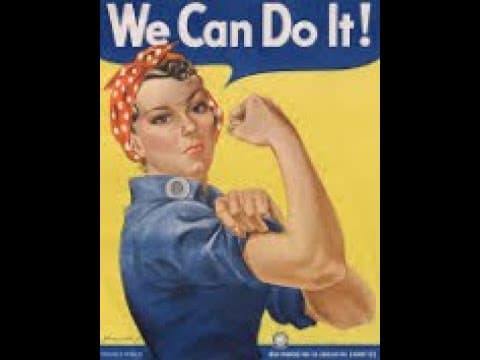
Wartime propaganda played a crucial role in uniting the American public behind the war effort. The Office of War Information controlled media narratives, ensuring that movies, radio broadcasts, and popular music supported the war. The famous song "Rosie the Riveter" became an anthem for women joining the workforce, symbolizing the collective effort of Americans during the war.
African Americans served in segregated units during the war, with civil rights leaders promoting the "Double V" slogan, advocating for victory over fascism abroad and segregation at home. Organizations like the NAACP saw increased membership, and the Tuskegee Airmen gained fame for their distinguished service. The war marked the last instance of segregated military service, as the Korean War would see integrated forces.
The Bracero Program encouraged Mexican laborers to work in the U.S. during the war, leading to a significant influx of Mexican immigrants. However, this also resulted in racial tensions, exemplified by the Zoot Suit Riots in 1943, where Hispanic teenagers clashed with military personnel in San Diego.
American Indians, notably the Navajo Code Talkers, played a vital role in military communications. Conversely, Japanese Americans faced severe discrimination, leading to Executive Order 9066, which resulted in their internment in relocation camps. The Supreme Court upheld this decision in the 1944 case of Korematsu v. United States, citing wartime security.
The war saw approximately six million women enter the workforce, symbolized by the iconic image of Rosie the Riveter. This shift not only contributed to the war effort but also laid the groundwork for future movements toward gender equality in the workplace.
The war in Europe involved two main theaters of operation: the fight against Germany and the subsequent campaign against Japan. Key battles included the Battle of Stalingrad, which marked a turning point against the Germans, and the D-Day invasion on June 6, 1944, where Allied forces stormed the beaches of Normandy.
The Battle of the Bulge represented Hitler's last major offensive, but the Allies ultimately prevailed, leading to Germany's surrender and the liberation of concentration camps, revealing the horrors of the Holocaust.
In the Pacific, the U.S. adopted an island-hopping strategy, focusing on capturing strategic islands while bypassing others. The Battle of Midway in 1942 was a significant turning point, halting Japanese expansion. The war culminated in the dropping of atomic bombs on Hiroshima and Nagasaki in August 1945, leading to Japan's surrender.
The wartime conferences among the leaders of the United States, Great Britain, and the Soviet Union, known as the Big Three, were crucial in planning post-war strategies. The Yalta Conference established plans for dividing Germany into occupation zones and promoting free elections in Eastern Europe, although these plans were not fully realized.
The United Nations was created to promote international peace and cooperation, marking a significant shift from the League of Nations' failure after World War I. The U.S. played a leading role in its formation, reflecting a commitment to internationalism.
World War II remains the deadliest and largest conflict in human history, resulting in a massive national debt but also establishing the United States as a superpower. The war's conclusion led to a new world order, with the U.S. and the Soviet Union emerging as rival superpowers, setting the stage for the Cold War that would dominate global politics for the next several decades.
In summary, World War II not only reshaped the geopolitical landscape but also had profound effects on American society, paving the way for future civil rights movements and international cooperation.



















