The trade of Kyrie Irving from the Cleveland Cavaliers to the Boston Celtics in 2017 was a pivotal moment in NBA history. It not only reshaped the Cavaliers' roster but also influenced the dynamics of the Eastern Conference and LeBron James' future. This blog post explores the circumstances leading to the trade, the negotiations involved, and the long-term effects on both teams.
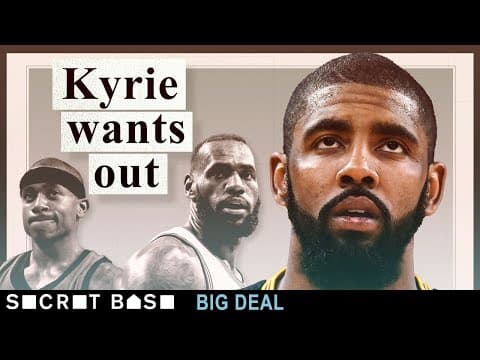
In the summer of 2017, the Cleveland Cavaliers faced a significant dilemma when their star point guard, Kyrie Irving, requested a trade. This request came just a year after the Cavaliers had won the NBA Championship, raising questions about the team's future and the stability of their roster. The trade that followed would not only alter the Cavaliers but also reshape the Eastern Conference and impact the trajectory of LeBron James' career.
After a disappointing end to the 2016-2017 season, where the Cavaliers lost to the Golden State Warriors in the NBA Finals, tensions began to rise within the team. LeBron James, the team's leader, publicly stated that the Cavaliers needed to make roster changes to remain competitive. However, the Cavaliers were already over the salary cap and had recently parted ways with their general manager, complicating their ability to make significant moves.
Kyrie Irving, feeling overshadowed by LeBron and wanting to be the focal point of a team, requested a trade. This request put the Cavaliers in a precarious position, as they had to decide whether to keep Irving or trade him while also considering LeBron's impending free agency.
The Cavaliers faced four potential strategies regarding Kyrie Irving:
Ultimately, the Cavaliers decided to explore immediate trade options for Kyrie.
The Cavaliers began discussions with several teams, including:
After exploring these options, the Cavaliers turned their attention to the Boston Celtics.
In August 2017, the Cavaliers and Celtics struck a deal that sent Kyrie Irving to Boston in exchange for Isaiah Thomas, Jae Crowder, Ante Zizic, and a 2018 first-round pick. This trade was initially hailed as a masterstroke for the Cavaliers, as it provided them with both immediate contributors and assets for the future.
Initially, the trade seemed to work out for the Cavaliers. They made it to the NBA Finals in 2018, largely due to LeBron's extraordinary performance. However, the win-now aspect of the trade faltered as Thomas struggled to regain his form after his injury, and the Cavaliers eventually traded him and Crowder away.
On the rebuilding side, the 2018 first-round pick turned into Collin Sexton, who showed promise as a young player. Following LeBron's departure in 2018, the Cavaliers used this pick to continue their rebuilding process, eventually leading to the acquisition of Donovan Mitchell in 2022.
The trade of Kyrie Irving was a pivotal moment for the Cleveland Cavaliers. It allowed them to navigate a difficult situation with a disgruntled star while also setting the stage for future success. Although the immediate results were mixed, the long-term implications of the trade ultimately benefited the franchise. The Cavaliers managed to rebuild while remaining competitive, a feat that many thought impossible when Irving first requested a trade.
In retrospect, the trade not only reshaped the Cavaliers but also had lasting effects on the Eastern Conference and the careers of the players involved. For a team that had to part ways with a future Hall of Famer, the outcome was not as bleak as it could have been, showcasing the complexities of NBA trades and team dynamics.