
This blog post explores the transformation of German society under Nazi rule during World War II, focusing on the shift to a war economy, the growing opposition to the regime, and the effects of Total War on the German populace from 1939 to 1945.
This blog post delves into the profound changes experienced by the German people during World War II, particularly from 1939 to 1945. It examines the transition to a war economy, the rise of opposition against the Nazi regime, and the consequences of Total War on everyday life in Germany.
When World War II began in September 1939, many Germans initially did not face significant hardships. The early years of the war saw Germany expand its territory, bringing economic benefits. However, as the war progressed, rationing was introduced, and the German populace began to suffer from shortages and frequent Allied bombing raids.
In December 1939, Hitler declared that Germany would transition to a war economy. By 1941, military-related goods constituted 55% of the workforce, and the production of tanks and aircraft surged. Albert Speer, appointed as Minister of Armaments and War Production in 1942, implemented policies to increase factory independence while maintaining central control. This shift led to a decrease in consumer goods and increased hardship for the German people.
The first winter of the war was particularly harsh, with temperatures plummeting and coal shortages affecting heating. Rationing became a necessity, with color-coded ration cards issued to manage the distribution of food, clothing, and other essentials. Jewish citizens faced even stricter rationing, marked by a red 'J' on their cards, and were often limited to shopping at specific times.
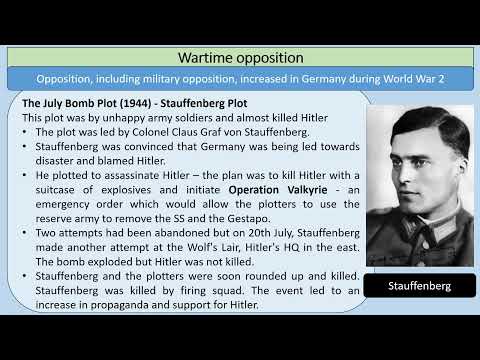
As the war continued, opposition to the Nazi regime began to grow, including from within the military. Notable events included the Stauffenberg plot, which aimed to assassinate Hitler in July 1944.
Colonel Klaus Graf von Stauffenberg led the July bomb plot, believing that Hitler was leading Germany to disaster. Although the assassination attempt failed, it resulted in increased propaganda and repression against dissenters.
Prominent figures like Cardinal Galen and Dietrich Bonhoeffer spoke out against Nazi policies, particularly regarding the euthanasia program and the treatment of Jews. Galen's sermons halted the euthanasia program, while Bonhoeffer joined the resistance and helped Jews escape, ultimately leading to his arrest and execution.
The White Rose group, led by Hans and Sophie Scholl, produced anti-Nazi leaflets urging Germans to resist. Their efforts culminated in their arrest and execution in 1943, symbolizing the bravery of youth opposition.
The Rosenstrasse protests in February 1943 saw Aryan wives of Jewish men successfully demand the release of their husbands from deportation. This event highlighted the potential for organized resistance against the regime.
The defeat at Stalingrad in early 1943 marked a turning point, leading to the implementation of Total War policies aimed at mobilizing all aspects of German society for the war effort.
In 1943, Goebbels called for the mobilization of women into the workforce, but many were reluctant to leave their homes. Despite this, the number of women in war industries increased significantly.
Allied bombing raids intensified, particularly in cities like Hamburg and Dresden, leading to widespread destruction and loss of life. The bombing campaigns severely impacted civilian morale and living conditions.
As the war dragged on, shortages of food and essential goods worsened. The Nazi regime's focus on military production led to the closure of non-essential businesses and a decline in civilian life. The Volksturm, a national militia, was formed to defend Germany, further illustrating the desperation of the regime.
By 1945, Germany was in chaos, facing military defeat and societal breakdown. The war had transformed the lives of the German people, leading to starvation, loss of morale, and fear. The impact of World War II on Germany was profound, shaping the course of history and leaving a lasting legacy on the nation and its people.



















