Barry Weiss's recent appointment as editor-in-chief of CBS News raises concerns about the future of journalism at the network. With her controversial background and ties to billionaire interests, the potential for biased reporting and editorial influence is significant. This blog explores Weiss's career, her views, and the implications of her leadership on CBS News and the broader media landscape.
In a significant shift in the landscape of American journalism, CBS News has appointed Barry Weiss as its new editor-in-chief. This decision comes amid a backdrop of increasing concern about the influence of billionaires on media organizations and the potential for biased reporting. In this blog post, we will explore Weiss's background, her controversial views, and what her leadership might mean for CBS News and the broader media landscape.
CBS News has long been regarded as one of the most trusted names in American journalism, known for its historical reporting on pivotal events such as JFK's assassination and Edward Armor Maro's "Harvest of Shame." However, recent developments, particularly the merger of CBS's parent company, Paramount, with Sky Dance Media, have raised questions about the future direction of the network.
The merger, largely financed by billionaire Larry Ellison, has already led to significant changes within CBS News. As part of the deal, Sky Dance committed to adopting measures aimed at rooting out bias in national news media. This included the appointment of a new ombudsman with ties to conservative think tanks, signaling a shift in editorial direction.
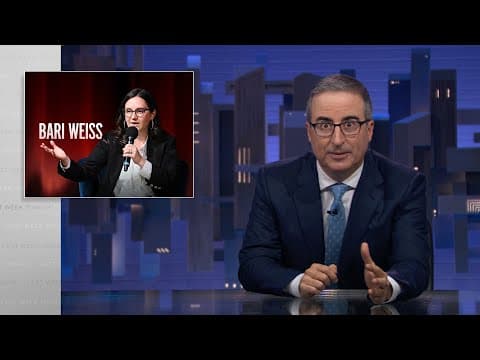
Barry Weiss is a polarizing figure in journalism, known for her contrarian views and her self-identification as politically homeless. Despite her background as a liberal, Weiss has often found herself at odds with mainstream liberal thought, which has garnered her both admirers and critics. Her career took off when she joined the op-ed page of the New York Times in 2017, where she was tasked with bringing in diverse voices that were often overlooked.
Weiss's editorial style has been characterized by provocative pieces that challenge prevailing narratives. For instance, she has argued that the left has gone too far in policing cultural appropriation and has criticized progressive prosecutors for undermining law and order. Her approach has often been described as irresponsible, with critics pointing to instances of poor fact-checking and misleading claims in her work.
After leaving the New York Times, Weiss founded The Free Press, a media company that has attracted significant funding from conservative billionaires. The publication has positioned itself as a platform for "honest news for sane people," but its content has often leaned towards reinforcing right-leaning narratives. Despite its growth to 1.5 million readers, only a small fraction of its audience pays for subscriptions, raising questions about its financial viability and editorial independence.
Several articles published by The Free Press have sparked controversy due to their lack of rigorous fact-checking. For example, a piece by Jamie Reid, a former case worker at a transgender clinic, claimed that the clinic was harming patients. While the article led to an investigation by the Missouri attorney general, subsequent reporting revealed that many of Reid's claims were unsubstantiated and contradicted by former patients and parents.
Similarly, Weiss's publication has been criticized for its coverage of crime rates in Austin, which misrepresented data to support a narrative of rising crime under a progressive district attorney. These examples highlight the potential dangers of placing someone with Weiss's editorial history in charge of a major news organization.
In addition to her role at The Free Press, Weiss co-founded the University of Austin, which aims to challenge what she perceives as the ideological dominance of progressive thought in higher education. The university has attracted scrutiny for its unconventional approach and its reliance on funding from controversial billionaires.
Weiss's appointment at CBS News raises significant concerns about the future of journalism at the network. Critics argue that her background in opinion journalism and her ties to billionaire interests could lead to biased reporting and a departure from the network's commitment to impartial news coverage. The potential for editorial influence from wealthy donors is particularly alarming in an era where trust in media is already fragile.
The trend of billionaires taking control of major news organizations is not new, with figures like Jeff Bezos at the Washington Post and Patrick Soon-Shiong at the LA Times also exerting influence over editorial decisions. As Weiss takes the helm at CBS News, it is crucial for audiences to remain vigilant about the potential changes in coverage and editorial direction.
Barry Weiss's appointment as editor-in-chief of CBS News marks a pivotal moment in the evolution of American journalism. As she brings her controversial views and editorial style to one of the country's most trusted news organizations, the implications for journalistic integrity and public trust are profound. It remains to be seen how this leadership change will affect CBS News and whether it will continue to uphold its legacy of reliable reporting in an increasingly polarized media landscape.