An insider in the Iranian military predicts the inevitable collapse of the Islamic Republic as its navy is destroyed, missile stocks deplete, and internal factions clash. Despite the president's calls for peace, the IRGC continues attacks, leading to regional backlash and escalating instability. The new supreme leader remains unseen, symbolizing a regime in crisis and disarray.
An officer within the Iranian military has boldly declared that the fall of the Islamic Republic is inevitable. This statement reflects the dire situation unfolding within Iran, where internal divisions, military defeats, and leadership uncertainties are converging to threaten the regime's survival.
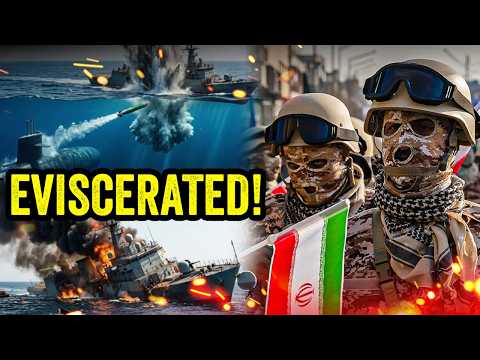
Recent developments reveal a catastrophic blow to Iran's naval capabilities. The United States and Israel have reportedly destroyed over 30 Iranian naval vessels, including the prized Shahed Bagari carrier. According to Sentcom, no Iranian ships remain operational in critical waterways such as the Arabian Sea, the Strait of Hormuz, and the Gulf of Oman. This effectively eliminates Iran's ability to threaten global shipping lanes.
Secretary of State Marco Rubio emphasized the success of these military operations, noting the daily depletion of Iran's missile stockpiles, launchers, and naval forces. Without a functional navy, Iran's capacity to close the Strait of Hormuz permanently is lost, although residual threats remain through mines, fast boats, and drone strikes. However, U.S. and Israeli forces continue to degrade even these remaining capabilities.
Turkey, a NATO member, has responded to Iranian missile attacks by summoning Iran's ambassador, signaling escalating tensions. The missile was intercepted by NATO defenses in Turkish airspace, raising concerns about potential triggers for collective defense under Article 5.
President Erdogan of Turkey appears poised to capitalize on Iran's weakening position. Iran's destruction removes a significant obstacle to Turkish regional ambitions across the Middle East, from the Levant to Iraq and into Africa. Each Iranian provocation provides Erdogan with justification to expand Turkish influence, a development Washington reportedly supports as part of a broader strategy to transfer Middle East security responsibilities to regional allies under the Abraham Accords.
A striking development within Iran is the apparent split between the elected president, Masoud Peskin, and the Islamic Revolutionary Guard Corps (IRGC). In an unprecedented move, President Peskin publicly apologized to Gulf states for Iranian attacks and called for a cessation of hostilities unless Iran is attacked first.
However, the IRGC ignored this directive, continuing missile strikes and drone attacks on Gulf states, including Dubai and Abu Dhabi. This defiance highlights the IRGC's loyalty solely to the Supreme Leader, not the president, underscoring a deep factional divide within the regime.
Iran's aggressive actions have provoked strong responses from neighboring countries. The United Arab Emirates has retaliated, Saudi Arabia is preparing countermeasures, Qatar has expelled Hamas leadership, and Azerbaijan has closed airspace and border crossings following Iranian drone strikes. The region is increasingly united against Tehran's destabilizing tactics.
According to a report by Iranian journalist Omid Habibinia, who has contacts within Iran's security apparatus, the IRGC is facing severe operational challenges. An active-duty Iranian military officer described the IRGC as "effectively homeless" in urban areas due to relentless U.S. and Israeli strikes targeting their command posts and relocation sites.
The IRGC has resorted to hiding within civilian structures such as hospitals, schools, mosques, and residential neighborhoods, mirroring tactics used by Hamas in Gaza. The Kurdish Peshmerga, a battle-hardened force in Iraqi Kurdistan, poses a significant threat to the IRGC, potentially opening a new front on Iran's western border.
This insider perspective suggests the IRGC is nearing organizational collapse, making the fall of the regime increasingly likely.
Compounding the regime's troubles is the mysterious absence of the new Supreme Leader, who has not been seen publicly since the onset of the conflict. This absence symbolizes the regime's instability and the challenges in maintaining cohesion amid military defeats and internal dissent.
The Iranian president's calls for peace are overshadowed by the IRGC's continued aggression, the destruction of the navy, depletion of missile stocks, and regional backlash. Commanders are reportedly fleeing, proxies are fragmented, and neighboring countries are preparing retaliation.
An officer within the regime has openly stated that collapse is imminent. While the fog of war means situations can evolve, current patterns indicate that the Islamic Republic's 47-year reign of terroristic tyranny is unraveling in real time, just ten days into this latest phase of conflict.
The world watches closely as Iran faces unprecedented internal and external pressures that may soon bring about a historic transformation in the Middle East.