
This blog post explores the complex tunnel systems built by the Viet Cong during the Vietnam War, detailing their construction, strategic significance, and the ingenious defensive mechanisms that allowed them to withstand American military efforts.
The Vietnam War, lasting from 1955 to 1975, was a significant conflict primarily fought in South Vietnam between the Viet Cong guerrillas and the United States. The war's origins are rooted in the decolonization efforts of the 1940s, as France attempted to reclaim its lost colonies in Indochina but was defeated by the communist-led independence movement. This led to the division of Vietnam into the communist North and the Western-aligned South, where the Viet Cong emerged to fight for reunification.
To resist American attacks, the Viet Cong constructed extensive underground tunnel systems, the most famous being the Cu Chi tunnels. This network spanned approximately 200 kilometers and was strategically located in the Iron Triangle, a crucial area for receiving supplies and reinforcements from North Vietnam and Cambodia.
The tunnels were primarily dug into alluvial soil, which is rich in iron and becomes softer during the monsoon season, allowing for easier excavation. The construction process typically involved two people digging while two to three others removed the excavated earth. The tunnels were designed with zigzag patterns to minimize enemy fire and reduce the impact of explosions.
The average width of the tunnels ranged from 80 cm to 1.2 m, with a soil thickness of at least 1.5 m above to protect against detection and bombardment. Entrances were cleverly camouflaged using wooden boards covered with soil and leaves, often hidden in pig pens to avoid American scrutiny.
Contrary to the perception of simple underground passages, these tunnels housed entire communities, including soldiers and civilians. They featured multiple levels, secret areas, hospitals, living quarters, storage facilities, and even kitchens. Ventilation was ensured through openings, and water basins were strategically placed to manage flooding and mitigate the effects of tear gas.
Living conditions were harsh, with limited food and water supplies, and inhabitants faced constant threats from disease and pests.
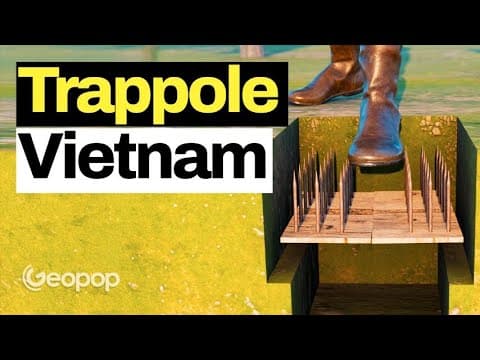
The Viet Cong employed a variety of ingenious traps to protect their tunnel systems. Some notable traps included:
These traps not only inflicted casualties but also severely impacted the morale of American soldiers, contributing to the psychological warfare of the conflict.
In response to the challenges posed by the tunnels, the U.S. military launched Operation Crimp in 1966, aiming to bomb suspected tunnel locations. However, the resilient soil composition often withstood aerial bombardments. As a result, specialized soldiers known as "tunnel rats" were deployed to navigate and clear the tunnels, often facing deadly traps.
Geologists were later brought in to analyze soil characteristics and improve the effectiveness of tunnel destruction efforts. This led to Operation Cedar Falls in 1967, which involved the use of Agent Orange to clear vegetation and bulldozers to expose tunnel entrances.
Despite these efforts, many tunnels remained intact, showcasing the ingenuity of the Viet Cong's construction and defense strategies.
The Vietnam War highlighted the effectiveness of guerrilla warfare and the strategic use of underground tunnel systems. Today, remnants of these tunnels serve as historical sites, allowing visitors to understand the conditions faced by the Viet Cong and the complexities of the war. The resilience and ingenuity displayed in the construction and defense of these tunnels played a crucial role in the Viet Cong's ability to withstand American military efforts, ultimately contributing to Vietnam's reunification in 1975.



















