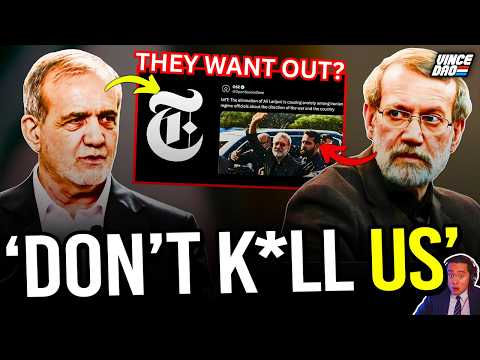
The assassination of Ali Larijani, Iran's top national security official and de facto leader during the war, has triggered widespread panic and anxiety within the Iranian government. This loss of leadership is causing a power vacuum, rampant infighting, and uncertainty about the regime's future, signaling a potential collapse as the government struggles to maintain control amid ongoing targeted assassinations.
Recent developments in Iran have revealed a government in turmoil following the assassination of Ali Larijani, the country's top national security official and de facto leader during the ongoing conflict. This event has sparked widespread panic and anxiety among Iranian leaders, raising questions about the future stability of the regime.
Ali Larijani was considered the glue holding the Iranian government together, particularly bridging the military and political leadership. His role was crucial in overseeing military operations and maintaining cohesion within the regime. The killing of Larijani, reportedly by Israeli forces, has not only removed a key figure but also exposed vulnerabilities in the regime's security.
There was speculation that Larijani was a pragmatist and a potential negotiator who might have been open to diplomatic solutions with the United States. Some feared that his assassination would empower hardliners and the Revolutionary Guard. However, evidence suggests that Larijani publicly opposed negotiations and was instrumental in escalating the conflict, including attacks on Gulf states and energy infrastructure.
This challenges the narrative of Larijani as a moderate and suggests that his removal may strategically weaken the regime's leadership rather than empower hardliners.
The loss of Larijani has created a significant power vacuum. Iranian officials are reportedly anxious and fearful, with some shaking upon hearing the news of his death. The regime's leadership is now uncertain about who will take orders and whether lower-level officials promoted to fill the void possess the necessary competence or share the same fanaticism.
Since the beginning of the conflict, there has been a wave of targeted assassinations against top Iranian officials, including the former Supreme Leader and the intelligence minister. Despite heightened security protocols, these assassinations continue, demonstrating that Iranian leaders cannot hide from their adversaries.
This ongoing campaign has led to a domino effect, further destabilizing the regime and fueling anxiety among remaining officials.
The absence of strong leadership is likely to lead to rampant infighting between the military and political factions within Iran. This could manifest as coup attempts, military mutinies, or other forms of internal conflict. Without a competent leader to unify the government, the cracks within the regime are becoming increasingly apparent.
The situation in Iran can be compared to other instances where the assassination of a leader initially unites a group but eventually leads to dysfunction and infighting. For example, the assassination of Charlie Kurt led to initial unity among his supporters but later caused division and chaos within the movement.
Similarly, Iran's regime may experience an initial surge of outrage and unity, but the lack of leadership will likely cause instability over time.
Israel's role in targeting Iranian officials, including Larijani, has been pivotal in destabilizing the regime. Israeli airstrikes have killed multiple senior officials, further weakening Iran's leadership structure.
There is speculation that these actions are part of a broader strategy to decapitate the regime and force its collapse, especially as reopening military routes like the Strait of Hormuz has proven difficult.
The Iranian regime is currently in a state of panic and disarray. The loss of Larijani, who was the last bastion holding the government together, signals a regime that is imploding from within. The power vacuum and ongoing assassinations raise serious doubts about the regime's ability to govern effectively or maintain stability.
While public statements from Iranian officials may claim continued resistance and unity, privately there is significant concern about the regime's survival and the possibility of seeking peace to avoid further chaos.
The assassination of Ali Larijani has had a profound impact on the Iranian government, exposing deep vulnerabilities and triggering widespread panic among its leaders. The loss of key leadership figures is causing a power vacuum and internal strife, suggesting that the regime is on the brink of collapse.
This situation underscores the strategic effectiveness of targeted assassinations in weakening authoritarian regimes and highlights the complex dynamics at play in the ongoing conflict involving Iran.
As the situation develops, the world watches closely to see how Iran's government will respond to these unprecedented challenges and whether it can maintain control or ultimately implode.
Your thoughts on this evolving situation are welcome. The implications of these events are significant for regional stability and global security.