The Islamic Republic of Iran is facing an unprecedented crisis as security forces lose control over major cities including Tehran. Despite brutal crackdowns, internet shutdowns, and death penalties for protesters, demonstrations continue to grow. The Supreme Leader has deployed the IRGC to suppress dissent amid fears of defections within the police and military. Reports indicate hundreds of deaths, signaling a critical turning point in Iran's political landscape.
The Islamic Republic of Iran is currently experiencing a profound crisis of control as widespread protests engulf the nation. Recent reports indicate that security forces have been pushed out of not just one or two, but three major cities, including the capital, Tehran. This marks a significant turning point in the ongoing unrest and suggests that the regime's grip on power is weakening.
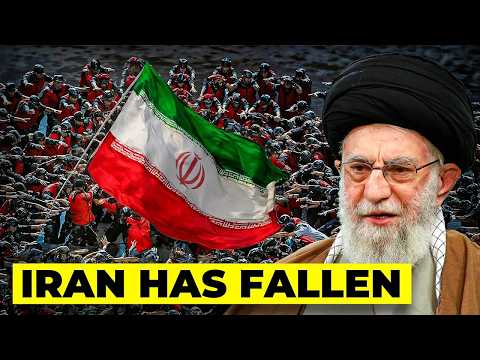
According to multiple sources, Iran's second largest city, fifth largest city, and Tehran itself have seen security forces lose practical control. If these developments hold, it could mean there is no way back for the Islamic regime. This alarming situation has prompted Iran's Supreme Leader, Ayatollah Ali Khamenei, to place security services on the highest alert—higher than during the 12-day war with Israel.
In response to the escalating unrest, the Supreme Leader has ordered the IRGC to take charge of the crackdown. This move is driven by fears of defections within the regular armed forces and police. Videos have already surfaced showing police officers clapping and waving to protesters, effectively joining the demonstrations. Many police officers find it difficult to use lethal force against protesters who are from their own neighborhoods or even their families.
The involvement of the military signals a more severe crackdown ahead, which is a worrying sign for protesters. Despite this, the size and intensity of the protests continue to grow.
Over the past two days, the Iranian government has implemented a near-total internet shutdown and issued a series of threats to quell the unrest. However, videos and reports from cities such as Tehran, Esfahan, Mashhad, Qum, and others show that rallies are increasing in size daily.
Authorities have escalated their response by ordering direct death penalties for anyone caught protesting on the streets. The Supreme Leader has labeled protesters as mercenaries allied with former U.S. President Donald Trump and vowed to defend the revolution from these "terrorists." This rhetoric has been accompanied by chants of "Death to America," indicating a major confrontation is imminent.
Some of the largest demonstrations have taken place in Mashhad, the birthplace of Haman, but the Supreme Leader's patience is wearing thin. Unfortunately, the crackdown has turned violent. Videos show IRGC carriers firing on Iranian citizens, with at least one protester shot in the head in Tehran, bleeding from the eye and mouth.
Eyewitnesses report that at least 200 people have been killed in Tehran alone, with the actual number likely higher. In Karaj, a large number of deaths have also been reported. One individual recounted identifying his wife's body among approximately 200 corpses.
Doctors in Tehran confirm these figures, with six hospitals recording at least 217 deaths in a single night, most caused by live ammunition. Authorities have been removing corpses from hospitals, and many of the dead are young people, including several killed outside Tehran's police station where security forces opened fire with machine guns, killing at least 30 protesters instantly.
In Shiraz, hospital staff report receiving 20 critically injured individuals shot in the head and neck areas, further underscoring the severity of the crackdown.
Despite the brutal repression, protesters continue to take to the streets, even as bullets fly. They are documenting the violence and sharing it with the world, refusing to be silenced. One particularly shocking video shows a protester filming while bullets whiz past, capturing the intensity and danger of the situation.
This resilience is reminiscent of the IRGC's own rise to power in 1979, which was marked by similar violent suppression of dissent. However, this time, the protesters do not appear to be slowing down.
The Iranian government's near-total internet blackout and telephone shutdown have made it difficult to obtain reliable information. The Supreme Leader's call to arms and labeling of protesters as foreign-backed mercenaries reflect the regime's desperation.
This situation highlights the harsh realities of modern warfare, where information control and brutal force are used to maintain power. It also draws parallels to other conflicts, such as the war in Ukraine, where civilians face similar dangers.
In light of these events, independent platforms are crucial for providing uncensored coverage. One such platform, Basics Insider, has been launched to offer unrestricted reporting without advertiser censorship. Funded by viewer support, it aims to provide comprehensive coverage of conflicts and crises like the current situation in Iran.
For those interested in following these developments closely and accessing exclusive content, supporting independent journalism is more important than ever.
The unfolding events in Iran represent a critical moment in the nation's history. The loss of control over major cities, the deployment of the IRGC, the brutal crackdown on protesters, and the growing resistance all point to a revolution in the making. The world watches as Iranians risk their lives to demand change, challenging a regime that has ruled for over four decades.