
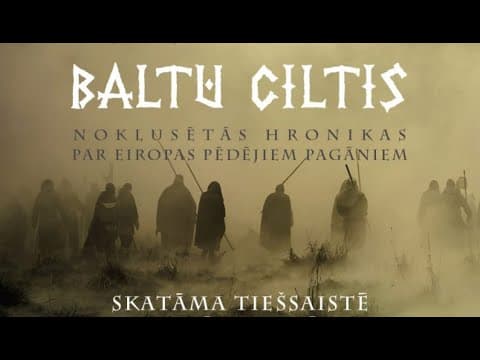
This blog post narrates the story of Lars, a young merchant traveling to the Prussian coasts in the 13th century. It explores the cultural transition from paganism to Christianity in Europe, the challenges faced by merchants, and the significance of trade in shaping societies during this transformative period.
We begin our story in the middle of the Baltic Sea, aboard a Danish trading ship heading towards the Prussian coasts. On this ship, a young merchant feels somewhat uneasy and frightened. We shall call him Lars, a name fitting for a Christian of the 13th century. Historical records, such as the medieval book "Liber Census Daniae," mention a merchant who, under the orders of Danish King Valdemar II, spied on the lands of the Baltic tribes. Lars may have received a similar task from the king, serving as our eyes and ears in the last pagan lands of Europe.
Christianity, spreading from the Roman Empire like an unstoppable wave, swept across all European lands, irrevocably changing the world. Pagan peoples, transitioning to Christianity, not only renounced their gods and the life orders they had created but also gradually adopted the values and customs of Christian European nations. This included a new understanding of governance, property rights, and laws.
The territory of Prussia, inhabited by related Baltic tribes, served as the land border between the last remaining pagans of Europe and the Christian world. Our protagonist, merchant Lars, is headed directly to a port on the Prussian coast.
"If I had known what fate awaited me, I would never have embarked on this journey. But at that time, I was young and knew little about people and the world. However, I was quite adept at my trade. I knew how to find where goods could be bought cheaply and then sought out where they could be sold at a higher price."
Lars had come to the Prussian lands to trade sword blades, as he knew that such durable swords could not be made from the local ore. In the port, he met an old friend of his father, also a merchant, who had come to buy amber. This friend highly valued the goods Lars had brought and advised him not to travel through pagan lands without local protection.
Written records mention the main sanctuary of the Prussians, Romuva, where they honored their pagan gods. However, the average life expectancy during this time was only 25 to 30 years, attributed to poor nutrition, harsh climatic conditions, unsanitary environments, and a lack of medical resources.
Lars's mission was not just about trade; it was also about gathering intelligence. He might have been tasked by King Valdemar II to spy on the Baltic tribes. In this story, he serves as our eyes and ears in the last pagan lands of Europe.
As we follow Lars on his journey, we witness the profound changes occurring in Europe as Christianity spreads. The transition from paganism to Christianity was not merely a change of faith but a complete transformation of societal values and norms. Lars's experiences as a merchant highlight the complexities of trade and cultural exchange during this pivotal time in history. His story is a reflection of the broader narrative of a continent in transition, where the clash of old beliefs and new ideologies shaped the future of Europe.



















