
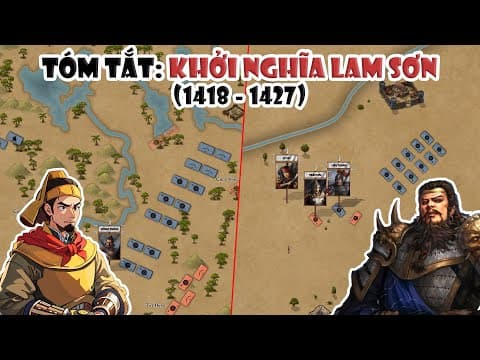
This blog post provides a comprehensive overview of the Lam Son Uprising (1418-1427) led by Lê Lợi against the Ming Dynasty's occupation of Vietnam, detailing the key events, strategies, and outcomes that ultimately led to the establishment of the Lê Dynasty.
In the early 15th century, Vietnam faced a dire situation under the oppressive rule of the Ming Dynasty. Following the fall of the Hồ Dynasty in 1407, the Ming established control over Vietnam, leading to widespread discontent among the Vietnamese people. This blog post explores the Lam Son Uprising (1418-1427), a significant rebellion led by Lê Lợi that ultimately restored Vietnamese independence and established the Lê Dynasty.
In 1407, the Ming Dynasty invaded Vietnam, overthrowing the Hồ Dynasty and imposing harsh rule over the Vietnamese people. The Hồ regime had been unpopular, and the Ming's arrival was met with resistance. Various uprisings occurred, notably by the Hậu Trần faction, but these efforts were quickly suppressed due to a lack of unity among the leaders.
Amidst the turmoil, Lê Lợi, a nobleman from Lam Sơn, emerged as a key figure in the resistance against the Ming. Known for his generosity and leadership, Lê Lợi had previously served as a military officer under the Hồ Dynasty. Disillusioned by the Ming's brutality, he decided to take action.
In January 1418, Lê Lợi, along with 50 loyal followers, launched a rebellion from the mountains of Lam Sơn. He proclaimed himself the "Bình Định Vương" (King of Pacification) and called upon the Vietnamese people to join the fight against the Ming invaders. The uprising began with a series of strategic attacks against Ming forces, initially achieving some success.
Lê Lợi's forces faced significant challenges, including a well-equipped Ming army of 50,000 troops. Despite this, the resistance managed to inflict heavy casualties on the enemy through guerrilla tactics and ambushes. Notable victories included the battles at Lạc Thủy and Chí Linh, where Lê Lợi's forces demonstrated their resilience and tactical ingenuity.
A pivotal figure in the uprising was Nguyễn Trãi, a brilliant strategist and poet. He joined Lê Lợi's cause and contributed significantly to the planning and execution of military strategies. His writings, particularly the "Bình Ngô Đại Cáo," served to inspire the troops and rally public support.
In 1425, after years of struggle, the tide began to turn in favor of Lê Lợi. The decisive battles at Tốt Động and Chúc Động marked a significant victory for the Lam Sơn forces, resulting in the defeat of the Ming army and boosting the morale of the Vietnamese resistance.
By 1427, Lê Lợi's forces had gained substantial ground, capturing key territories and isolating the remaining Ming strongholds. The siege of Đông Quan (modern-day Hanoi) became the focal point of the final phase of the uprising. Lê Lợi's disciplined army, bolstered by popular support, laid siege to the city, leading to a series of skirmishes and battles.
Faced with overwhelming odds and internal strife, the Ming commanders sought to negotiate peace. Lê Lợi, however, remained resolute in his goal of complete independence. After a series of strategic victories, the Ming forces were forced to retreat, culminating in their withdrawal from Vietnam in late 1427.
The Lam Son Uprising was a monumental event in Vietnamese history, symbolizing the struggle for independence and national identity. Lê Lợi's leadership and the collective efforts of the Vietnamese people led to the establishment of the Lê Dynasty in 1428, marking the beginning of a new era of prosperity and stability for Vietnam. Lê Lợi, later known as Lê Thái Tổ, is celebrated as a national hero, and his legacy continues to inspire generations in Vietnam.



















