
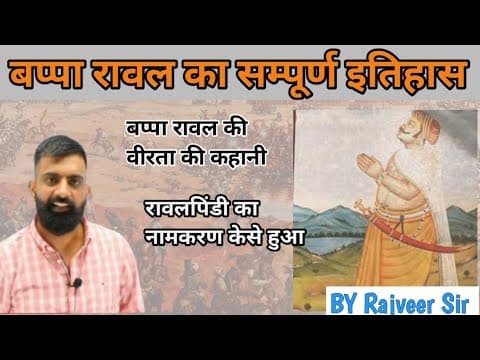
Bappa Rawal, originally named Kal Bhoj, was a significant ruler in Indian history known for his conquests and the establishment of the Mewar kingdom. His legacy includes the title 'Bappa', which signifies respect and honor, and his campaigns against various adversaries, including the capture of Chittorgarh. Bappa Rawal's reign is marked by his devotion to Lord Shiva and his role in protecting Hindu culture during the early Muslim invasions.
Bappa Rawal, a prominent figure in Indian history, is often regarded as the founder of the Mewar kingdom. His story is intertwined with valor, devotion, and the establishment of a legacy that has influenced generations. This blog post delves into the life, conquests, and significance of Bappa Rawal, shedding light on his contributions to Indian history.
Bappa Rawal's real name was Kal Bhoj. The title 'Bappa' is derived from the term used in Gujarat to denote respect, akin to calling someone 'father' or 'paternal figure'. This title reflects the reverence he commanded among his subjects. The term 'Rawal' signifies a king or ruler, and thus, Bappa Rawal can be understood as a title of honor for a king who was seen as a father figure to his people.
Bappa Rawal's reign occurred during a tumultuous period in Indian history, marked by the early Muslim invasions. His lineage is traced back to the Gohil dynasty, and he is often credited with laying the foundation for the Rajput resistance against foreign invasions. His campaigns were not just military endeavors but also efforts to preserve and promote Hindu culture and traditions.
Bappa Rawal is best known for his military campaigns, particularly his conquest of Chittorgarh in 734 AD. This victory was significant as it marked the establishment of Mewar as a formidable kingdom. The conquest was achieved with the blessings of the sage Harit, who played a crucial role in Bappa's ascension to power.
Bappa Rawal was not only a warrior but also a devout follower of Lord Shiva. His governance was characterized by a unique principle where he considered himself a servant of the divine rather than a sovereign ruler. This philosophy is reflected in the way he ruled Mewar, often referring to himself as a minister or 'Diwan' of Lord Shiva.
Bappa Rawal's devotion led to the construction of several temples, including the famous Eklingji temple near Udaipur. These temples served as centers of worship and cultural preservation, reinforcing the spiritual foundation of his kingdom.
Bappa Rawal was honored with the title 'Hindu Surya', which means 'Sun of the Hindus'. This title was bestowed upon him for his efforts in protecting Hindu culture during a time of significant threat from Muslim invaders. His legacy as a protector of Hinduism continued through subsequent generations of Rajput rulers.
Bappa Rawal is also credited with introducing a standardized currency system in Mewar, including the issuance of gold coins weighing 115 grains. This innovation played a crucial role in the economic stability of his kingdom and facilitated trade and commerce.
Bappa Rawal's legacy is a testament to his strength as a ruler, warrior, and devotee. His contributions to the establishment of the Mewar kingdom, his military conquests, and his devotion to Lord Shiva have left an indelible mark on Indian history. As a figure who bridged the gap between divinity and kingship, Bappa Rawal remains a symbol of valor and cultural pride in the face of adversity.



















