
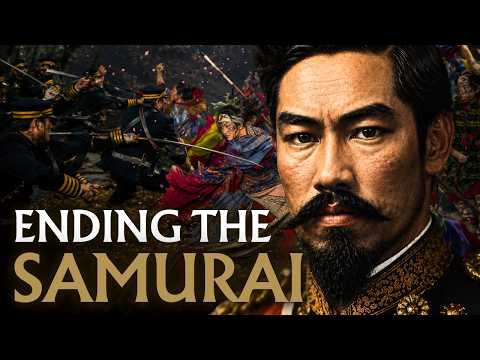
Emperor Meiji, who ascended the throne at just 14, led Japan through a transformative period known as the Meiji Restoration. This era marked the end of feudalism, the establishment of a modern government, and significant industrialization, positioning Japan as a major world power. Despite his role in modernization, debates continue about the implications of his reign, particularly regarding Japan's militaristic expansion in the early 20th century.
Emperor Meiji, born on November 3, 1852, near Kyoto, was a pivotal figure in Japanese history. His reign marked the transition of Japan from a feudal society to a modern state, a period known as the Meiji Restoration. This blog post explores his early life, the socio-political landscape of Japan during his ascent, and the profound changes that occurred under his rule.
Emperor Meiji, originally named Prince Sachi, was the son of Emperor Komei, who ruled during the Edo period. Komei was a traditionalist, advocating for the preservation of Japan's long-standing political and cultural structures. Sachi's mother, Nakayama Yoshiko, was a concubine, and due to the early deaths of Komei's legitimate children, Sachi became the heir apparent.
In the mid-19th century, Japan was a feudal society dominated by the Tokugawa Shogunate, which had been in power since 1603. The shoguns held real power, while the emperor served as a ceremonial figure. Japan had successfully isolated itself from foreign influences for over two centuries, maintaining a homogenous culture and society. However, by the early 19th century, external pressures began to mount, particularly from Western powers seeking trade and diplomatic relations.
The arrival of Commodore Matthew Perry in 1853 marked a turning point. Perry's demands for Japan to open its ports led to the Convention of Kanagawa in 1854, which ended Japan's isolation. This exposure to Western ideas and technologies created a divide within Japanese society: should Japan resist or embrace these changes?
Following the death of his father in 1867, Sachi ascended the throne as Emperor Meiji at just 14 years old. His reign began during a tumultuous period known as Bakumatsu, characterized by political strife between supporters of the Tokugawa Shogunate and those advocating for imperial power.
In January 1868, the Meiji Restoration commenced, effectively ending the shogunate and restoring power to the emperor. This movement was spearheaded by influential lords such as Saigo Takamori and Okubo Toshimichi, who sought to modernize Japan and reduce the shogunate's influence. The restoration was marked by the issuance of the Charter Oath, which outlined the goals of the new government, including the establishment of deliberative assemblies and the end of feudalism.
The Meiji government initiated significant political reforms, including the abolition of the feudal system and the establishment of a centralized government. The daimyos were asked to relinquish their power, leading to the creation of prefectures governed by imperial officials.
The Iwakura Mission, a diplomatic expedition to the United States and Europe, aimed to gather knowledge on industrialization and governance. This mission laid the groundwork for Japan's rapid industrialization, particularly in textiles and railways. By the late 19th century, Japan had developed a modern economy, with a national currency and a banking system.
The Meiji era also saw the establishment of a modern military. A conscription ordinance was introduced, leading to the formation of a national army. The Japanese military adopted Western techniques and technologies, significantly enhancing its capabilities.
As Japan modernized, it began to assert itself regionally. The Treaty of Shimonoseki in 1895 marked Japan's victory over China in the First Sino-Japanese War, establishing Japan as a major power in East Asia. This victory was followed by further territorial expansions, including the annexation of Korea in 1910.
Emperor Meiji's reign was transformative, propelling Japan into the modern world. However, his legacy is complex. While he is credited with modernizing Japan and establishing it as a world power, his era also laid the groundwork for Japan's militaristic expansion in the early 20th century.
Emperor Meiji's impact on Japan is undeniable. His leadership during the Meiji Restoration initiated profound changes that shaped the nation's trajectory. As Japan emerged as a modern state, it also faced the challenges and consequences of its newfound power. The debate continues: was Meiji a visionary leader who modernized Japan, or a figure whose actions contributed to future conflicts? The answer may lie in the complexities of his legacy and the historical context of his reign.



















