
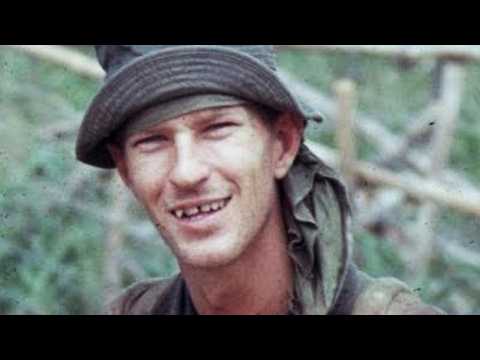
Jerry M. Shriver, known as Mad Dog, was a legendary figure in the Vietnam War, renowned for his bravery and unconventional tactics as a member of the elite MACV-SOG. His story reflects the complexities of war, the bonds formed in combat, and the ultimate sacrifice made by soldiers. Shriver's legacy endures through his heroic actions and the loyalty he inspired in his men.
In the late 1960s, amidst the chaos of the Vietnam War, one man stood out for his extraordinary bravery and unconventional tactics. Staff Sergeant Jerry M. Shriver, known as Mad Dog, became a legendary figure among American troops and the enemy alike. His story is one of heroism, camaraderie, and the harsh realities of war.
In a fierce engagement, North Vietnamese troops pinned down a Hatchet Force of elite American MACV-SOG operators. Despite being outnumbered and outgunned, Shriver and his loyal Montagnard allies refused to back down. Armed with an arsenal of pistols, revolvers, and a sawed-off shotgun, Shriver fought valiantly, calling in for Close Air Support while ensuring his men were evacuated. His defiance was encapsulated in his words: "No, no…I’ve got them right where I want them: surrounded from the inside."
Born on September 24, 1941, in De Funiak Springs, Florida, little is known about Shriver's early life. Inspired by tales of World War II veterans, he enlisted in the Army at a young age. After completing Airborne school, he became a paratrooper with the 101st Airborne Division and later joined the Army Special Forces, earning the coveted Green Beret.
As the Cold War intensified, the U.S. became involved in Vietnam, supporting the South Vietnamese government against the Communist Viet Minh. Shriver arrived in Vietnam in 1966, joining the MACV-SOG, a highly secretive unit tasked with unconventional warfare. Over the next three and a half years, he extended his deployments, spending over 1,000 days in combat.
Shriver's reputation as Mad Dog grew with each mission. Described as the quintessential warrior-loner, he was dedicated to training and preparing for combat. His eccentric personality was evident in his choice of attire, often seen in a blue velvet smoking jacket and derby hat, yet always armed to the teeth. His unconventional approach to warfare included using enemy weapons and carrying multiple firearms.
As a platoon sergeant in the Hatchet Force, Shriver led small units of American operators and Montagnard fighters in reconnaissance and sabotage missions deep behind enemy lines. His leadership and bravery earned him the loyalty of his men, who he supported with supplies and care.
On April 24, 1969, during a raid on an enemy airfield, Shriver and his team faced overwhelming odds. After landing, they were immediately pinned down by enemy fire. Shriver, determined to protect his men, charged towards the enemy positions, armed with an Uzi SMG. He was last seen leading his troops into battle, and despite extensive searches, he was never found.
Jerry M. Shriver was officially listed as Missing in Action at the age of 27. His bravery earned him numerous accolades, including a Silver Star, Bronze Star, and Purple Heart. In 1974, despite his body never being recovered, he was posthumously promoted to Master Sergeant and awarded a second Silver Star.
The story of Jerry M. Shriver, the Mad Dog of Vietnam, is a testament to the courage and sacrifice of soldiers in the face of adversity. His legacy lives on through the memories of those who served alongside him and the impact he had on the Vietnam War. Shriver's life exemplifies the complexities of war, the bonds formed in combat, and the ultimate sacrifice made by those who fight for their country.



















