
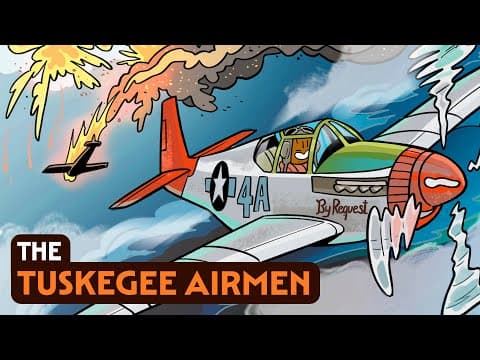
The Tuskegee Airmen, the first African American military aviators in the U.S. Armed Forces, overcame systemic racism and adversity during World War II to achieve remarkable success in combat, ultimately paving the way for desegregation in the military and inspiring future generations.
On July 2, 1943, Second Lieutenant Charles B. Hall made history as he flew his P-40 Warhawk alongside a group of B-25 bombers in the Italian theater of World War II. His mission was to escort these bombers, ensuring their safety from enemy fighters. In a dramatic turn of events, Hall engaged a German fighter, successfully shooting it down, marking the first aerial victory for the 99th Pursuit Squadron and the legendary Tuskegee Airmen.
During the 1940s, African Americans faced pervasive racism that limited their opportunities and aspirations. The establishment of an elite squadron of African American fighter pilots required significant changes on the ground. The Great Depression and the subsequent election of Franklin Delano Roosevelt (FDR) played crucial roles in this transformation. FDR's administration began to court African American voters, who had previously aligned with the Republican Party, leading to a shift in political dynamics.
In 1939, FDR initiated the Civilian Pilot Training Program (CPT) to prepare the nation for potential conflict. This program allowed many white Americans to gain aviation training, but it also laid the groundwork for the creation of segregated training facilities for black pilots at the Tuskegee Institute, thanks to the advocacy of Frederick Patterson.
In 1941, First Lady Eleanor Roosevelt visited the Tuskegee Institute, where she witnessed African American pilots training. Her support was pivotal; she took a flight with Chief Anderson, the program's instructor, and publicly praised the Tuskegee pilots, boosting their credibility and morale.
The attack on Pearl Harbor in December 1941 and the subsequent declaration of war by Germany and Italy prompted a surge in enlistments. African American men, eager to serve their country and earn respect, flocked to Tuskegee despite the daunting realities of Jim Crow laws and rampant racism in the South. Many faced hostility on their journey to training, yet they remained determined to prove their capabilities.
The Tuskegee Airmen faced significant obstacles, including skepticism from military leaders who doubted their abilities. Many white officers believed that black men were inferior and not suited for complex tasks like aviation. Despite these prejudices, the program produced talented pilots, including Benjamin O. Davis Jr., who would become a key figure in the Tuskegee Airmen's legacy.
Davis, a West Point graduate, faced discrimination but persevered, eventually commanding the 99th Pursuit Squadron. Under his leadership, the squadron was deployed to Morocco in 1943, where they participated in Operation Corkscrew, contributing to the liberation of Axis-occupied territories.
The 99th Pursuit Squadron's first air victory came when Lieutenant Hall shot down a German fighter. This achievement garnered significant attention, and Hall became the first African American to receive the Distinguished Service Cross. However, despite their successes, the Tuskegee Airmen continued to face racial discrimination, living in subpar conditions and flying outdated aircraft.
As the war progressed, the 99th Squadron's performance led to the formation of the 332nd Fighter Group, which transitioned to more advanced aircraft like the P-47 Thunderbolt and P-51 Mustang. The squadron adopted the nickname "Red Tails" due to the distinctive red paint on their aircraft. Their escort missions became legendary, as they successfully protected bombers and engaged enemy fighters, achieving a reputation for excellence.
The Tuskegee Airmen not only fought against fascism abroad but also against racism at home. Their service and sacrifices contributed to the eventual desegregation of the U.S. military in 1948. Many of these brave men lived to see the fruits of their labor, including the promotion of Benjamin O. Davis Jr. to the rank of general, a historic milestone for African Americans in the military.
The legacy of the Tuskegee Airmen is a testament to resilience, courage, and the fight for equality. Their story is an integral part of American history, reminding us that the struggle for civil rights and recognition continues. As we reflect on their contributions, it is essential to acknowledge and honor their sacrifices, ensuring that their legacy is never forgotten. The Tuskegee Airmen exemplify the spirit of determination and excellence, inspiring future generations to overcome adversity and strive for greatness.



















