
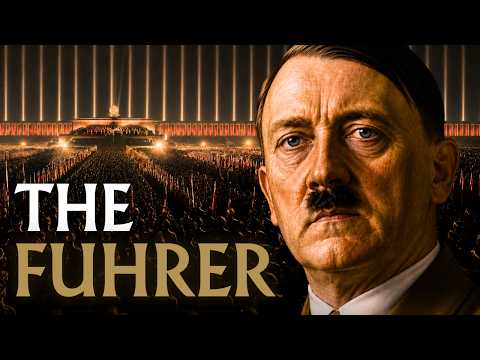
This blog post explores the life of Adolf Hitler, from his troubled childhood and early ambitions as an artist to his rise as the Führer of Nazi Germany, detailing his political ideology, the impact of World War II, and the horrific consequences of his regime, including the Holocaust.
Adolf Hitler was born on April 20, 1889, in Braunau-am-Inn, Upper Austria. His father, Alois Hitler, was a German nationalist and customs official, while his mother, Klara Pölzl, was a kind and pious woman from a peasant family. Alois, who was known for his brutish demeanor, had three wives and nine children, with Adolf being one of the youngest. The family environment was marked by tension and violence, particularly due to Alois's heavy drinking and abusive behavior.
There is a theory suggesting that Hitler may have had Jewish ancestry, stemming from his paternal grandmother, Maria Anna Schicklgruber, who had a child out of wedlock. This speculation was investigated by Nazi official Hans Frank in the 1930s, but definitive evidence remains elusive.
Hitler's early life was marred by tragedy, as three of his older siblings died in infancy. This left him as Klara's eldest surviving child, leading to a close but potentially unhealthy bond that may have contributed to his later narcissism. Alois's death in 1903 ended a tumultuous relationship, allowing Hitler to pursue his interests more freely.
In 1907, Hitler moved to Vienna, where he developed a passion for fine art. Despite his ambitions, he faced repeated rejections from the Academy of Fine Arts. His artistic endeavors were modest at best, and he struggled financially, eventually becoming homeless. This period of hardship in Vienna is believed to have shaped his later anti-Semitic views, as he encountered various non-German groups during his time there.
In 1913, Hitler relocated to Munich, where he was initially excused from military service in the Austro-Hungarian army due to medical reasons. However, with the outbreak of World War I, he enlisted in the Bavarian divisions of the German imperial army, serving on the Western Front and earning several commendations for bravery.
After the war, Hitler returned to Munich amidst political turmoil. He became involved with the German Workers' Party, which later transformed into the National Socialist German Workers' Party (Nazi Party). His political ideology began to take shape during this time, influenced by ultra-nationalist and anti-Semitic sentiments.
In 1923, Hitler attempted a coup known as the Beer Hall Putsch, which failed and led to his arrest. During his time in prison, he wrote "Mein Kampf," outlining his beliefs and future plans for Germany. Upon his release, he focused on rebuilding the Nazi Party and expanding its influence.
By the late 1920s, the Nazis had gained significant traction, particularly during the economic turmoil of the Great Depression. Hitler's charismatic speeches and the party's effective propaganda led to a surge in support, culminating in the Nazis becoming the largest party in the Reichstag by July 1932.
In January 1933, Hitler was appointed Chancellor of Germany. He quickly consolidated power, eliminating political opposition and establishing a totalitarian regime. The Night of the Long Knives in 1934 marked a significant turning point, as Hitler purged potential rivals within the Nazi Party, solidifying his control.
Hitler's aggressive expansionist policies led to the outbreak of World War II in 1939 with the invasion of Poland. His military strategies initially brought swift victories, but the tide began to turn with the failed invasion of the Soviet Union in 1941. The war resulted in unprecedented destruction and loss of life across Europe.
One of the most horrific aspects of Hitler's regime was the Holocaust, which saw the systematic extermination of six million Jews and millions of others deemed undesirable. This genocide was facilitated by the Nazi state and its paramilitary organizations, reflecting Hitler's deeply ingrained anti-Semitic ideology.
As the war progressed, Hitler's health deteriorated, exacerbated by a reliance on various drugs prescribed by his physician. His decision-making became increasingly erratic, leading to significant military blunders, such as the disastrous Battle of Stalingrad.
By 1944, the Allies were advancing on all fronts, and Hitler retreated to his bunker in Berlin. In April 1945, as Soviet forces closed in, he married Eva Braun and prepared to end his life. On April 30, 1945, Hitler committed suicide, marking the end of his tyrannical rule and the collapse of the Third Reich.
Adolf Hitler remains one of history's most reviled figures, embodying the dangers of totalitarianism, extreme nationalism, and unchecked power. His legacy is a stark reminder of the atrocities that can arise from hatred and intolerance, and the importance of vigilance in safeguarding democracy and human rights.



















