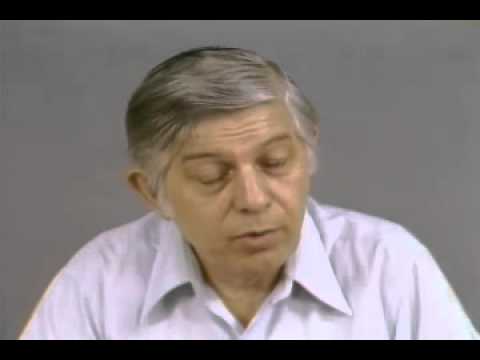
Bart Stern shares his harrowing experiences as a Jewish boy during the Holocaust, detailing his family's history, the gradual rise of anti-Semitism, and his survival through unimaginable hardships in concentration camps. His story serves as a powerful reminder of the importance of remembering history to prevent its repetition.
In a poignant interview, Bart Stern recounts his life as a Jewish boy in Czechoslovakia during the rise of Nazi Germany. His narrative is not just a personal account but a vital piece of history that sheds light on the experiences of countless others during the Holocaust.
Bart Stern, originally known as Peru Battlestone, hails from a town in what was then Czechoslovakia, now part of modern-day Russia. His family has deep roots in the region, with his father and grandfather having lived there for approximately 600 years. Bart describes his father as a respected businessman and benefactor in both the Jewish and non-Jewish communities, known for his honesty and industriousness.
Growing up in a large family of seven children, Bart's early education began in a traditional Jewish school, known as Haider, where he learned the routines of Jewish holidays. This early education provided him with a significant advantage when he transitioned to secular schooling, as he was already familiar with reading and writing.
The peaceful life Bart knew began to unravel in 1938 with the mobilization of the Hungarian army and the subsequent Munich Agreement, which led to the partition of Czechoslovakia. Bart recalls the fear that gripped the Jewish community as refugees from German-occupied areas flooded into their town. The atmosphere shifted dramatically, and the once-respected Jewish community began to feel the weight of impending doom.
As the Nazis tightened their grip, Bart's family faced increasing restrictions. Jewish citizens were gradually stripped of their rights, forced to wear identifying yellow stars, and subjected to laws that limited their professions and freedoms. Bart's family, like many others, began to contemplate emigration, but options were limited.
In March 1944, the Germans marched into Bart's hometown. The immediate aftermath was chaotic, with new laws prohibiting Jews from leaving their homes. Bart vividly remembers the fear and confusion as the occupying forces began rounding up Jews and forcing them into ghettos.
The ghettoization process was swift and brutal. Bart's community, once vibrant and interconnected, was now marked by despair and uncertainty. He recalls the horror stories shared by Polish Jews who had fled to their town, tales that many refused to believe, thinking such atrocities could never happen to them.
Bart and his family were eventually deported to Auschwitz. He describes the harrowing journey in cattle cars, packed tightly with fellow Jews, many of whom did not survive the trip. Upon arrival, they were met with the stench of burning flesh and the grim reality of their situation. Bart was separated from his family, a moment that would haunt him for the rest of his life.
In Auschwitz, Bart endured unimaginable hardships. He witnessed the dehumanization of his fellow inmates, the brutality of the guards, and the constant threat of death. Despite the overwhelming despair, Bart clung to his Jewish identity, finding solace in his faith and the rituals that connected him to his heritage.
Bart's survival was a combination of luck and resilience. He managed to evade the death marches and was liberated by the Russians on January 27, 1945. His liberation was bittersweet, as he emerged from the camps a shadow of his former self, having lost most of his family and friends.
After the war, Bart faced the daunting task of rebuilding his life. He chose to embrace his Jewish identity fully, becoming an Orthodox Jew. He found strength in his faith and a commitment to ensuring that the horrors he experienced would never be forgotten.
Today, Bart Stern carries the tattoo that marks him as a Holocaust survivor. He views it not as a source of shame but as a reminder of the past and a call to action for future generations. He emphasizes the importance of remembering history to prevent its repetition, urging others to learn from the past.
Bart Stern's story is a powerful testament to the resilience of the human spirit in the face of unimaginable adversity. His experiences during the Holocaust serve as a crucial reminder of the dangers of hatred and intolerance. As we reflect on his journey, we are reminded of our responsibility to honor the memories of those who suffered and to ensure that such atrocities are never repeated.