
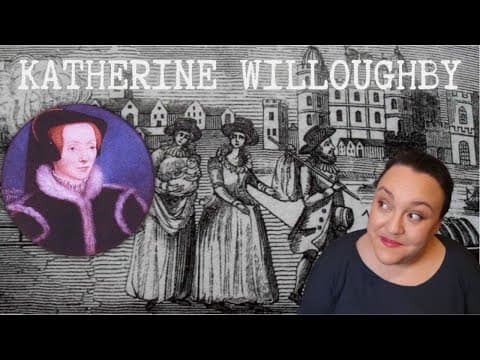
Catherine Willoughby, born in 1519, was a significant figure in Tudor England, known for her noble lineage, marriages, and influence in the Protestant Reformation. Her life intertwined with key historical events and figures, showcasing her role as a courtier and patron of the arts and religion.
Catherine Willoughby, born in 1519, has been a subject of interest for many historians and enthusiasts of Tudor history. This blog post delves into her life, exploring her noble lineage, marriages, and her significant role in the political and religious landscape of Tudor England.
Catherine Willoughby was born to William Willoughby, the 11th Baron Willoughby de Eresby, and his wife Maria. As their only child, Catherine was born into a wealthy family with a considerable portfolio of properties across Lincolnshire, Norfolk, and Suffolk, valued at over 900 pounds a year, equivalent to approximately 468,000 pounds today. Her mother, Maria, was a Spanish lady who served in the household of Catherine of Aragon, which further connected Catherine to the royal court.
Following the death of her father in 1526, Maria fought to secure Catherine's inheritance against claims from Sir Christopher, William's brother. This legal battle was significant, as securing her inheritance would make Catherine a highly desirable match for noble families. Charles Brandon, a close ally of King Henry VIII, negotiated a marriage arrangement between Catherine and his son, Henry, the Earl of Lincoln.
In a surprising turn of events, after the death of his wife Mary Tudor in 1533, Charles Brandon married Catherine Willoughby when she was just 14 years old. This marriage, despite the scandal surrounding the age difference and the circumstances, was supported by Maria, as it elevated Catherine's status. The couple had two children, Henry and Charles, and their marriage appeared to be a successful one.
Catherine's life was deeply intertwined with the political machinations of the Tudor court. Following the fall of Anne Boleyn in 1536, Charles Brandon's influence grew, and Catherine benefited from her husband's rising status. As a prominent figure at court, she began to shift away from her Catholic upbringing towards Protestantism, aligning herself with reform-minded individuals.
Catherine became a patron of Protestant reformers and was instrumental in promoting their works. She supported the publication of religious texts and was involved in efforts to lift restrictions on Bible reading for women and the lower classes. Her influence extended to her children, whom she ensured were educated by leading reformers.
The political landscape shifted dramatically with the ascension of Mary I, a staunch Catholic. Recognizing the danger posed to her and her family, Catherine and her husband Richard Bertie fled into exile. They lived abroad during Mary's reign, returning to England only after her death in 1558. Upon her return, Catherine resumed her role as a patron of Protestant writers and preachers.
Catherine's later years were marked by disappointment as her hopes for a reformed church under Elizabeth I were not fully realized. She faced marginalization and died on September 19, 1580. Her son, Peregrine, succeeded her and continued the family legacy, with the title of Baron Willoughby de Eresby still held by her descendants today.
Catherine Willoughby's life was a tapestry of noble lineage, political intrigue, and religious transformation. Her legacy as a courtier, patron, and magnate remains significant in the context of Tudor history, illustrating the complexities of women's roles during this tumultuous period. Her story is a reminder of the influential women who shaped the course of history, often from the shadows of their male counterparts.



















