
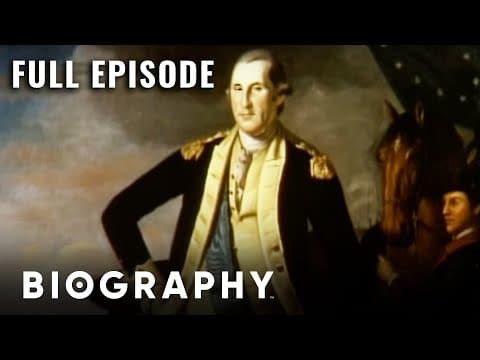
This blog post explores the life of George Washington, detailing his rise from a Virginia planter to the commander-in-chief of the Continental Army and the first President of the United States, highlighting his military achievements, personal struggles, and lasting impact on American democracy.
From A&E, this is "Biography" Saturday. On January 8th, 2000, we reflect on the life of George Washington, a man whose courage and honor shaped the United States. His death in December 1799 marked the end of an era, prompting memorial services across the colonies. Washington was revered as a national hero, a figure whose likeness adorned homes across America. This biography delves into Washington's life before his presidency, showcasing his journey from a Virginia boy to the father of a nation.
George Washington was born in February 1732 near Pope's Creek in Northern Virginia. His father, Augustine Washington, was a successful planter with aspirations for greater social status. Although the Washington family was prosperous, they were not at the top of Virginia society. Washington's childhood was marked by a strong desire for honor and reputation. He was known for his good manners and adherence to the "Rules of Civility and Decent Behavior," a Jesuit guide he hand-copied as a boy.
Washington's life changed dramatically when his father died in 1743, leaving him to mature quickly. He sought guidance from his older half-brother, Lawrence Washington, a military man who inspired George's aspirations. Lawrence encouraged him to study surveying, which became a source of income and respect for young George.
Washington's early military experiences began in the 1750s during the French and Indian War. At just 21, he volunteered to deliver an ultimatum to the French, embarking on a perilous journey through uncharted territory. His successful mission garnered him fame, and he became known as Colonel Washington.
As a lieutenant colonel, Washington faced his first military engagement, which marked the beginning of the French and Indian War. His bravery was evident, as he wrote about the thrill of hearing bullets whistle past him. Despite facing significant challenges, including a disastrous defeat under General Braddock, Washington's reputation as a courageous leader grew.
In 1758, Washington resigned from military service, believing his career as a soldier was over. He married Martha Custis, a wealthy widow, in January 1759. Their marriage, while not blessed with children, provided Washington with a stable home life and increased his social standing.
Settling into life as a farmer at Mount Vernon, Washington innovated agricultural practices and expanded his estate. His leadership qualities shone through as he managed his plantation with the discipline of a military commander. However, his political ambitions soon drew him back into public life.
Washington was elected to the Virginia House of Burgesses in 1758, where he witnessed the growing resentment towards British rule. His experiences during this time fueled his revolutionary spirit, leading him to support boycotts against British goods.
By 1774, tensions escalated, and Washington was elected to represent Virginia at the First Continental Congress. He was appointed commander-in-chief of the Continental Army in 1775, tasked with leading a ragtag group of soldiers against the British military.
Washington's leadership during the Revolutionary War was marked by both victories and defeats. His strategic retreat from New York City demonstrated his commitment to preserving his army for future battles. The turning point came during the Christmas campaign of 1776, when he led a surprise attack on Trenton, capturing over 1,000 Hessians and boosting American morale.
The winter at Valley Forge tested Washington's resolve and the endurance of his troops. Despite harsh conditions, he remained with his men, instilling discipline and training them for future engagements. His leadership during this time solidified his reputation as a dedicated commander.
The war culminated in the British surrender at Yorktown in 1781, effectively ending the conflict. Washington's ability to unite the colonies and lead them to victory earned him the title of national hero. His decision to relinquish military power set a precedent for future leaders.
In 1789, Washington was unanimously elected as the first President of the United States. His presidency was characterized by efforts to stabilize the new nation and establish a functioning government. He faced numerous challenges, including foreign threats and domestic issues, but his leadership helped solidify the union.
Washington's death in 1799 prompted a national outpouring of grief. He is remembered not only for his military and political achievements but also for his commitment to the ideals of democracy. His writings reflect a belief in the principles of liberty and governance by the people.
While Washington owned slaves, he also recognized the inconsistency of slavery with American ideals. In his will, he directed that his slaves be freed, making him the only founding father to demand emancipation.
George Washington's life was a remarkable journey of courage, leadership, and dedication to the principles of freedom. His legacy as the father of the United States endures, reminding us of the sacrifices made for the ideals of democracy. As we reflect on his contributions, it is clear that without George Washington, the United States as we know it may not exist today.



















