
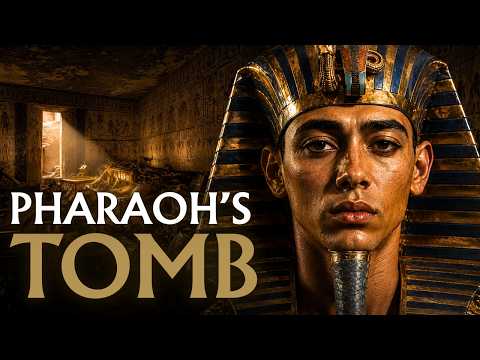
Tutankhamun, the Boy Pharaoh of ancient Egypt, ascended to the throne at a young age amidst significant religious upheaval. His reign marked a return to traditional polytheism after his father's monotheistic reforms. Despite his short life and reign, Tutankhamun's legacy was solidified by the discovery of his tomb in 1922, revealing treasures that captivated the world and sparked renewed interest in ancient Egypt.
The man known to history as Tutankhamun was born in the middle of the 14th century BC during the Eighteenth Dynasty of ancient Egypt. Although the exact date of his birth is uncertain, it is generally agreed that it occurred sometime in the late 1340s BC. Tutankhamun’s parentage is disputed, but it is widely believed that his father was Akhenaten, who ruled Egypt as Amenhotep IV before establishing a monotheistic religion known as Atenism.
Tutankhamun was originally named Tutankhaten, meaning "the Living Image of Aten," in honor of the sun god. He was likely born in Amarna, the capital city founded by his father. Tutankhamun was born with a club foot, which forced him to use a walking stick throughout his life. He was raised by his wet nurse, Maia, and among the artifacts found in his tomb were toys he played with as a child, including an ivory monkey and a wooden bird.
At around the age of four, he began his education, learning to write in cursive hieratic script and later in formal hieroglyphs. His studies included administration, geography, history, diplomacy, religion, and warfare, reflecting the responsibilities he would eventually inherit.
Tutankhamun grew up during a revolutionary period in Egyptian history, marked by his father's religious reforms. Akhenaten introduced the cult of the Aten, a sun god depicted as a golden disc. While Akhenaten allowed the worship of traditional gods, he emphasized Aten as the supreme deity. This shift caused significant unrest among the populace, who continued to worship the old gods.
The death of Tutankhamun’s sister, Princess Meketaten, during a plague, and the subsequent deaths of other royal family members, further destabilized the royal family. Following Akhenaten’s death, the throne passed briefly to Smenkhare before likely moving to a royal woman named Neferneferuaten, who may have been Tutankhamun’s mother or sister.
At the age of ten, Tutankhamun ascended to the throne, becoming king alongside his wife and half-sister, Ankhesenamun. His reign began under the guidance of powerful advisors, including Ay, who may have been his grandfather, and General Horemheb, commander of the Egyptian army. Despite being a child, Tutankhamun was required to perform ceremonial duties and make important decisions.
Tutankhamun’s advisors recognized the need to restore the traditional polytheistic beliefs that had been neglected during Akhenaten’s reign. The young king issued a royal decree acknowledging the neglect of the old gods and began the process of restoring their worship. He moved the capital back to Memphis and Thebes, reversing his father’s religious reforms.
The king’s advisors, who had previously promoted Atenism, now guided him in restoring the old religion. Tutankhamun ordered the repair of temples and the reinstatement of the priesthoods that had been neglected. He also initiated building projects, including the construction of a sphinx avenue at Karnak and continued work on the Luxor Temple.
Tutankhamun’s reign was not without military challenges. He faced a Nubian uprising and sought to reclaim the Levantine city of Qadesh, which had been lost during Akhenaten’s reign. Although he may not have participated directly in battles due to his youth and disability, he held audiences with foreign rulers and received tributes from vassal states.
Tutankhamun’s personal life was marked by tragedy. He and Ankhesenamun were married, but their attempts to have children resulted in stillbirths. His reign was cut short when he died at the age of nineteen, likely due to complications from a hunting accident that resulted in a broken leg.
The discovery of Tutankhamun’s tomb in 1922 by Howard Carter brought global attention to the young pharaoh. The tomb contained a wealth of artifacts, including the famous golden death mask, which captivated the world and sparked a renewed interest in ancient Egypt. Despite his brief reign, Tutankhamun became one of the most famous pharaohs in history.
Tutankhamun’s legacy is complex. He is often viewed as a tragic figure, overshadowed by the powerful advisors who guided his reign. His efforts to restore the old religion were significant, yet his successors attempted to erase his memory from history. For over three thousand years, Tutankhamun remained largely forgotten until the discovery of his tomb elevated him to international fame.
The story of Tutankhamun is one of a young king navigating the complexities of power, religion, and legacy. His life and reign, though short, left an indelible mark on history, and modern research continues to uncover the mysteries surrounding this enigmatic figure. As we reflect on Tutankhamun’s life, we are reminded of the enduring fascination with ancient Egypt and the stories of its rulers.



















