
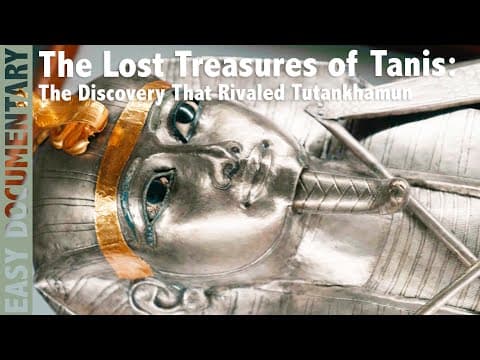
The discovery of the Royal Necropolis at Tanis, containing over 60 kilos of gold and unique silver coffins, is one of the most spectacular archaeological finds in Egypt. Despite its significance, it remained overshadowed by Tutankhamun's tomb due to the outbreak of World War II. This article explores the treasures, the pharaohs of Tanis, and the legacy of Pierre Montet's remarkable excavation.
In March 2023, the world's largest Egyptology Museum opened at the foot of the Giza pyramids, showcasing the finest treasures of ancient Egypt. Among the 5,000 sumptuous pieces from the legendary tomb of Tutankhamun, another remarkable discovery takes its place: the treasures of Tanis. While Tutankhamun's tomb is widely known, the royal tombs of Tanis, found intact and filled with extraordinary artifacts, remain relatively unknown to the public.
Located about 15 kilometers from the Giza pyramids, the Egyptian Museum in Cairo once housed these treasures in its former exhibition halls. The treasures of Tanis were discovered in a forgotten acropolis in the Nile Delta, a true "Valley of the Kings" in northern Egypt. These finds include:
These artifacts reveal a lesser-known side of ancient Egypt and the saga of long-forgotten pharaohs who, like Tutankhamun, left their mark on Egyptian civilization.
The kings associated with Tanis, such as Susennis, Osorkon, and Taklot, are not household names today. However, they ruled Egypt and were buried in tombs found intact, filled with coffins, sarcophagi, and jewels. The treasures include gold, silver, and other precious items, making the discovery one of the most spectacular in Egyptology.
Despite the extraordinary nature of the find, the treasures of Tanis never captured the public imagination like Tutankhamun's tomb. The primary reason was bad timing: the discovery coincided with the outbreak of the Second World War. As global attention shifted to the tensions and conflicts in Europe, ancient Egypt became less important in the public eye. Consequently, the discovery did not receive the media coverage or public fascination it deserved.
The excavation of the Royal Necropolis at Tanis was led by the French archaeologist Pierre Montet. Although his name may not be widely known, his work is legendary in the field of Egyptology. Montet's discoveries at Tanis are among the most fascinating and extraordinary episodes in the history of archaeology.
Tanis is not only famous for its treasures but also for its role in popular culture. The archaeological site was featured in the climactic scenes of the Hollywood blockbuster "Raiders of the Lost Ark," directed by Steven Spielberg. In the film, Tanis serves as the backdrop for Indiana Jones' adventures, further cementing its place in the public imagination, albeit in a fictional context.
The lost treasures of Tanis represent a remarkable chapter in the story of ancient Egypt. With over 60 kilos of gold, unique silver coffins, and unparalleled funeral masks, the discoveries at Tanis rival those of Tutankhamun. Although overshadowed by global events at the time of their discovery, these treasures and the pharaohs they belonged to continue to fascinate historians, archaeologists, and Egypt enthusiasts alike. The opening of the new Egyptology Museum near the Giza pyramids offers a renewed opportunity for the world to appreciate the grandeur and mystery of Tanis alongside the more famous Tutankhamun.



















