
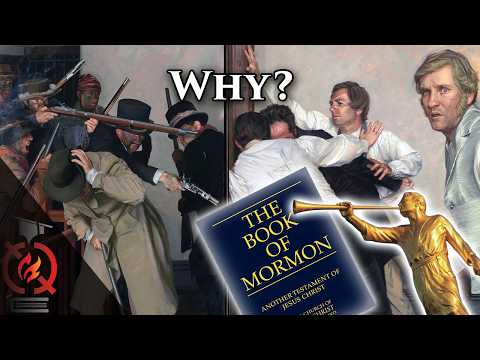
This blog post explores the tumultuous history of early Mormonism, focusing on the life and martyrdom of Joseph Smith, the founder of the Church of Jesus Christ of Latter-day Saints. It covers the origins of Mormonism, the challenges faced by Smith and his followers, and the events leading to his lynching in Illinois, highlighting the complex interplay of religion, politics, and societal tensions in 19th-century America.
The story of Joseph Smith, the founder of the Church of Jesus Christ of Latter-day Saints, is one of both inspiration and tragedy. His life and eventual martyrdom reflect the broader struggles of early Mormonism against a backdrop of societal upheaval and religious fervor in 19th-century America. This post delves into the origins of Mormonism, the challenges faced by Smith and his followers, and the events leading to his lynching in Illinois.
Joseph Smith's journey began in the early 1800s in the so-called Burnt Over District of New York, a region known for its religious revivals and fervent spiritual movements. The Smith family moved to Palmyra in 1816, where Joseph was exposed to various religious ideas and practices. His mother, Lucy Smith, took her children to revivals, while his father engaged in treasure hunting, which influenced Joseph's early interests in divination and spiritual experiences.
In 1820, Smith claimed to have a vision in which God and Jesus Christ instructed him to restore the original church. This vision marked the beginning of his religious mission, leading to the publication of the Book of Mormon in 1830, which he claimed to have translated from golden plates.
The early years of the Church were marked by rapid growth but also significant challenges. Smith faced legal troubles, including a fraud charge related to his treasure-seeking activities. Despite these setbacks, he continued to attract followers, including notable converts like Sidney Rigdon, who helped establish the church's early structure and community.
As the church expanded, tensions with local populations grew, particularly in Missouri, where Mormons faced violent opposition. The church's attempts to create a communal society clashed with the existing social order, leading to conflicts that culminated in violent expulsions.
After being driven from Missouri, Smith and his followers found refuge in Illinois, where they established the city of Nauvoo. Here, Smith consolidated power and introduced radical new doctrines, including the concept of polygamy and the idea that individuals could become gods in the afterlife. These teachings, along with Smith's political ambitions, including a run for president, further alienated him from the broader American society.
Tensions escalated in Nauvoo as dissent grew among church members, particularly regarding Smith's practices and leadership. In 1844, a group of dissenters published the Nauvoo Expositor, accusing Smith of various wrongdoings, including polygamy. In response, Smith ordered the destruction of the press, which led to increased hostility from local non-Mormons.
As tensions reached a boiling point, Smith and his brother Hyrum were arrested and taken to Carthage Jail. Despite the presence of a militia meant to protect them, a mob stormed the jail, resulting in a violent confrontation. Smith attempted to defend himself but was ultimately shot and killed by the mob, marking a tragic end to his life and mission.
Joseph Smith's death was a pivotal moment in Mormon history, leading to a succession crisis and further persecution of Mormons. His martyrdom solidified his status as a prophet among followers and set the stage for the church's eventual migration to Utah under the leadership of Brigham Young.
The story of Joseph Smith and the early Mormon church is a complex tapestry of faith, conflict, and resilience. It reflects the broader struggles of a nation grappling with its identity and the role of religion in public life. As we explore this history, we gain insight into the challenges faced by those who sought to carve out a place for their beliefs in a rapidly changing world.



















