
This blog post explores the controversial actions of President James K. Polk during the Mexican-American War, the rise of filibustering expeditions, the implications of the Austin Manifesto, and the socio-political consequences of these events, including the treatment of Mexican Americans and Native Americans, the emergence of new political parties, and the Compromise of 1850.
The Mexican-American War, which took place from 1846 to 1848, was a pivotal moment in American history, marked by aggressive territorial expansion and significant controversy. This post will explore the actions of President James K. Polk, the rise of filibustering expeditions, the implications of the Austin Manifesto, and the socio-political consequences that followed.
President James K. Polk was a staunch advocate of Manifest Destiny, the belief that the United States was destined to expand across the North American continent. His aggressive expansionist policies were encapsulated in his infamous quote, "American blood on American soil," which highlighted the controversial nature of the war. Polk attempted to purchase a significant portion of Mexico, but when negotiations failed, he sent troops into Mexican territory, provoking a conflict that many viewed as unjustified.
Polk's popularity stemmed from the widespread belief in Manifest Destiny, which many Americans supported. However, his actions set a precedent for future aggressive territorial acquisitions, leading to further conflicts and controversies.
The Mexican-American War inspired a wave of filibustering expeditions, where individuals or groups would take matters into their own hands to seize territory. One notable figure was William Walker, who led an expedition to northern Mexico with a small army of mercenaries. He successfully declared himself president of the Baja Peninsula but later attempted to expand his conquests into Nicaragua, where he was ultimately captured and executed.
These filibustering efforts were not officially sanctioned by the U.S. government but reflected the aggressive expansionist mindset that had taken hold in the South. The Southern government had its own ambitions, particularly regarding Cuba, which was seen as a lucrative territory. The Austin Manifesto, which outlined plans to acquire Cuba, was leaked, causing outrage in the North and further deepening the divide between the two regions.
The Austin Manifesto revealed the South's intentions to acquire Cuba using tactics similar to those employed in the Mexican-American War. The plan involved offering Spain $130 million for Cuba, knowing that Spain would likely refuse. The South's strategy was to create a pretext for military action, mirroring the aggressive tactics used against Mexico.
When the North learned of these plans, it sparked fears of Southern expansionism and the potential for a slave-dominated power structure. This growing tension between the North and South foreshadowed the impending Civil War.
The Mexican-American War had profound effects on both American society and the territories involved. Approximately 13,000 American soldiers died during the conflict, with many succumbing to diseases like malaria rather than battle injuries. The war also resulted in the Treaty of Guadalupe Hidalgo, which promised protections for the Spanish-speaking inhabitants of the newly acquired territories. However, these promises were largely unfulfilled, leading to widespread discrimination and racism against Mexican Americans.
The war and subsequent expansionist policies had devastating consequences for Native Americans. The ideology of Manifest Destiny was often used to justify acts of genocide and displacement. Native populations faced massacres and were systematically hunted down, with many being enslaved or forced off their lands.
The aftermath of the Mexican-American War also led to significant political realignment. The Whig Party began to fracture, with a faction known as the Conscience Whigs opposing the war and its implications. Many of these individuals would later align with the newly formed Free Soil Party, which sought to prevent the expansion of slavery into the territories.
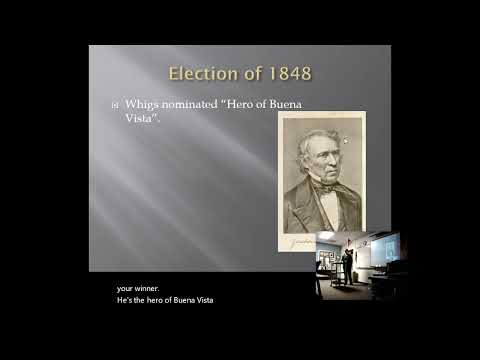
In the 1848 presidential election, Zachary Taylor, a military hero from the war, won the presidency. However, the political landscape was shifting, and the emergence of the Free Soil Party indicated growing opposition to slavery.
As California sought admission to the Union following the Gold Rush, tensions over whether it would be a free or slave state escalated. The Compromise of 1850, orchestrated by Henry Clay, aimed to address these tensions. The compromise allowed California to enter as a free state while implementing a stringent Fugitive Slave Law, which angered many in the North.
The Compromise was ultimately signed into law by Millard Fillmore after the unexpected death of Zachary Taylor. While it temporarily eased tensions, it also highlighted the deep divisions within the country regarding slavery and territorial expansion.
The Mexican-American War and its aftermath were marked by aggressive expansionism, controversial policies, and significant social and political consequences. The actions of President Polk, the rise of filibustering expeditions, and the implications of the Austin Manifesto all contributed to the growing divide between the North and South. As the nation grappled with the consequences of its expansionist ambitions, the stage was set for the conflicts that would ultimately lead to the Civil War.



















