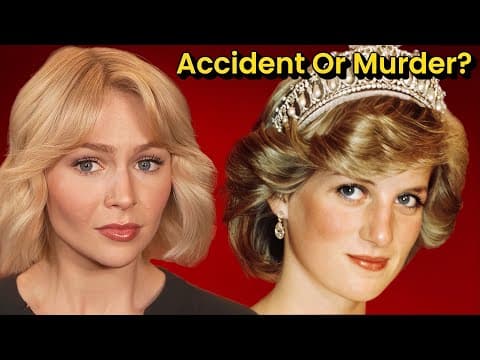
Princess Diana's life was marked by privilege, personal struggles, and a groundbreaking approach to charity and motherhood. Her tragic death in a 1997 car crash in Paris, caused by a drunk driver evading paparazzi, sparked extensive investigations and conspiracy theories. Despite official findings confirming it was an accident, Diana's legacy as the People's Princess endures, symbolizing compassion and humanity.
On August 31st, 1997, at 12:23 a.m., a black Mercedes sped through a Paris tunnel, pursued by paparazzi. The driver, intoxicated and impaired by medication, lost control, leading to a catastrophic crash that would claim the life of Diana, Princess of Wales. This tragic event shocked the world and sparked decades of fascination, conspiracy theories, and reflection on the life of a woman who touched billions.
Diana Frances Spencer was born on July 1st, 1961, at Park House, Sandringham, on royal land leased from Queen Elizabeth II. The Spencer family had aristocratic ties to the British crown for centuries, descending from King Charles II. Despite her privileged birth, Diana's childhood was marked by emotional hardship. Her parents had hoped for a boy and were initially disappointed by her birth. When Diana was six, her mother left the family, leading to a bitter custody battle and feelings of abandonment that deeply affected her.
Diana first met Prince Charles at age 16, when he was dating her older sister. Over the next few years, Charles's relationship with Diana's sister faded, and he began courting Diana. Their courtship was brief, with only 13 meetings before their engagement was announced in 1981. Despite public appearances of happiness, cracks appeared early in their relationship. Charles's ambiguous response about being "in love" during their engagement interview foreshadowed difficulties ahead.
Diana discovered Charles's ongoing relationship with Camilla Parker Bowles before their wedding, which devastated her. Nevertheless, on July 29th, 1981, nearly 750 million people worldwide watched Diana walk down the aisle at St. Paul's Cathedral. She made history by omitting the word "obey" from her vows, signaling her independent spirit.
The honeymoon revealed emotional distance between Diana and Charles. Charles's affection for Camilla persisted, and Diana's struggles with bulimia and self-harm began shortly after their engagement. The palace often dismissed her cries for help, labeling her unstable. Their marriage deteriorated publicly by the early 1990s, with both parties engaging in extramarital affairs.
Diana's motherhood was revolutionary; she raised her sons William and Harry with a focus on normalcy and compassion, taking them to everyday places and encouraging empathy for others. Her public image soared as she became a global fashion icon and humanitarian, known for her warmth and genuine connection with people.
Diana redefined royal charity work by physically engaging with those she helped. In 1987, she famously shook hands with AIDS patients without gloves, challenging stigma and fear. She also campaigned against landmines, visiting war-torn Angola in 1997 and walking through active minefields, bringing global attention to the issue.
Her approach was heartfelt and personal, often returning to hospitals and shelters without media presence, showing genuine care for the vulnerable. Her impact on charity was profound, influencing public attitudes and inspiring change.
In 1992, the separation of Diana and Charles was publicly announced, marking the end of their fairy tale marriage. Diana remained Princess of Wales but lost the style "Her Royal Highness." She focused on a smaller number of charities and sought personal happiness, including relationships with Dr. Hasnat Khan and later Dodi Fayed.
On August 30th, 1997, Diana and Dodi Fayed arrived in Paris and stayed at the Ritz Hotel. That night, they attempted to dine out but were thwarted by aggressive paparazzi. Later, they left the hotel in a rented black Mercedes driven by Henry Paul, the hotel's deputy head of security, who was intoxicated and impaired by medication.
The car sped through the Pont de l'Alma tunnel at over twice the speed limit, attempting to evade photographers. The driver lost control after clipping a white Fiat Uno, crashing into a concrete pillar. Henry Paul and Dodi Fayed died instantly; Diana was critically injured and died hours later in hospital.
Multiple investigations by French and British authorities, including Operation Paget led by Sir John Stevens, concluded the crash was a tragic accident caused by Henry Paul's intoxication and reckless driving, compounded by the pursuit of paparazzi. No evidence supported conspiracy theories alleging assassination by British intelligence or royal family members.
Despite exhaustive inquiries, conspiracy theories persisted, fueled by unanswered questions such as the unidentified Fiat Uno driver and Henry Paul's unexplained wealth. The inquest jury in 2008 ruled Diana and Dodi were unlawfully killed due to gross negligence but found no evidence of murder or conspiracy.
Diana's death prompted an unprecedented outpouring of grief worldwide. Millions left flowers, notes, and tributes at Kensington Palace. The royal family's initial silence and adherence to protocol were widely criticized, leading to changes such as flying the Union Jack at half-mast and a rare televised address by Queen Elizabeth II.
Diana's funeral on September 6th, 1997, was watched by over 2.5 billion people globally. Her brother, Earl Spencer, delivered a powerful eulogy condemning the media's relentless pursuit. Elton John performed a rewritten version of "Candle in the Wind," which became one of the best-selling singles ever.
Diana was buried at Althorp, the Spencer family estate, on a private island to protect her resting place from public intrusion. Her sons, William and Harry, have continued to honor her memory, commissioning a statue unveiled in 2021.
Princess Diana's life was a blend of privilege, personal pain, and extraordinary compassion. Her death was a tragic accident, but her legacy as the People's Princess endures. She transformed the role of royalty through her genuine empathy and humanitarian work, leaving an indelible mark on the world.
Her story reminds us of the complexities behind public figures and the human vulnerabilities that connect us all. Though the conspiracy theories may never fully fade, the truth of her life and death continues to inspire millions.
What are your thoughts on Princess Diana's life and legacy? Feel free to share your memories or reflections.