
This blog explores the enigmatic figure of Qin Shi Huang, the first emperor of China, suggesting he may not be human based on historical texts and recent phenomena in Xi'an. It delves into ancient records, artistic representations, and the implications of his lineage, linking him to mysterious beings and events, including dragon sightings and ancient prophecies.
In recent weeks, unusual phenomena have been reported in Xi'an, China, including sightings of dragon shadows and ominous thunderstorm activity. This has sparked discussions about the historical figure of Qin Shi Huang, the first emperor of China, and whether he might not be human. This blog post delves into the mysteries surrounding Qin Shi Huang, exploring ancient texts, artistic representations, and the implications of his lineage.
At the beginning of this month, Xi'an experienced severe thunderstorms, during which many witnesses reported seeing a dragon-like shadow in the sky, accompanied by a terrifying roar. This phenomenon has led to speculation about its connection to Qin Shi Huang's tomb, suggesting a mysterious force at play.
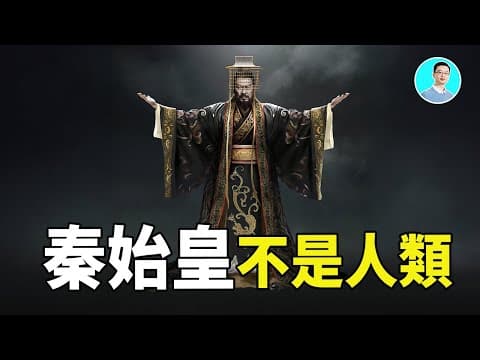
Qin Shi Huang, born Ying Zheng in 259 BC, ascended to the throne at the age of 13 and unified China by conquering six states by the age of 39. Despite his monumental achievements, there is a striking absence of authentic portraits or sculptures of him. All existing representations are later interpretations, raising questions about his true appearance and nature.
Despite the advanced artistic skills of the Qin dynasty, no verified images of Qin Shi Huang exist. The famous Terracotta Army showcases remarkable craftsmanship, yet none of the figures represent the emperor himself. This absence has led to speculation about whether Qin Shi Huang deliberately concealed his identity, possibly due to his unusual characteristics.
Historical texts provide some descriptions of Qin Shi Huang's appearance, notably in the Records of the Grand Historian by Sima Qian and the Taiping Yulan, a comprehensive encyclopedia from the Northern Song dynasty. These accounts describe him as having a peculiar nose, large eyes, and a towering height of approximately 2.67 meters (8 feet 6 inches), suggesting he may not have been entirely human.
Sima Qian describes Qin Shi Huang as having a sharp, pointed nose and a chest resembling that of an eagle. His voice was said to be hoarse and intimidating, leading to further speculation about his nature. The descriptions paint a picture of a formidable figure, possibly linked to supernatural origins.
The Taiping Yulan elaborates on Qin Shi Huang's features, emphasizing his large eyes and high nose. The text suggests that he possessed traits associated with legendary beings, further fueling the idea that he may have belonged to a different lineage.
The lack of concrete evidence regarding Qin Shi Huang's ancestry has led to various theories. Some suggest that he may have been a hybrid of human and otherworldly beings, possibly linked to the mysterious "Yiren" or "strange person" mentioned in ancient texts.
Lü Buwei, a prominent figure in Qin's history, is said to have recognized the potential of Ying Zichu (Qin Shi Huang's father) as a valuable asset. This recognition raises questions about the extraordinary qualities that may have been perceived in Ying Zichu, suggesting a lineage that deviates from ordinary human characteristics.
The narrative surrounding Qin Shi Huang intertwines with legends of ancient beings, such as the "Vira Cocha" from Incan mythology, who is described as a god-like figure with extraordinary abilities. This connection hints at a broader narrative of celestial beings influencing human history.
Vira Cocha is depicted as a creator god who shaped humanity and is often associated with dragon-like imagery. The parallels between Vira Cocha and Qin Shi Huang suggest a shared heritage or influence, possibly indicating that both figures represent a lineage of extraordinary beings.
The mysteries surrounding Qin Shi Huang continue to captivate historians and enthusiasts alike. The absence of authentic representations, combined with descriptions of his unusual features and the recent phenomena in Xi'an, raises profound questions about his true nature. Was Qin Shi Huang merely a human emperor, or does he represent a lineage that transcends our understanding of humanity? As we delve deeper into these ancient texts and legends, we may uncover secrets that challenge our perceptions of history and the beings that shaped it.



















