
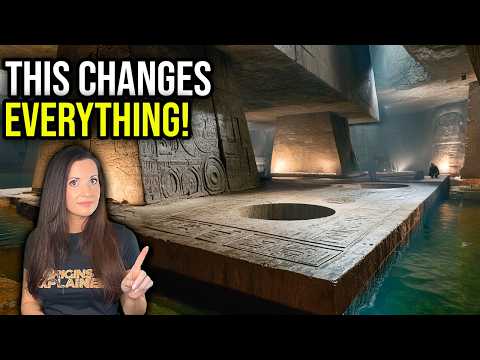
The Osireion, located beneath the Temple of Seti I in Abydos, Egypt, is a mysterious underground structure built with massive granite blocks. Unlike typical Egyptian temples, its architecture and construction techniques suggest it may predate the 19th dynasty and could have served as a symbolic tomb for Osiris or possibly a lost ancient machine. Its purpose and origins remain debated among scholars.
Deep beneath the sands of Abydos in Egypt lies a structure that defies conventional understanding. Known as the Osireion, this enigmatic underground chamber is constructed from 100-ton blocks of solid granite, transported from hundreds of miles away, and situated nearly 50 feet below the surrounding temples. While the official narrative describes it as a symbolic tomb for the god Osiris, the precision and scale of its stonework suggest a far more complex story.
The Osireion is hidden behind the finished limestone walls of the Temple of Seti I at Abydos. Unlike the temple above, which dates to the 19th dynasty (circa 1290–1279 BC), the Osireion’s architecture is markedly different. It is a sunken rectangular structure approximately 98 feet long and 39 feet wide, built from enormous red granite blocks. Its walls are lined with these massive stones, some weighing as much as 50 tons, fitted together with remarkable precision and without mortar.
The structure was first noticed in 1902 by Margaret Murray, working under the archaeologist Flinders Petrie, who observed unusual architectural features at the rear of Seti I’s temple. Petrie began formal excavations in 1903, uncovering parts of this previously unknown underground chamber. Later, in the 1920s, Henri Frankfort of the Egypt Exploration Society further investigated the site, revealing a chamber flooded with dark, stagnant water and featuring a raised stone platform surrounded by a trench of water. Twelve massive granite pillars rose around this central platform, supporting thick stone lintels that formed heavy enclosed squares overhead.
The Osireion’s construction contrasts sharply with other Egyptian temples of its era. It lacks typical features such as pylons, open courtyards, and hypostyle halls. There is no long axial path guiding visitors through sacred spaces; instead, the structure descends directly into the ground, ending in a single enclosed chamber. This design creates a powerful psychological effect, as entering the Osireion means leaving light behind and moving into darkness and silence.
The building techniques used in the Osireion are also distinct. While the pyramids were built by stacking limestone blocks averaging about 2.5 tons each, the Osireion’s granite blocks are significantly larger and heavier. The labor required to quarry, transport, and position these stones would have been immense, raising questions about the purpose of such an effort.
The prevailing theory among Egyptologists is that the Osireion served as a symbolic tomb for Osiris, the god of the underworld. Abydos was a major religious center, believed to be the actual burial place of Osiris. Pilgrims traveled there for centuries to participate in rituals and festivals reenacting Osiris’s death and resurrection, known as the Osiris Mysteries. These ceremonies emphasized themes of loss, concealment, and rebirth.
Seti I deliberately built his temple near this sacred site, including chambers dedicated to Osiris. It is possible that the Osireion was constructed as a ritual tomb where priests performed ceremonies in darkness, mimicking the god’s final resting place. The descent into the chamber, the surrounding water moat, and the lack of decoration all support this ritualistic interpretation.
Some researchers propose a more unconventional theory: that the Osireion is not a temple at all but the remnant of a lost high-technology machine predating the pharaohs by thousands of years. The precision of the stone cutting, the massive scale of the blocks, and the unique architectural style suggest it could have served a function beyond religious symbolism.
This theory remains speculative, as modern science has yet to identify any machinery or technology within the Osireion. However, the structure’s anomalous features continue to fuel debate about the existence of an advanced lost civilization that left behind technological marvels beneath Egypt’s sands.
The Osireion’s entrance passage bears a cartouche of Seti I, linking the structure to his reign. Yet, the building techniques appear to be at least a thousand years older than the 19th dynasty. This discrepancy has puzzled scholars, leading to the suggestion that Seti I may have built his temple around an already existing, much older structure.
The question of when the Osireion was originally constructed remains unanswered. Its architectural style and construction methods do not align with known Egyptian building practices from Seti I’s time, adding to the mystery.
Entering the Osireion involves descending into darkness and silence, a journey that likely held deep psychological and spiritual meaning for ancient Egyptians. The symmetry of the tunnel, the absence of surface decoration, and the central platform surrounded by water all indicate a space designed for ritual use.
The Osireion’s design may have been intended to evoke the underworld itself, reinforcing the themes of death and rebirth central to Osiris worship. This immersive experience would have been a powerful element of the religious ceremonies conducted there.
The Osireion remains one of Egypt’s most intriguing archaeological mysteries. Its massive granite blocks, unique architectural style, and subterranean location set it apart from other ancient Egyptian structures. Whether it was a symbolic tomb for Osiris, a lost ancient machine, or something else entirely, the Osireion challenges our understanding of Egypt’s past.
As research continues, the Osireion invites us to reconsider the history of ancient civilizations and the technologies they may have possessed. Buried beneath the sands of Abydos, this enigmatic structure holds secrets that continue to captivate scholars and enthusiasts alike.



















