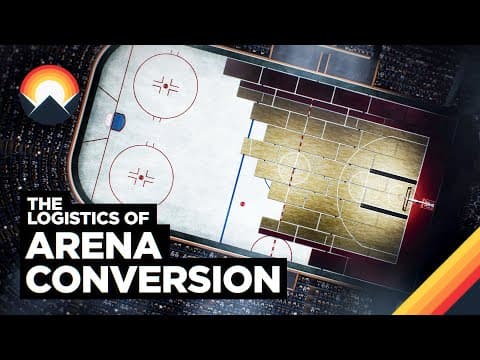
The conversion of the United Center from a hockey rink to a basketball court involves a meticulous and rapid process that takes just over two and a half hours, showcasing the intricate logistics and teamwork required to accommodate different sporting events.
At 9:31 PM on November 6th, the Chicago Blackhawks faced off against the Detroit Red Wings, concluding the game with a 4-1 loss. Just twenty-two hours later, the Chicago Bulls are set to play against the Minnesota Timberwolves, prompting an immediate and complex transformation of the United Center from a hockey rink to a basketball court.
As soon as the final buzzer sounds, the broadcast crew springs into action, swiftly removing remotely-operated cameras mounted on the glass. Concurrently, the rubber mats covering the ground are rolled up through the Zamboni tunnel, allowing ice crews and others on skates to navigate safely.
A dedicated conversion crew, consisting of around fifty individuals—both full-time United Center employees and part-timers—stands ready. These workers utilize color-coded glass carts to efficiently transport the glass panels. The removal process is straightforward: a suction cup is applied, and the connector between each pane is detached, allowing for rapid removal.
While the glass is being taken down, cleaning crews focus on the sections of seats at the far ends of the rink. This area is prioritized for cleaning as it will undergo significant changes in the coming hours. The cleaning crew begins on the west side, where a forklift will soon need access, necessitating the removal of seats currently blocking the corner tunnel.
In addition to cleaning, the crew also removes cabling, railings, and other elements to prepare for the conversion. Within just 25 minutes of the game ending, the last pieces of glass are removed, and the Zamboni is called in to resurface the ice. This step is crucial, as the ice must remain in top condition for the upcoming basketball game.
The transition from hockey to basketball involves significant changes in seating configuration. An NBA court is less than half the length and width of an NHL rink, allowing for the installation of 1,200 additional seats. The seating extends closer to the playing surface, beyond the hockey boards, and requires careful planning to accommodate the different access points for players in each sport.
To facilitate this rapid conversion, the seating is mounted on telescopic platforms. The individual seats fold down flat and retract automatically, allowing for quick adjustments. The geometry of the seating area must be meticulously managed to ensure that the basketball court fits perfectly within the arena.
As the Zamboni finishes resurfacing the ice, the crew begins covering it with 530 pieces of insulated plywood flooring. While most pieces are straightforward to place, the corners require precise cuts to fit correctly. The last piece is particularly challenging, necessitating adjustments to ensure a perfect fit. Once all pieces are in place, spacers are hammered in to secure the flooring.
The United Center hosts a variety of events beyond hockey and basketball, including concerts and comedy shows. The conversion crew must be prepared for different setups, which can lead to long nights, especially when multiple events are scheduled back-to-back. During playoff season, the uncertainty of which sport will be needed adds to the complexity of the conversions.
After the flooring is secured, the crew measures and marks the court's layout. The basketball court is stored in a temperature-controlled room, and each piece must be assembled in a specific order to ensure proper alignment of lines and logos. Precision is critical; any misalignment can lead to significant issues during gameplay.
As the court is laid out, the telescopic seating is extended, and rubber flooring is placed between sections to eliminate gaps. The coveted courtside seats are positioned, and tables for league officials and broadcast staff are set up.
One of the final steps involves setting up the basketball hoops. The crew ensures that the shot clock is positioned correctly and that the hoop is calibrated for gameplay. Final inspections and adjustments are made to ensure everything is in order before the game.
By midnight, the entire conversion process from hockey rink to basketball court has taken just over two and a half hours. This remarkable feat showcases the dedication and teamwork of the conversion crew, who will repeat this process multiple times throughout the month. In November alone, the United Center will undergo twenty-one conversions, demonstrating the logistical prowess required to bring diverse entertainment to Chicago.