
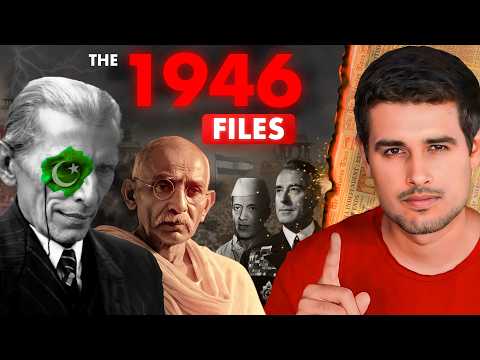
This blog post explores the complex political landscape of India during the final year of British rule, detailing the events leading to independence and partition, including key figures, movements, and the impact of communal tensions.
A year before India gained independence, the nation was engulfed in a political struggle that resembled a game of thrones. The events of 1946 and 1947 were pivotal in shaping the future of the subcontinent, marked by intense negotiations, communal riots, and the looming threat of partition.
By 1946, it was evident that the British were preparing to leave India. The question was not if India would gain freedom, but rather how and when it would happen. Several key factors contributed to this momentum:
In 1945, Clement Attlee became the UK Prime Minister, promising to return India its freedom. The British public largely supported this decision, leading to discussions on how to transfer power.
In January 1946, the political map of India was divided into British provinces and princely states. The Government of India Act of 1935 had allowed for some autonomy, leading to elections in 11 provinces. The Indian National Congress won in seven provinces, while the Muslim League gained control in Bengal and Sindh.
The elections highlighted the growing communal divide, with Jinnah's Muslim League gaining significant political power. Jinnah, who had once advocated for Hindu-Muslim unity, shifted his stance, demanding a separate nation for Muslims.
On July 29, 1946, Jinnah announced the Direct Action Day, threatening that India would either be divided or destroyed. This led to horrific riots in Bengal, where thousands were killed, and Calcutta became a city of corpses. The violence was a direct consequence of Jinnah's refusal to cooperate with Congress and the failure of the Cabinet Mission's proposals for a united India.
Despite the violence, Viceroy Wavell invited Congress to form an interim government in August 1946. Nehru and Congress agreed to participate, but tensions with the Muslim League persisted. Jinnah's demands for exclusive rights to nominate Muslim members in the government were rejected by Congress, leading to further discord.
In October 1946, riots erupted in Noakhali, prompting Gandhi to intervene. He worked tirelessly to promote communal harmony, walking through villages to foster peace between Hindus and Muslims. However, the cycle of violence continued, with retaliatory riots breaking out in Bihar.
In March 1947, the political situation deteriorated further. Mountbatten was appointed as the last Viceroy of India, tasked with resolving the crisis. His initial proposals aimed for a united India, but Jinnah rejected them, insisting on a separate nation.
As riots escalated, Congress leaders, including Nehru and Patel, began to accept the idea of partition as a necessary solution. Gandhi, however, remained opposed to the division, even suggesting that Jinnah be made Prime Minister to maintain unity.
Ultimately, the partition plan was formalized in May 1947, leading to the division of India into two independent dominions: India and Pakistan. This plan was met with mixed reactions, and concerns about the implications for the princely states and communal relations persisted.
On August 15, 1947, India gained independence, but the partition resulted in one of the largest mass migrations in history, with approximately 15 million people displaced and over a million lives lost in the ensuing violence. The legacy of this tumultuous period continues to shape the subcontinent today.
The events leading to India's independence were marked by political maneuvering, communal strife, and the struggle for power. The complexities of this period are captured in the web series "Freedom at Midnight," which provides a detailed account of the last year of British rule in India. Understanding this history is crucial for comprehending the challenges faced by the nation in its early years and the ongoing impact of these events on contemporary India.



















