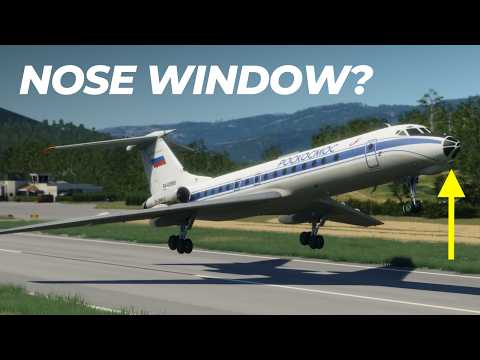
The Tupolev Tu-134, a Soviet-era airliner, is known for its unique design and operational challenges. Despite its historical significance, safety concerns and outdated technology make it a questionable choice for modern air travel. This blog explores the quirks of the Tu-134, from its cockpit layout to its performance issues, highlighting why many would hesitate to fly on this aircraft today.
The Tupolev Tu-134 is a fascinating piece of aviation history, introduced in 1970 and manufactured until 1989. Despite its age, it still captures the interest of aviation enthusiasts, including Eric Corio, who continues to fly this quirky aircraft. In this blog post, we will explore the unique features of the Tu-134, its operational challenges, and the reasons why many would hesitate to board this Soviet-era airliner.
The Tu-134 is characterized by its distinctive design, including round ship-type windows that give it a unique aesthetic. The aircraft was primarily used as an airliner but has also served as a VIP transport and military aircraft. Its interior features a surprisingly sophisticated galley, complete with a sink and storage space, which adds to its charm.
Upon entering the cockpit, one is greeted by a typical Soviet turquoise color scheme, which can be intimidating for those unfamiliar with its layout. The cockpit is equipped with various controls, but the language barrier presents a significant challenge for pilots who do not speak Russian. This complexity is compounded by the fact that the Tu-134 was designed during a time when navigation relied heavily on visual cues rather than advanced technology.
The cabin itself is spacious, with a VIP configuration that is not typical for commercial flights. This setup reflects the aircraft's dual role as both a passenger airliner and a military transport. However, the cabin also features a lavatory that is notably green, adding to the aircraft's quirky character.
Despite its unique features, the Tu-134 faces significant operational challenges. Over 850 units were built, but the number of active aircraft is dwindling due to safety concerns and noise restrictions. The aircraft has a notorious safety record, with a Wikipedia article dedicated to its accidents, including 76 hull losses and 1,387 fatalities. The most recent crash occurred in October 2022, highlighting ongoing safety issues.
Flying the Tu-134 can be a daunting experience. During a simulated flight, the aircraft demonstrated several performance issues, including difficulty in takeoff and landing. The aircraft requires a long runway to achieve takeoff speed, and its landing gear and hydraulic systems often malfunction. These issues contribute to a challenging flying experience, making it clear why many pilots would be hesitant to operate this aircraft.
The Tupolev Tu-134 is a remarkable example of Soviet engineering, with its quirky design and historical significance. However, its operational challenges and safety concerns make it a questionable choice for modern air travel. While it may be an interesting aircraft to explore in a simulator or as a historical artifact, the risks associated with flying on a Tu-134 are substantial. For those considering a flight on this aircraft, it may be wise to think twice before boarding this quirky relic of aviation history.