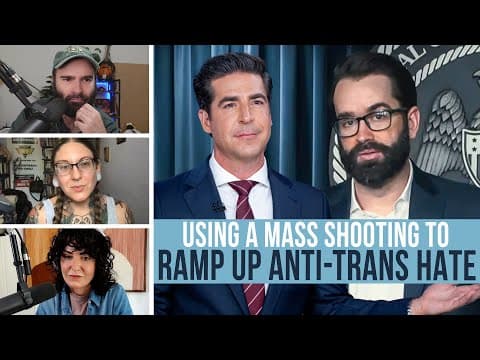
In this episode of Even More News, the hosts discuss the recent mass shooting in Minneapolis and the subsequent media narrative that unfairly targets the trans community. They explore the complexities of labor issues, the lack of effective gun control discussions, and the societal factors contributing to violence. The conversation highlights the dangers of misinformation and the urgent need for a more nuanced understanding of mental health and community support.
Oh, hello and welcome back to Even More News, the first and only news podcast. My name is Katie Stall, and I'm joined by Cody Johnston and our special guest, journalist and author Kim Kelly. Today, we delve into the recent mass shooting in Minneapolis and the troubling narratives that have emerged in its wake.
Before we dive into the main topic, Kim shares her insights on labor issues, particularly focusing on coal miners and the Trump administration's policies that affect their safety. She discusses her ongoing work for In These Times, highlighting how the administration has failed to implement crucial regulations that could protect miners from black lung disease. Despite the complexities surrounding coal miners, Kim emphasizes the need for empathy and understanding towards this often-overlooked group.
Recently, a tragic mass shooting occurred during morning mass at Anunion Catholic School in Minneapolis, resulting in the deaths of two children and injuries to 17 others. The shooter, who took their own life, was reported to have identified as a trans woman and had a history of posting racist and violent sentiments online. This incident has sparked a media frenzy, with right-wing outlets quickly framing the narrative around the shooter's gender identity rather than addressing the pressing issue of gun violence.
The conversation surrounding the shooting has largely shifted to focus on the shooter's identity, with many right-wing commentators suggesting that being trans is linked to violence. This narrative is not only misleading but also harmful, as it perpetuates stigma against the trans community. The hosts point out that the majority of mass shootings are committed by cisgender white men, and the attempt to link trans identity to violence is a dangerous oversimplification.
The discussion also touches on the broader context of gun violence in America. The hosts express frustration over the lack of meaningful conversations about gun control in the wake of such tragedies. They highlight the need for a comprehensive approach to mental health and community support, rather than scapegoating marginalized groups.
The hosts emphasize that many individuals who commit acts of violence are struggling with mental health issues and a lack of community support. They argue that addressing these underlying issues is crucial in preventing future tragedies. The conversation also explores the toxic online environments that can radicalize individuals, leading them to commit violent acts.
Throughout the episode, the hosts discuss the role of misinformation in shaping public perception. They criticize the media's tendency to sensationalize certain aspects of a story while ignoring the larger systemic issues at play. This selective reporting can lead to harmful stereotypes and further marginalization of vulnerable communities.
As the episode wraps up, the hosts reflect on the urgent need for a more nuanced understanding of the issues surrounding gun violence, mental health, and the experiences of marginalized communities. They call for greater empathy and a commitment to addressing the root causes of violence rather than perpetuating harmful narratives.
In a world where tragedies like the Minneapolis shooting occur all too frequently, it is essential to engage in thoughtful and informed discussions that prioritize the well-being of all individuals, regardless of their identity.
Thank you for joining us on this important conversation. We appreciate your support and encourage you to continue seeking out diverse perspectives on these critical issues.