
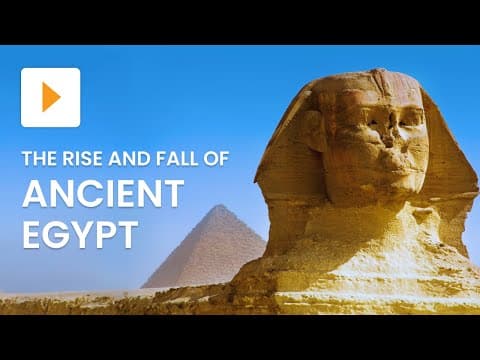
Ancient Egypt, one of the most advanced civilizations, thrived for 3000 years along the Nile River, known for its monumental architecture, advances in medicine, and unique cultural practices, before succumbing to Roman conquest in 30 CE.
Ancient Egypt stands as one of the most remarkable civilizations in history, lasting for an impressive 3000 years. This blog post explores the key elements that defined this ancient society, from its geographical advantages to its monumental achievements and eventual decline.
The civilization of Ancient Egypt developed along the banks of the Nile River, which played a crucial role in its success. The Nile provided fertile soil, enriched by annual floods that deposited nutrient-rich silt. This natural irrigation system allowed the Egyptians to cultivate crops effectively, supporting a growing population.
In 3050 BCE, Menes united the Upper and Lower Kingdoms of Egypt, marking the beginning of what is known as the Old Kingdom. This unification was pivotal in establishing a centralized government and a cohesive cultural identity that would endure for millennia.
Ancient Egypt was ruled by a succession of Pharaohs, who were considered to be both divine and royal. This belief in the Pharaoh's semi-divine status reinforced their authority and justified their monumental building projects, which were a hallmark of Egyptian civilization.
One of the most significant aspects of Ancient Egyptian civilization was its large-scale construction projects. The Egyptians demonstrated advanced knowledge of mathematics and engineering, employing tens of thousands of laborers to build impressive structures. Among the most iconic achievements are the Pyramids of Giza and the Great Sphinx, which continue to captivate the world today.
During this period, the Egyptians developed a writing system known as hieroglyphics, which was essential for record-keeping and communication. Additionally, they created a calendar consisting of 365 days, divided into 12 months of 30 days each, with an extra five days dedicated to the gods. This innovation was crucial for agricultural planning and religious observances.
Ancient Egyptians made significant strides in the field of medicine. They utilized various medical instruments to treat injuries, such as setting broken bones and stitching wounds. The use of opium for pain relief highlights their understanding of medicinal practices. Their approach to health and healing laid the groundwork for future medical advancements.
Mummification was a key cultural practice in Ancient Egypt, aimed at preserving the bodies of the deceased, particularly Pharaohs, for the afterlife. This intricate process involved embalming and wrapping the body, ensuring it remained intact for eternity. The discovery of well-preserved tombs, such as that of Tutankhamun, has provided invaluable insights into the beliefs and practices of this civilization.
After thriving for three millennia, Ancient Egyptian civilization came to an end with the Roman conquest in 30 CE. This marked a significant shift in power and culture, as Egypt became a province of the Roman Empire, leading to the gradual decline of its unique traditions and practices.
The story of Ancient Egypt is one of innovation, power, and cultural richness. From its geographical advantages along the Nile to its monumental achievements in architecture and medicine, this civilization has left an indelible mark on history. Understanding its rise and fall offers valuable lessons about the complexities of human societies and their legacies.



















