
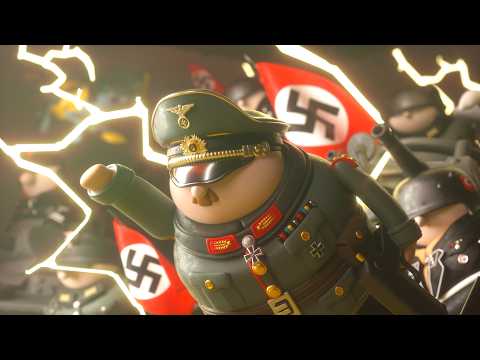
Blitzkrieg, the German military strategy of rapid warfare, revolutionized combat during World War II. Spearheaded by Heinz Guderian, it combined speed and firepower, leading to swift victories in Poland, Denmark, and France. However, the strategy faced significant challenges in the Soviet Union, particularly during the harsh winters and the Battle of Stalingrad, ultimately leading to its decline.
Blitzkrieg—the tactical dream scenario of Germany’s favorite villainous mustache enthusiast Adolf Hitler. This strategy emerged as a response to the stagnant trench warfare of World War I, aiming to make warfare faster and more terrifying. The brainchild behind this concept was Heinz Guderian, who proposed a rapid assault using fast-moving tanks, dive bombers, and artillery, all coordinated through radio communication. Thus, Blitzkrieg was born, combining speed, firepower, and audacity.
In 1939, Poland found itself unprepared for the onslaught of Blitzkrieg. Surrounded by aggressive neighbors and already facing threats from the swastika and Soviet banners, Poland became the testing ground for this new military doctrine. The Luftwaffe bombed cities and railways, creating chaos and cutting off Polish frontline forces. Meanwhile, German Panzer divisions rolled through the countryside, bypassing strongholds with remarkable speed.
On September 17, the Soviet Union joined the fray from the east, further complicating Poland's situation. The swift conquest of Poland marked the beginning of what would later be termed the Sitzkrieg, or the “Sitting-on-Your-Butt War.” While the French fortified their borders, the Germans used this lull to prepare for further invasions.
Germany's next targets were Denmark and Norway. The invasion of Denmark was executed in mere hours, showcasing the effectiveness of the Blitzkrieg strategy. Norway, however, proved more challenging due to its size and the presence of the Royal Navy. Despite these challenges, the German forces continued their rapid advance.
As the German armored convoy moved towards France and the Low Countries, the French felt secure behind the Maginot Line, a defensive structure they believed was impenetrable. However, the Germans bypassed this line by advancing through the Ardennes Forest, a region the French deemed too dense for tank movements. This miscalculation allowed the Germans to execute their strategy effectively.
An interesting aspect of the Blitzkrieg was the use of Pervitin, a methamphetamine that kept German soldiers alert and aggressive. This drug-fueled approach contributed to the rapid advances of the Panzer divisions, which reached the outskirts of Dunkirk in just two weeks. However, a strategic pause by Hitler allowed around 400,000 British and French troops to escape, despite the Luftwaffe's initial successes.
Following the swift victories in France and the Low Countries, the Germans faced their first significant setback during the Battle of Britain. Hermann Göring's Luftwaffe struggled against the British Royal Air Force, demonstrating that air superiority was not easily achieved.
In June 1941, Germany launched Operation Barbarossa, a massive invasion of the Soviet Union that aimed to take Blitzkrieg to new heights. The initial advances were rapid, but the German forces soon encountered the harsh realities of the Russian terrain and climate, particularly during the infamous Rasputitsa, or mud season.
As winter set in, the German advance stalled, and the Wehrmacht faced severe challenges. The Battle of Stalingrad marked a turning point, stripping the Germans of their tactical advantages. The urban warfare environment negated the effectiveness of their fast-moving tactics, and the relentless Russian winter further hampered their efforts.
The Soviet army launched a counteroffensive, encircling the German 6th Army in Stalingrad. With no supplies and facing the brutal cold, the 6th Army ultimately surrendered, marking a significant defeat for the Germans.
Despite the setbacks faced in the Soviet Union, the principles of Blitzkrieg continued to influence German military tactics. However, the rapid advances that characterized the early years of the war were increasingly directed towards Berlin rather than the expansive territories they had initially aimed to conquer. The Blitzkrieg strategy, while revolutionary, ultimately faced insurmountable challenges that led to its decline as the war progressed.



















