
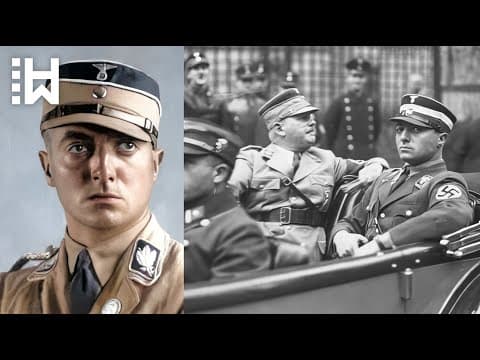
Karl Ernst, a notorious SA leader, rose to power in Nazi Germany through violence and intimidation but met a brutal end during the Night of the Long Knives, illustrating the treacherous nature of Nazi politics.
On 30 January 1933, the German Republic faced a seismic shift as Adolf Hitler was appointed Chancellor of Germany. This pivotal moment was marked by the emergence of the Sturmabteilung (SA), a paramilitary force known as the Brownshirts, who thrived on violence and intimidation. Among the SA's many commanders was Karl Ernst, a figure notorious for his brutality and scandalous past.
Karl Ernst was born on 1 September 1904 in Berlin, then part of the German Empire. His father, a strict cavalryman, likely envisioned a military career for his son. However, young Karl took a different path, working various jobs including a hotel bellhop and a bouncer at a gay nightclub. Rumors of his involvement as a gay prostitute followed him throughout his career in the Nazi Party, breeding mockery and disdain among his peers.
The 1920s in Berlin were characterized by stark contrasts. The city was a hub of cabarets and avant-garde art, yet it simmered with resentment following Germany's defeat in World War I. Amidst this turmoil, paramilitary groups like the Freikorps emerged, attracting many unemployed veterans. Adolf Hitler founded the SA in 1921, gathering the roughest elements of these groups. Karl Ernst reemerged in SA circles around 1925, where his street smarts and loyalty were valued despite his controversial past.
As Germany's economy deteriorated during the Great Depression, SA membership surged. Under Ernst Röhm, the SA transformed into a massive force, numbering in the millions by 1933. Röhm's radical vision of merging the SA with the regular army alarmed Hitler's conservative allies, setting the stage for conflict within the Nazi leadership.
One of Karl Ernst's earliest claims to infamy occurred on 12 September 1931, during the Jewish New Year. SA men, including Ernst, led a violent rampage through Berlin, chanting anti-Semitic slogans and attacking Jewish citizens. Although arrested and briefly imprisoned, Ernst's light punishment reflected the growing influence of the Nazis over the judicial system.
With Hitler's appointment as Chancellor, Karl Ernst received a significant promotion, effectively commanding the SA in Berlin. The Brownshirts, now a legal arm of the ruling party, unleashed terror on Jewish businesses and political opponents. The Reichstag fire on 27 February 1933 further solidified the Nazis' grip on power, with rumors suggesting Ernst's involvement in orchestrating the blaze to justify emergency powers.
Despite his rise, tensions brewed within the Nazi hierarchy. Ernst Röhm's ambitions threatened the established military elite, leading to a power struggle. On 30 June 1934, Hitler initiated the Night of the Long Knives, a purge targeting Röhm and other SA leaders. Karl Ernst, who had just arrived in Bremen for his honeymoon, was arrested and tortured before being executed by a firing squad in Berlin.
Karl Ernst's life serves as a cautionary tale of ambition and betrayal within the Nazi regime. His meteoric rise through violence ultimately led to his downfall during the very purge he had helped to instigate. The story of Karl Ernst highlights the brutal nature of Nazi politics, where loyalty was fleeting and violence was both a tool and a weapon against those who had once served the regime. In the end, Ernst's legacy is one of terror and treachery, a sobering reminder of the consequences of unchecked ambition in a ruthless political landscape.



















