
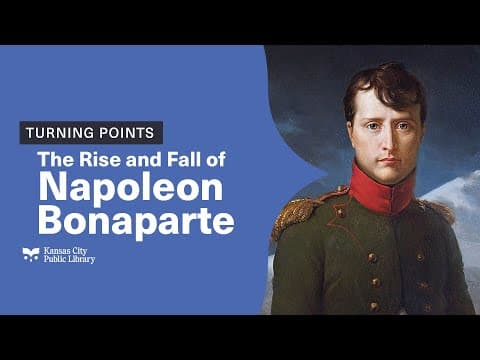
This blog post explores the significant turning points in the life of Napoleon Bonaparte, detailing his rise from a Corsican nationalist to the Emperor of France, his military strategies, political maneuvers, and the eventual decline of his empire, highlighting key figures and events that shaped his legacy.
Napoleon Bonaparte is one of the most significant figures in modern European history, known for his military genius and political acumen. This blog post delves into the pivotal moments in his life, examining how his decisions and the influence of those around him shaped his destiny and the world.
Napoleon was born on the Italian island of Corsica, just three months after it was sold to France. Coming from minor nobility, he faced challenges in his early education, particularly with the French language, which he spoke poorly. His early life was marked by a strong sense of Corsican nationalism, influenced by his father's allegiance to Pasquale Paoli, a leader of Corsican independence.
The French Revolution in 1789 provided Napoleon with an opportunity to pivot from his nationalist roots. After a failed invasion attempt of a neighboring island, he realized that Corsican independence was unattainable. He aligned himself with the Jacobins, the radical faction of the revolution, which marked the beginning of his rise in the French military.
In 1793, during the turmoil of the French Revolution, Napoleon was given a field commission as an artillery officer in the campaign against the British in Toulon. His decisive actions led to a swift promotion to brigadier general, showcasing his military prowess at a young age.
As the Jacobins lost power in 1794, Napoleon found himself in a precarious position. However, he was protected by influential figures like Paul Barras, who became his mentor. This connection allowed him to navigate the political landscape and avoid being sidelined.
In 1795, a royalist mob threatened the government in Paris. Napoleon was tasked with dispersing the crowd, which he did by firing cannon into them, a decisive action that earned him recognition and solidified his position as a leading general in France.
Napoleon's military campaigns in Italy from 1796 to 1797 were marked by rapid victories against Austrian forces, establishing him as a formidable military leader. His subsequent expedition to Egypt aimed to disrupt British trade routes but ultimately ended in failure, leading to his return to France.
In 1799, Napoleon staged a coup d'état, becoming the First Consul of France. This marked the end of the French Revolution and the beginning of the Napoleonic era, as he consolidated power and initiated reforms.
Napoleon's reign was characterized by a series of military campaigns known as the Napoleonic Wars, during which he expanded French territory across Europe. His strategies and reforms transformed the French military and government.
In 1808, Napoleon invaded Spain, an unforced error that ignited widespread resistance and guerrilla warfare. This conflict drained French resources and marked the beginning of his decline.
The disastrous invasion of Russia in 1812 was a critical turning point. Despite initial successes, the harsh winter and scorched earth tactics employed by the Russians decimated Napoleon's army, leading to a significant loss of troops and morale.
In 1813, Napoleon faced a coalition of European powers at the Battle of Leipzig, resulting in a catastrophic defeat. This battle marked the beginning of the end for Napoleon, as he was forced to retreat and eventually abdicate in 1814.
Napoleon's brief return to power in 1815, known as the Hundred Days, ended with his defeat at the Battle of Waterloo. This final defeat led to his exile on the island of Saint Helena, where he spent the remainder of his life.
Napoleon Bonaparte's rise and fall is a tale of ambition, military genius, and the complexities of power. His legacy continues to influence military strategy and political thought, making him a subject of fascination for historians and enthusiasts alike. Understanding the turning points in his life provides insight into the dynamics of leadership and the consequences of ambition in the face of changing political landscapes.



















