
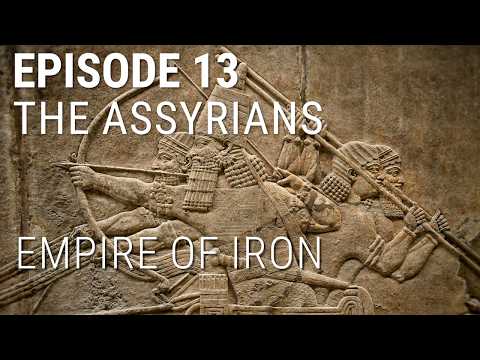
This blog post explores the rise and fall of the Assyrian Empire, detailing its origins, military prowess, cultural achievements, and the factors leading to its eventual collapse, as narrated through historical accounts and archaeological findings.
In the year 401 BC, during the Greek Golden Age, a Persian prince named Cyrus the Younger fought a civil war against his brother for the throne of Persia. To aid him, he hired a mercenary army of Greek soldiers, including the writer Xenophon, who chronicled their journey in his work, Anabasis. After a victorious battle at Cunaxa, the Greeks learned of Cyrus's death, leaving them stranded in a foreign land. They embarked on a perilous journey home, crossing deserts and encountering the ruins of ancient cities, which would later be identified as Nimrud and Nineveh.
Xenophon and his men stumbled upon vast, deserted cities, remnants of a once-great civilization. The walls of these cities were monumental, constructed from clay bricks and stone foundations, showcasing the architectural prowess of their builders. Despite their impressive size, the Greeks could not linger; they were pursued by the Persian army and needed to find their way to the Black Sea.
These ruins were remnants of the Assyrian Empire, a civilization that rose from the ashes of the Bronze Age to become one of the world's first military superpowers. The Assyrians not only expanded their territory but also fostered a remarkable flourishing of art and learning.
The Assyrian Empire emerged in the arid desert lands of Mesopotamia, watered by the Tigris and Euphrates rivers. This fertile region, known as the Fertile Crescent, was home to some of the earliest human societies. The Assyrians revered their ancient history, drawing inspiration from legendary figures like Gilgamesh and Sargon the Great.
As the Sumerian Empire fell, the Akkadian language became dominant, and the city of Ashur, founded around 2500 BC, began to flourish. Ashur became a wealthy trading city, benefiting from its strategic location along the Tigris River. The Assyrians built temples and established a complex religious system, with the god Ashur becoming central to their identity.
Throughout the centuries, the Assyrians made several attempts to establish their own kingdom, often facing challenges from rival powers like Babylon. However, they experienced a cultural renaissance, producing epic poetry that celebrated their military conquests and heroic spirit.
The collapse of the Bronze Age around 1200 BC posed significant challenges, but the Assyrians adapted by consolidating their power and focusing on essential territories. Tiglath-Pileser I, ascending the throne in 1114 BC, expanded the empire through military campaigns, establishing Assyria as a formidable force.
The reign of Adad-Nirari II marked the beginning of a new era of expansion. The Assyrian army, primarily composed of farmers, was transformed into a professional military force under Tiglath-Pileser III. This king reformed the military, introducing elite armored troops and engineering units, allowing for more effective campaigns.
By the time of Ashurnasirpal II, the Assyrian Empire reached unprecedented heights. His reign was characterized by ruthless military tactics, including mass deportations of conquered peoples, which helped maintain control over the vast empire. The capital, Nineveh, became a center of culture and power, adorned with grand palaces and gardens.
Despite its military successes, the Assyrian Empire faced growing discontent among its subjects. The heavy-handed approach to governance led to widespread resentment, and rebellions became increasingly common. The reign of Ashurbanipal, while marked by cultural achievements, also saw the empire's vulnerabilities exposed.
The empire's downfall was precipitated by a combination of internal strife and external pressures. The rise of the Medes and Babylonians, fueled by the Assyrians' oppressive rule, culminated in a coalition that would ultimately bring about the empire's collapse. In 612 BC, Nineveh fell to the combined forces of the Medes and Babylonians, marking the end of the Assyrian Empire.
The ruins of Nineveh and other Assyrian cities serve as a testament to the empire's grandeur and its eventual demise. The Assyrians left behind a rich cultural heritage, including vast libraries filled with clay tablets that recorded their history, literature, and knowledge. These texts, preserved through the ages, continue to provide insight into the lives of the Assyrians and their contributions to civilization.
As we reflect on the rise and fall of the Assyrian Empire, we are reminded of the complexities of history, the interplay of power and culture, and the enduring legacy of those who came before us. The story of the Assyrians is not just a tale of conquest and collapse; it is a narrative that speaks to the resilience of human civilization and the lessons we can learn from the past.



















