
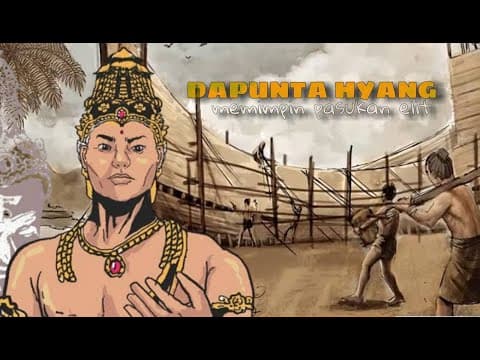
The Sriwijaya Kingdom, a significant maritime and Buddhist empire in Southeast Asia, thrived from the 7th century, controlling trade in the Malacca Strait and rivaling Majapahit. Founded by Dapunta Hyang Srijayanasa, it expanded through military conquests and strategic trade, with its center believed to be in Palembang. Despite its eventual decline, the legacy of Sriwijaya remains influential in the history of the region.
In this blog post, we will explore the fascinating history of the Sriwijaya Kingdom, which emerged in the 7th century and became one of the largest and most influential empires in Southeast Asia. Known for its Buddhist culture and maritime prowess, Sriwijaya played a crucial role in controlling trade routes in the Malacca Strait and left a lasting legacy in the region.
The history of the Nusantara (the Indonesian archipelago) is rich and diverse, with the Sriwijaya Kingdom standing out as a significant player during its time. The kingdom is often regarded as a symbol of the grandeur of Sumatra in ancient times, comparable to the Majapahit Kingdom located on the island of Java.
The Sriwijaya Kingdom was founded in the 7th century by Dapunta Hyang Srijayanasa. Evidence of this can be found in inscriptions discovered in the city of Kapur Mendo, located in western Bangka. These inscriptions detail Srijayanasa's journey, where he led an army of 20,000 soldiers from Minanga Tamwan to Palembang, Jambi, and Bengkulu. During this expedition, he successfully conquered strategic areas that were vital for trade, leading to the prosperity of the Sriwijaya Kingdom.
According to the inscriptions from the year 686 AD found on Bangka Island, Sriwijaya had already established control over southern Sumatra, including Bangka, Belitung, and even reaching Lampung. This expansion was marked by military expeditions, including attempts to assert dominance over Java, which was seen as resistant to the authority of the Maharaja of Sriwijaya. This period coincided with the decline of the Tarumanegara Kingdom in West Java and the Holing Kingdom in Central Java.
The exact location of Sriwijaya's capital has been a topic of debate among historians. However, a widely accepted view is that Palembang served as the central hub of the kingdom. Even today, Palembang is recognized as the heart of Sriwijaya. Some scholars suggest that the kingdom had a maritime nature, leading to a practice of shifting its center of power among various locations, including Kedah, Muara Takus, and Jambi.
The golden age of the Sriwijaya Kingdom was characterized by a long succession of rulers, which contributed to its stability and prosperity. However, the historical records of these kings are not well-documented, primarily due to a lack of concrete evidence regarding the kingdom's structure and governance. Despite this, the influence of Sriwijaya persisted for centuries, shaping the cultural and political landscape of Southeast Asia.
The Sriwijaya Kingdom represents a significant chapter in the history of the Nusantara, showcasing the region's rich cultural heritage and maritime trade. Its legacy continues to be a subject of interest for historians and enthusiasts alike. As we reflect on the achievements and challenges faced by this remarkable kingdom, we gain a deeper understanding of the historical dynamics that have shaped Southeast Asia.
Thank you for joining us on this journey through the history of the Sriwijaya Kingdom. We hope this exploration has enriched your knowledge and appreciation of this ancient empire.



















