
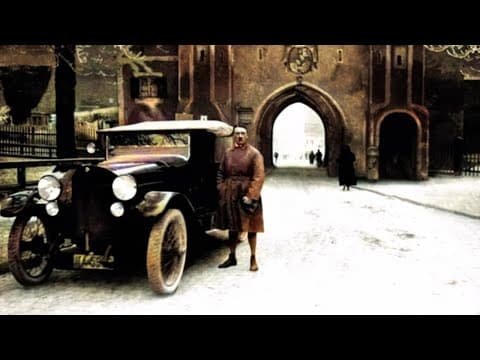
This blog post explores the early life of Adolf Hitler, detailing his upbringing, education, and the formative experiences that shaped his ideology and political ambitions, ultimately leading to his rise as the Führer of Germany.
Adolf Hitler, one of the most notorious figures in history, rose from a life of obscurity to become the Führer of Germany, leading the nation into a catastrophic war and committing atrocities that resulted in the deaths of millions. This blog post delves into his early life, examining the influences and experiences that shaped his character and ideology.
Adolf Hitler was born on April 20, 1889, in Braunau am Inn, a small town in Austria. He was the third of six children born to Alois and Klara Hitler, but only he and his younger sister, Paula, survived beyond childhood. Alois, a customs inspector, was known to be strict and cold, while Klara was described as loving and kind-hearted. This dynamic would later influence Hitler's personality and relationships.
Hitler's early years were marked by instability. His family moved several times due to his father's job, and he spent his formative years in various towns in Austria. He began school in 1895 but struggled academically, often receiving poor grades. His rebellious nature and lack of diligence led to him repeating a year in secondary school. Ultimately, he left school without graduating, which set the stage for a life of uncertainty.
After his father's death in 1903, Klara moved the family to Linz, where Adolf lived off her pension. He was considered a failure by his relatives, showing little interest in pursuing a career. Instead, he dreamed of becoming an artist and sought admission to the Academy of Fine Arts in Vienna. However, he was rejected twice, which deeply affected him.
From 1907 to 1913, Hitler lived in Vienna, where he experienced a mix of fascination and disillusionment. He became increasingly isolated, living a bohemian lifestyle and struggling to make ends meet. During this time, he developed his anti-Semitic views, influenced by the prevailing nationalist sentiments in Austria and his own experiences of rejection and failure.
In 1914, as World War I broke out, Hitler enlisted in the Bavarian Reserve Infantry Regiment. The war provided him with a sense of purpose and belonging that he had previously lacked. He quickly rose through the ranks, earning the Iron Cross for bravery. However, he was wounded and spent time in a military hospital, where he learned of the revolution that would end the war and the monarchy in Germany.
After the war, Hitler returned to Munich, where he became involved in the burgeoning nationalist movements. He was initially sent to spy on the German Workers' Party, which he soon joined. His oratory skills and charismatic presence quickly made him a prominent figure within the party.
In 1920, the German Workers' Party was renamed the National Socialist German Workers' Party (NSDAP). Hitler's leadership style and ability to connect with the masses helped solidify his position as the party's leader. He articulated a vision that resonated with many Germans disillusioned by the Treaty of Versailles and the economic hardships of the Weimar Republic.
In November 1923, Hitler attempted to seize power in Munich through the Beer Hall Putsch. The coup failed, leading to his arrest and imprisonment. During his time in Landsberg Prison, he wrote "Mein Kampf," outlining his ideology and political goals, which included extreme nationalism, anti-Semitism, and the idea of Lebensraum (living space) for the German people.
Hitler's early life was marked by failure, rejection, and a search for identity. These experiences, combined with the tumultuous political landscape of post-war Germany, shaped his worldview and ambitions. His rise from obscurity to the leader of the Nazi Party set the stage for one of the darkest chapters in human history, as he would go on to implement policies that led to World War II and the Holocaust. Understanding Hitler's early life is crucial to comprehending the forces that propelled him to power and the catastrophic consequences that followed.



















