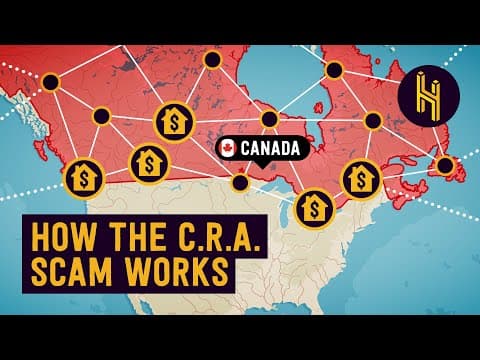
The CRA scam has become a widespread issue in Canada, affecting millions and costing hundreds of millions of dollars. This blog post explores the mechanics of the scam, its sophisticated operations, and the challenges in combating it.
Over the past five years, the landscape of scams has dramatically changed, particularly in Canada. With the advent of technology and the internet, scams have evolved from simple cons to sophisticated operations that target millions of unsuspecting individuals. One of the most notorious scams affecting Canadians is the Canada Revenue Agency (CRA) scam, which has become alarmingly prevalent.
At its core, the CRA scam is deceptively simple. Imagine returning home after a long day, only to find a message on your answering machine from the Canada Revenue Agency. The message, which appears to come from the actual CRA phone number, informs you that there is a warrant out for your arrest due to unpaid taxes. This alarming news can easily unsettle anyone, especially since many people are unsure about their tax payments.
Once a victim calls back, they are connected to someone posing as a CRA agent who confirms the legitimacy of the claim. To avoid arrest, the victim is instructed to withdraw a significant sum of money from a nearby bank and send it via courier to an address provided by the scammer. In earlier iterations of the scam, victims were directed to deposit money into Bitcoin ATMs, but due to increased awareness, this method has largely been phased out.
After sending the money, victims often realize they have been scammed, but by then, it is too late. The money has already been sent to a location that is likely just a random apartment, and the scam is complete.
While the surface execution of the CRA scam may seem straightforward, its success lies in the complex and organized structure behind it. Unlike traditional scams, the CRA scam is operated by a vast network of individuals, making it difficult to combat.
At the bottom of this organizational hierarchy are the money mules. These individuals, often unaware of their involvement in a scam, receive the money sent by victims and pass it along to higher-ups in the organization. Many money mules are unsuspecting students or individuals who believe they are participating in a legitimate business operation.
When law enforcement arrives at the money mule's location, they often find someone who is just as confused as the victim, leading to a lack of actionable intelligence for the police.
Once the money is in the hands of the money mules, it is transferred out of Canada using a system known as the Hala system. This informal banking method, which has been in use for over 700 years, allows money to be moved across borders without government regulation or formal records. The process relies on personal connections and trust, making it nearly impossible to trace.
The initial calls to victims are made using automated dialers that leave messages for millions of Canadians. When a victim calls back, they are connected to one of several call centers, often located in India. These centers are staffed by small teams who handle the calls, but they are not the ones making the initial outreach. This division of labor allows the scam to operate efficiently and evade law enforcement.
As scams like the CRA scam grow in sophistication, so do the methods used to target victims. Scammers are now purchasing personal data from brokers who scrape information from the internet. This data can include phone numbers, email addresses, and home addresses, making it easier for scammers to target specific individuals.
To combat the rising tide of scams, individuals can take proactive measures to protect their personal information. Services like Incogn can help by reaching out to data brokers on your behalf to ensure your information is not sold or misused. By using such services, you can significantly reduce the risk of becoming a victim of scams.
The CRA scam is a stark reminder of the evolving landscape of fraud in Canada. With its sophisticated operations and the involvement of organized networks, it poses a significant threat to individuals. Awareness and proactive measures are essential in protecting oneself from falling victim to such scams. As technology continues to advance, so too must our strategies for safeguarding our personal information and finances.