
The 1920s, known as The Roaring 20s, was a transformative decade in American history marked by economic prosperity, cultural shifts, and significant social changes. This era saw the rise of jazz music, the flapper lifestyle, technological advancements, and the impact of prohibition, all of which shaped modern American society while also revealing underlying tensions and challenges that would lead to future conflicts.
The 1920s, often referred to as The Roaring 20s, was a decade of rapid change and excitement in America. It was a time characterized by booming economic prosperity, cultural shifts, and social liberation. Advances in technology, the rise of mass entertainment, and changing social norms reshaped American life in profound ways. From the popularity of jazz and flappers to the impact of automobiles and consumerism, the 1920s left a lasting legacy on the nation.
The 1920s marked a significant social and political change in the United States. More Americans began living in cities than on farms, indicating a shift from a primarily rural society to an urban one. The economy doubled from 1920 to 1929, creating a thriving consumer market where people had more disposable income to spend. Chain stores became increasingly popular, leading to mass production of clothing and a more uniform fashion sense across the country.
Culturally, Americans were listening to the same music, dancing to the same tunes, and speaking the same slang. Silent films captivated audiences nationwide, although television was introduced in the late 1920s and was not yet commonly found in American homes. The Charleston dance became a symbol of the era's carefree spirit, and spectator sports gained immense popularity.
The post-World War I era brought prosperity, with advances in technology such as telephones, automobiles, and electricity becoming more commonplace. Life in the 1920s was often characterized by the pursuit of enjoyment, with women expressing themselves more freely both sexually and individually. The U.S. government adopted a policy of isolationism, avoiding involvement in European affairs, while factories transitioned from war production to manufacturing civilian goods.
However, this transition was not without challenges. Many soldiers returning home from war struggled to find employment, and farmers faced economic difficulties due to a decline in European exports. The 1920s saw a wave of inventions and innovations that transformed daily life, with household appliances like vacuum cleaners and refrigerators becoming more common.
Entertainment experienced major advancements during this period. The rise of radios and motion pictures brought news, music, and entertainment into people's homes like never before. The introduction of traffic signals helped manage the growing number of automobiles on the road, while home conveniences like electric blenders and washing machines revolutionized daily tasks.
A significant cultural shift occurred as the age of mass consumption was stimulated by new marketing techniques that encouraged Americans to spend more. Buying on credit through installment plans became popular, allowing consumers to purchase expensive items and pay for them over time. However, this growing reliance on credit led many Americans into debt, foreshadowing economic challenges to come.
Prohibition, enacted through the 18th Amendment of 1919 and ratified in 1920, aimed to eliminate the manufacture, sale, and transportation of alcohol in the United States. The Volstead Act enforced the amendment with the goal of reducing crime and improving public morals. However, rather than achieving its intended effects, prohibition led to numerous unintended consequences.
Speakeasies, secret illegal bars that required passwords for entry, flourished across American cities, promoting jazz music and the flapper lifestyle. Bootlegging, the illegal production and sale of alcohol, became a highly profitable underground industry, with figures like Al Capone leading organized crime networks. Prohibition also contributed to an increase in crime and corruption, ultimately leading to its repeal in 1933.
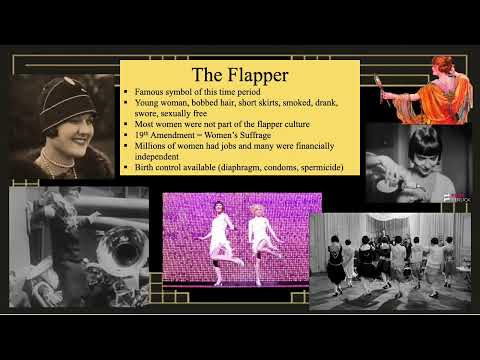
The flapper became one of the most famous symbols of the 1920s, representing a new kind of young woman who embraced modernity and independence. Flappers were known for their distinct style, sporting bobbed hair and short skirts, often seen smoking and drinking. They challenged traditional gender norms and expressed their sexual freedom in ways that were considered shocking at the time.
However, it's important to note that most women were not part of the flapper culture. While the image of the flapper was widely celebrated in media, the reality was that the majority of women still adhered to more traditional roles. The 19th Amendment, granting women the right to vote, coincided with economic independence as millions of women entered the workforce.
The first Red Scare and immigration policies from 1919 to 1924 were driven by widespread fear of communism in the United States following the 1917 Russian Revolution. Many Americans became alarmed that communism could spread, particularly through labor unions and immigrant communities. This fear led to a nationwide crackdown on suspected radicals, including the Palmer Raids, which resulted in thousands of arrests.
In response to these concerns, the U.S. government implemented strict immigration quotas, particularly targeting Southern and Eastern Europe. This environment of suspicion and hostility culminated in high-profile cases like that of Sacco and Vanzetti, two Italian anarchists controversially convicted of murder, symbolizing the era's deep-rooted fears and challenges faced by immigrants.
The automobile revolution, led by Henry Ford and the Model T, profoundly impacted American society. The Model T became widely affordable in the 1920s, thanks to Ford's mass production techniques. This transformation reshaped American life by promoting suburban expansion and providing new opportunities for travel and leisure.
The rise of the automobile industry created millions of jobs across multiple sectors, including steel, oil, and road construction. The cultural landscape also shifted, as dating norms evolved and young people used cars to gain independence and explore leisure activities.
The Jazz Age of the 1920s was a defining period in American cultural history, characterized by the widespread popularity of jazz music. Originating in African American communities, jazz became a powerful symbol of the Roaring 20s, influencing fashion trends, dance styles, and social attitudes.
Key figures in jazz, such as Louis Armstrong and Duke Ellington, brought the genre into mainstream popularity. Jazz clubs, like Harlem's Cotton Club, provided spaces where racial lines were often blurred, fostering a sense of cultural unity.
Despite criticism from some quarters, jazz had a lasting impact on American culture, shaping music, entertainment, and social attitudes for decades to come. The Harlem Renaissance, a significant cultural movement, emerged during this time, celebrating African American culture and advocating for racial equality.
Entertainment and popular culture in the 1920s underwent major transformations. The radio boom brought live music, sports, and news directly into people's homes, creating a shared national experience. Silent films thrived, with Hollywood producing blockbuster movies that captivated audiences.
Celebrity culture exploded, with figures like Babe Ruth dominating the sports world and actors like Rudolph Valentino becoming beloved icons. This era marked the beginning of modern sports culture, with nationwide fan bases forming around popular teams and players.
The 1920s ushered in an economic boom and consumerism revolution that transformed daily life. Mass production techniques made consumer goods more affordable, with items like refrigerators and radios becoming accessible to the average American family. The advertising boom played a crucial role in shaping consumer culture, appealing to people's desires for modernity and status.
However, the illusion of prosperity masked underlying economic weaknesses, leading to a widening gap between the rich and the working class. The stock market experienced rapid growth, fueled by expanding businesses and growing investor confidence, but this ultimately led to financial risks and the catastrophic crash of 1929.
In 1925, the Scopes Monkey Trial brought national attention to the debate over teaching evolution in public schools. The trial centered around John Scopes, a high school teacher arrested for teaching evolution in violation of state law. It symbolized the broader conflict between science and religion in the 1920s, highlighting tensions between modern scientific theories and traditional beliefs.
The trial became a media sensation, igniting a national conversation about science education and religion that persisted for decades. Although Scopes was found guilty, the trial exposed the growing challenges to traditional values in American society.
Al Capone, one of the most infamous gangsters of the prohibition era, led the powerful Chicago outfit during the 1920s. Born into an Italian immigrant family, Capone capitalized on the illegal liquor trade, turning organized crime into a highly profitable enterprise. His reign was marked by violence and intimidation, culminating in notorious events like the St. Valentine's Day Massacre.
Despite his criminal empire, Capone was ultimately brought down for tax evasion, serving time at Alcatraz. His legacy endures as a symbol of the prohibition era's mix of lawlessness and glamour, embodying the excess and corruption of the 1920s.
The cultural changes of the 1920s were met with significant backlash, particularly from many white Americans who viewed the emergence of mass culture as a threat to traditional values. This led to a resurgence of the Ku Klux Klan, which sought to enforce its vision of morality by targeting African Americans, immigrants, and other minority groups.
The first Red Scare also fueled racial tensions, as fear of communism and radical ideologies led to widespread paranoia and suspicion. This environment of fear significantly influenced public attitudes toward diversity and cultural change, highlighting deep divisions in American society.
The 1920s were a decade of immense social, cultural, and economic change in America. From the rise of jazz music and the Harlem Renaissance to the economic boom fueled by mass production and consumerism, this era was defined by innovation and transformation. However, it also revealed underlying tensions and challenges that would shape the future of the nation. The events of the 1920s continue to resonate today, reminding us of the complexities of American history and the ongoing struggle for equality and justice.



















