
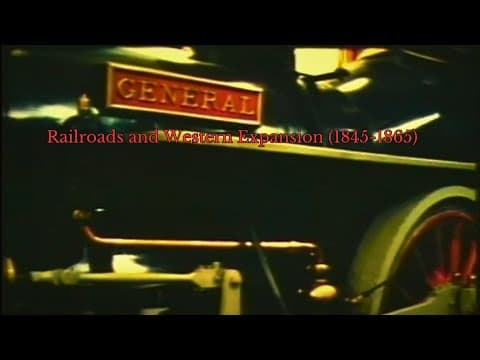
This blog post explores the transformative impact of railroads on America's westward expansion between 1845 and 1865. It discusses technological advancements, land grants, and the role of railroads in the Civil War, highlighting how they facilitated migration, commerce, and military logistics, ultimately shaping the nation.
In the mid-19th century, railroads emerged as a pivotal force in shaping the United States, facilitating westward expansion and transforming the nation’s economy and society. This blog post delves into the significant developments in railroad technology, the impact of land grants, and the crucial role railroads played during the Civil War.
In 1851, New York City officials celebrated the Erie Railroad, recognizing it as a monumental achievement of the age. Railroads, still in their infancy, were about to mature into a vital component of American infrastructure. The completion of railroads was not just about transportation; it was about building and binding a nation.
After the 1840s, railroads began to spread across the Appalachian Mountains, reaching into America’s Heartland—the vast Prairie lands. The introduction of steel-bladed plows by John Deere in 1837 allowed settlers to cultivate the rich clay soil, while Cyrus McCormick’s mechanical reaper revolutionized agricultural productivity. These innovations, combined with the railroads, enabled settlers to carve out homesteads and thrive in the wilderness.
Political unrest in Europe, particularly the Irish potato famine, led many refugees to seek new lives in America. Some purchased Prairie farms, while others became tenant farmers. As settlers moved westward, railroads became the essential link that connected goods to markets. Their speed and capacity allowed for the transportation of perishable products and heavy raw materials, fostering economic growth in both eastern cities and inland settlements.
In 1850, the federal government granted the Illinois Central Railroad alternate sections of land adjacent to its right of way. This land was sold to settlers, facilitating further expansion. Between 1850 and 1860, approximately 20 million acres of public land were granted to railroads. In return, these railroads were obligated to transport government personnel, property, and mail at reduced rates.
As railroads expanded, they became more than just mechanical marvels; they embodied style and class. Brightly colored engines adorned with brass trim captured the imagination of the public. The sight and sound of trains inspired awe, and many young boys dreamed of becoming engineers or conductors. The call of the train symbolized adventure and new possibilities, encouraging a westward migration.
By the mid-19th century, America’s frontier had extended beyond the Mississippi River, with the Far West booming due to cheap farmland and the allure of gold in California. However, as railroads connected the agrarian West to the industrial East, the nation was torn apart by the Civil War.
For the first time, railroads played a crucial role in large-scale warfare. They allowed armies to move troops and supplies at unprecedented speeds and distances. Generals on both sides had to adapt their strategies to incorporate the logistics of rail transport. The North, with nearly three times as much track and superior resources, had a significant advantage. The Erie and Pennsylvania Railroads alone possessed more locomotives than the entire Confederate army.
Events such as Andrew’s raid highlighted the strategic importance of railroads during the war. In one of the final campaigns, General Sherman’s march to the sea relied heavily on a rail line nearly 500 miles long, which supplied over 100,000 troops. Sherman himself acknowledged that his campaign would have been impossible without the railroad.
At the conclusion of the Civil War, a special train transported President Abraham Lincoln’s body back to Illinois, symbolizing the profound connection railroads had established across the nation. Lincoln had recognized the importance of railroads during the war, signing the Pacific Railroad Act in 1862, which initiated the construction of the first Transcontinental Railroad.
The era of railroads from 1845 to 1865 was marked by innovation, expansion, and conflict. Railroads not only facilitated the movement of people and goods but also played a critical role in shaping the nation’s destiny. As America continued to grow, the railroads would remain a vital artery of commerce and communication, forever altering the landscape of the country.



















