
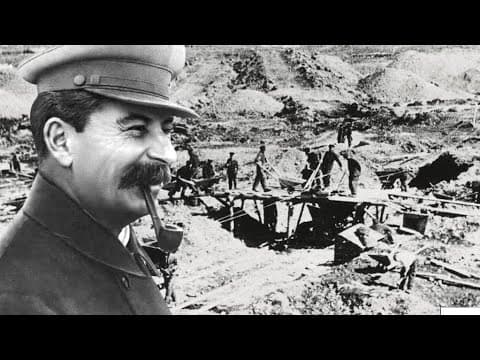
This article explores the multifaceted role of Stalin in the industrialization of Russia, arguing that while he played a significant part in shaping the process, the inevitability of industrialization was rooted in broader historical and economic contexts. It discusses the various political figures and regimes that could have influenced this process and highlights the importance of external capital and technological transfer in achieving industrial growth.
The topic of Stalin's role in the industrialization of Russia has sparked considerable debate. Some argue that Stalin was instrumental in this process, while others contend that industrialization could have occurred without him, or even in opposition to his policies. This article seeks to navigate these contrasting viewpoints and explore the underlying issues surrounding Stalin's influence on industrialization.
Regardless of who ruled Russia—be it Tsar Nicholas II, Trotsky, or Stalin—the country was destined for industrialization. Historical evidence suggests that Russia was on the brink of industrial development as early as the reign of Alexander I, who initiated the construction of railroads. Karl Marx noted that the establishment of railroads necessitated the development of an industrial base to support them.
Industrialization in Russia had already begun under various regimes:
The failure of the Russian bourgeoisie to effectively lead industrialization meant that the responsibility fell to other groups, notably engineers and the emerging Soviet bureaucracy, many of whom were from the Old Believer community.
A critical factor in Russia's industrialization was the influx of foreign capital and technology. The country relied heavily on investments from:
The need for foreign investment was exacerbated by the inadequacies of the Russian bourgeoisie, which was too weak to spearhead industrialization independently.
While Stalin's regime was marked by a militaristic approach to industrialization, it is essential to recognize that he was not the sole architect of this process. His leadership coincided with a broader trend of industrialization that was already underway. Stalin's policies emphasized heavy industry, aligning with the needs of a nation preparing for potential military conflicts.
Stalin's rise to power was characterized by political maneuvering and the elimination of rivals, such as Trotsky, who also advocated for industrialization. The competition for leadership in the industrialization process was fierce, with various factions vying for influence. Stalin's ability to navigate these political waters allowed him to consolidate power and direct the industrialization efforts.
Had different leaders been at the helm, such as Trotsky or Bukharin, the trajectory of industrialization might have differed significantly:
These alternative visions highlight that while Stalin played a crucial role, the industrialization of Russia was not solely dependent on his leadership.
In conclusion, while Stalin's influence on the industrialization of Russia was significant, it is crucial to understand that this process was inevitable due to a combination of historical, economic, and political factors. The industrialization of Russia was a complex phenomenon shaped by various leaders, external influences, and the pressing needs of the nation. Stalin's role, therefore, should be viewed within this broader context, recognizing that he was both a product of his time and a key player in a process that was already set in motion by preceding events and figures.



















